Solar plant SCADA system modernization: a utility upgrade roadmap
NERC’s 2024 State of Reliability data shows that aging monitoring stacks contribute to roughly 71% of avoidable curtailment hours on utility-scale solar. If your solar plant SCADA system still runs on Windows Server 2012, unsegmented Modbus TCP, or PLCs without signed firmware, you carry hidden cyber and revenue risk. This guide walks the upgrade roadmap REIG uses on plants between 5 MW and 500 MW, sequenced for minimum production downtime and clean audit signoff.
Why your solar plant SCADA system is past its design life
Most utility-scale solar built between 2012 and 2018 used SCADA architectures designed for a 10-year service life. Inverter firmware vintages have moved through three major revisions in that window, and the control hardware was never built for the cyber threat model NERC published in CIP-013.
A 2024 review by EPRI found that 63% of operating plants over 20 MW run at least one piece of monitoring infrastructure past vendor end-of-life. The most common offenders are SEL-3530 RTAC units running firmware older than R143, Schneider Quantum PLCs with Modbus TCP exposed to the corporate VLAN, and OPC DA tunnels that have not seen a security patch since 2019. Each is a documented entry path in the Department of Energy’s Cybersecurity Capability Maturity Model.
The economic case is sharper than the security one. Plants running legacy solar plant SCADA system stacks lose between 0.4% and 1.1% of annual energy production to false trips, comms timeouts, and curtailment events that a current stack would clear in under 30 seconds. On a 100 MW asset, that is roughly $180,000 in annual revenue you stop seeing the day the bond holder asks for a sustaining capex line item.
We cover the details separately in Solar SCADA Failover Architecture for High Availability Plants.
There is a full breakdown of this topic in Solar SCADA Alarm Rules: Cut Nuisance Noise on Utility-Scale Plants.
For a closer look at this, see How solar SCADA reduces unplanned downtime at utility-scale plants.
We cover the details separately in Utility Scale Solar Monitoring vs SCADA: Roles and Layers Defined.
We cover the details separately in SunSpec Modbus inverter: register maps for utility-scale solar plants.
For a closer look at this, see Solar Power Plant Controller: SCADA Integration, Setpoints, Limits.
There is a full breakdown of this topic in Solar SCADA cybersecurity NERC CIP: utility-scale compliance guide.
There is a full breakdown of this topic in Solar tracker SCADA integration: backtracking and tag map design.
There is a full breakdown of this topic in Modbus TCP vs DNP3: solar SCADA protocol guide for utility plants.
There is a full breakdown of this topic in BESS SCADA Integration for Utility-Scale Solar Plants: A Field Guide.
There is a full breakdown of this topic in Solar Curtailment and AGC in Utility-Scale Solar Plant Operations.
There is a full breakdown of this topic in IEEE 1588 PTP Time Sync for Solar SCADA: GPS Clock Field Guide.
We cover the details separately in Solar Power Plant Controller: SCADA Integration, Setpoints, Limits.
For a closer look at this, see Utility Scale Solar Monitoring vs SCADA: Roles and Layers Defined.
For a closer look at this, see IEEE 1588 PTP Time Sync for Solar SCADA: GPS Clock Field Guide.
We cover the details separately in Solar SCADA Alarm Rules: Cut Nuisance Noise on Utility-Scale Plants.
For a closer look at this, see Solar drone thermal inspection: utility-scale hotspot field guide.
For a closer look at this, see DC Ground Fault Detection in Utility-Scale Solar: NEC 690.5 Field Guide.
For a closer look at this, see Solar plant frequency response: FFR and synthetic inertia guide.
There is a full breakdown of this topic in Solar plant AC grounding and ground grid design: IEEE 80 field guide.
We cover the details separately in Solar plant transformer DGA: dissolved gas analysis field guide.
We cover the details separately in Solar plant reactive power control: inverter VAR dispatch guide.
Auditing your current solar plant SCADA system before any upgrade
Skip the audit and you will spec the wrong upgrade. REIG’s standard pre-upgrade audit takes two engineers four days on site and produces a 60-page baseline document covering five domains.
- Asset inventory: every device with an IP address, firmware version, MAC, and patch level
- Network topology: actual L2 and L3 paths, not the as-designed drawings
- Protocol audit: live capture of Modbus, DNP3, IEC 61850, and OPC traffic for 72 hours
- Cyber baseline: scored against NERC CIP v7 plus IEC 62443-2-1
- Performance baseline: 12 months of historian data benchmarked against PVsyst expectations
The findings always surprise the asset manager. On a recent 80 MW audit in West Texas, REIG found 14 string combiner boxes reporting to a SCADA point ID that had been decommissioned in 2021. The data stream had silently been writing into a dead channel for three years, and PVsyst-vs-actual gap analyses had been blaming inverter clipping.
NREL’s SCADA reference architecture report gives a useful template for the desired end state. But every real audit starts with what you actually have on the wire, not what the as-built drawings claim. For a deeper walkthrough of audit methodology see our internal note on the SCADA cybersecurity checklist.
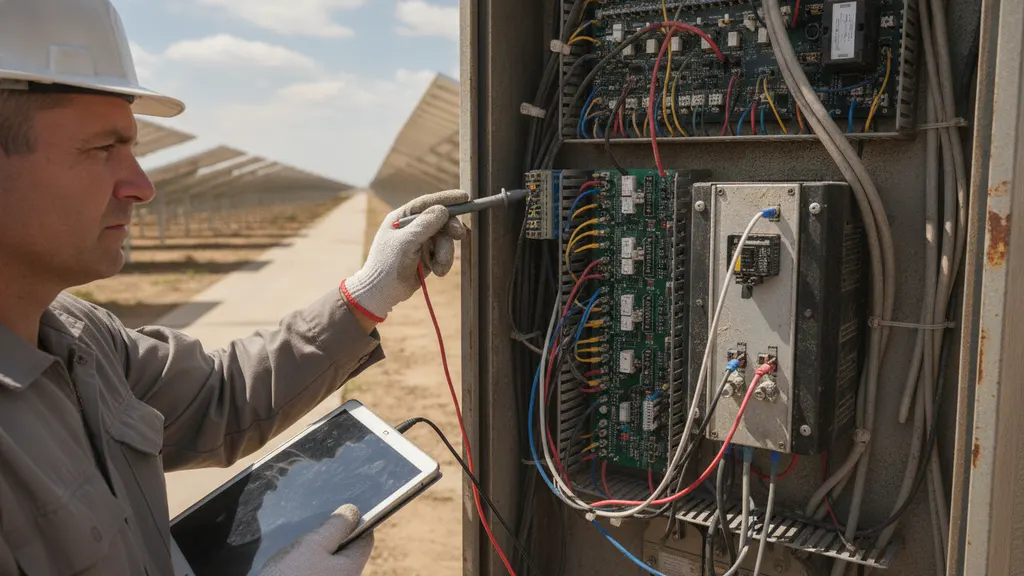
Phased upgrade roadmap for a modern solar plant SCADA system
A working roadmap covers 18 to 24 months and runs in five phases. REIG does not recommend forklift replacement on producing plants. The revenue lost during a 30-day full cutover usually exceeds the cost premium of phased work by a factor of three.
Phase 1: Network segmentation and DMZ build (months 1 to 3)
New firewall, separated OT VLAN, jump host, RADIUS authentication. Zero changes to control logic. This phase alone closes 40 to 50% of CIP v7 gaps and lets every later phase happen without exposing OT to corporate IT.
Phase 2: RTU and gateway refresh (months 4 to 8)
Replace legacy RTAC and gateway hardware with units that support signed firmware, role-based access, and TLS-encrypted DNP3 per IEEE 1815-2012. Stage one block at a time during pre-dawn low-output windows.
Phase 3: Historian, HMI, and OPC migration (months 9 to 14)
Move from Wonderware InTouch on Windows Server 2012 to a current platform on Server 2022. Highest-risk phase. Plan a 36-hour parallel-run window with both old and new historian collecting in tandem.
Phase 4: DAS and met-station integration (months 15 to 18)
Re-tag every sensor, validate against site irradiance and back-of-module temperature references per NREL measurement best practices.
Phase 5: Cyber hardening and SAT signoff (months 19 to 24)
Full SAT against IEEE 1815 plus an external penetration test. Detailed methodology in the commissioning section below.
Hardware modernization: RTUs, gateways, and network segmentation
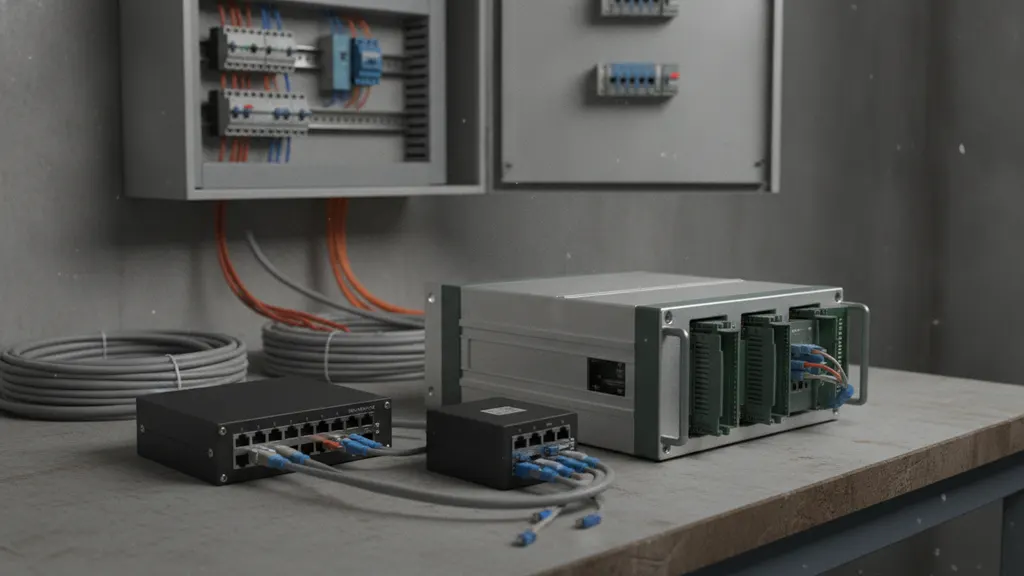
Hardware selection drives the next 10 years of operating cost on a solar plant SCADA system, so it deserves more attention than vendor data sheets get. REIG specs to four criteria for every device in the OT zone: signed firmware with a documented secure-boot chain, role-based access with RADIUS or LDAP integration, native syslog over TLS to a remote SIEM, and documented MTBF above 150,000 hours under solar farm thermal cycles.
That filter eliminates roughly 60% of the products marketed to utility-scale solar. The survivors include the SEL-3555 RTAC, the Phoenix Contact mGuard line at the firewall layer, and Hirschmann industrial switches for the L2 fabric. None are the cheapest option in their class. All meet NIST SP 800-82r3 guidance on industrial control system security.
Network design follows the Purdue Reference Model with explicit zone-and-conduit segmentation per IEC 62443-3-2. A typical 100 MW site ends up with five zones: corporate, DMZ, supervisory, control, and field. Each zone gets its own firewall ruleset, and traffic between zones flows only through documented conduits with logged sessions.
| Component | Pre-2018 vintage | Modern equivalent | Cost per 50 MW site |
|---|---|---|---|
| RTU / gateway | SEL-3530 R130 | SEL-3555 R145+ | $78,000 |
| OT firewall | Cisco ASA 5505 | Phoenix mGuard FL 4000 | $24,000 |
| HMI / historian | Wonderware on Server 2012 | AVEVA System Platform 2023 | $95,000 |
| L2 switching | Mixed Cisco / HP | Hirschmann MACH1040 | $42,000 |
Cybersecurity baselines under NERC CIP v7 and IEC 62443
Compliance and security are not the same thing. A solar plant SCADA system can pass a CIP audit on paper and still be one phishing email from a tripped POI breaker. Real hardening treats NERC CIP as the floor and IEC 62443 as the target.
The minimum baseline for any modernized stack:
- All field devices behind a stateful firewall with deny-by-default rules
- Multi-factor authentication on every interactive remote access path
- Centralized logging to a SIEM with at least 12 months of retention
- Quarterly vulnerability scans against an isolated test bench, never production
- Signed firmware verified at boot, with a documented chain of custody from vendor to plant
FERC Order 887 added internal network security monitoring requirements that come into force for high and medium-impact facilities. If your site falls under that threshold, your roadmap timeline is shorter than you think, and your auditors are about to ask uncomfortable questions about east-west traffic visibility.
DAS integration and historian architecture
Modern asset management depends on a clean Data Acquisition System tightly coupled to the solar plant SCADA system. The two systems have different jobs. SCADA handles control and protection at sub-second resolution. DAS handles analytics, performance reporting, and warranty claims at 1-minute or 15-minute granularity.
Keep them separate at the physical layer. A shared historian on a single Windows VM is fine. A shared PLC is a single point of failure that has cost more than one asset manager their morning coffee meeting. For a deeper walkthrough of where DAS and SCADA should integrate vs stay separate, see DAS vs SCADA for utility-scale solar.
For irradiance and met-station tagging, follow NREL POA (plane-of-array) and back-of-module reference practices. Out-of-the-box DAS templates from inverter OEMs almost always need to be re-tagged before they will produce a defensible PR (performance ratio) calculation that survives a warranty dispute.
Commissioning, FAT, and SAT validation
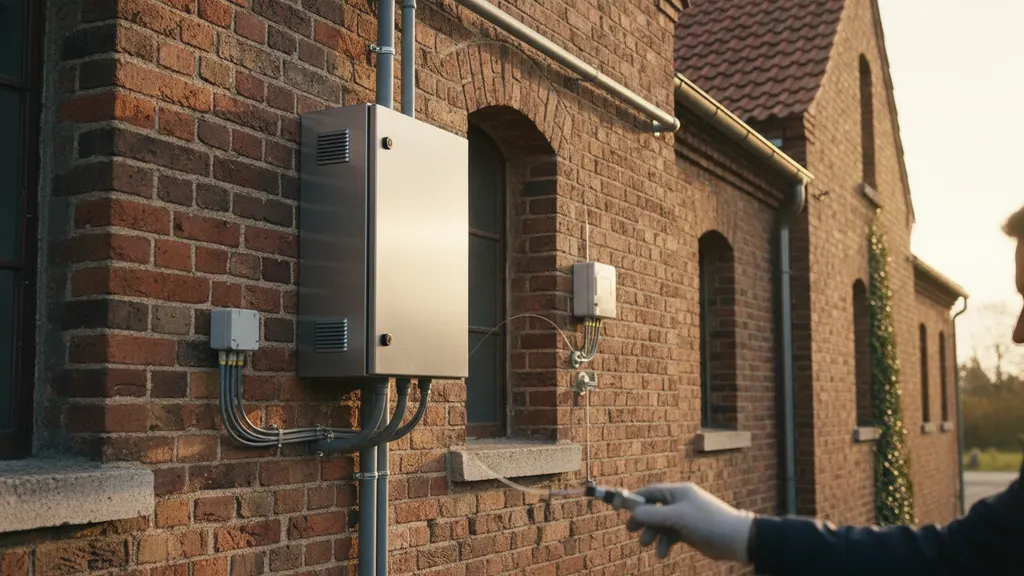
A Factory Acceptance Test is run at the integrator’s shop on a test rig. A Site Acceptance Test is run at the actual plant, against real inverters, real combiners, and real network gear. Skip the SAT and your solar plant SCADA system will surface protocol drift in production, usually at 14:00 on a peak-irradiance Thursday with the asset manager on the call.
REIG runs every modernization through a structured 5-day SAT:
- Day 1: Network and security validation. Port scans, MFA testing, firewall rule audit.
- Day 2: Protocol validation against IEEE 1815 DNP3, including secure authentication exchange.
- Day 3: Control loop testing. Each curtailment setpoint exercised through the full chain.
- Day 4: Historian and DAS data quality audit. A 24-hour soak with synthetic and real signals.
- Day 5: Operator training, runbook handover, signoff against the original FAT script.
The ISA-IEC 62443 series provides a useful SAT checklist template that REIG adapts per site. For a worked example see our SCADA commissioning FAT and SAT guide.
Frequently asked questions
How often should a solar plant SCADA system be modernized?
A solar plant SCADA system has a useful design life of 8 to 12 years. After that point, vendor firmware support ends, replacement parts become difficult to source, and the cyber threat model shifts faster than the hardware can adapt. EPRI’s 2023 fleet survey found that plants past their 10-year mark experienced 2.3x the false-trip rate of plants under 5 years old. Most operators plan a major modernization at year 10, with smaller firmware and patch refreshes every 18 months between full overhauls. Plants in regions with strict NERC CIP enforcement often move sooner since each audit cycle exposes gaps a legacy stack cannot close. See EPRI generation sector research.
What does a SCADA upgrade typically cost per MW for a 50 MW plant?
For a 50 MW utility-scale plant, REIG project data from 2023 and 2024 shows full SCADA plus DAS modernization runs $42,000 to $78,000 per MW, with hardware accounting for roughly 45%, software licenses 20%, and engineering and commissioning the remainder. Costs drop sharply on larger sites because fixed engineering costs amortize over more MW. The 200 MW reference cases sit closer to $36,000 per MW. On the low end, plants doing a network-and-cyber upgrade only often complete for $18,000 per MW. The EIA Electric Power Annual tracks fleet-level capex trends that mirror this pattern.
Can we upgrade a solar plant SCADA system without taking the plant offline?
Yes, on most plants. REIG’s 5-phase roadmap is designed to keep the plant producing throughout the entire 18 to 24 month program. The only required production windows are short pre-dawn or post-dusk cutovers for RTU swaps (typically 90 minutes per block) and a 6 to 8 hour historian failover window during Phase 3. Total revenue impact across a full modernization runs less than 0.1% of annual generation on a properly sequenced project. Forklift replacements, by contrast, take 30 to 45 days of full outage, which on a 100 MW asset means $1.8M to $2.7M of lost revenue per NREL benchmarking data.
How do NERC CIP and IEC 62443 differ for utility-scale solar?
NERC CIP is a US regulatory standard with binding penalties enforced by FERC. IEC 62443 is an international engineering standard that defines security capability levels for industrial control systems. For utility-scale solar above 75 MW that interconnects to the bulk electric system, NERC CIP compliance is non-optional and audited. IEC 62443 is voluntary but increasingly required by lenders, insurers, and offtake counterparties as a condition of financing. REIG specs new systems to IEC 62443 Security Level 3 since meeting that target by default keeps the plant ahead of every CIP revision through 2030. See our NERC CIP compliance walkthrough.