Solar SCADA commissioning: building the utility witness pack
A utility-scale plant cannot interconnect until the offtaker witness team signs the commissioning report. Solar SCADA commissioning is the gate between mechanical completion and revenue operation, and the witness pack is the document set that proves every signal, alarm, and trip path works as designed. Get the pack wrong and the utility refuses energization, holding the project off-grid for weeks while crews repeat tests.
What solar SCADA commissioning actually proves
Solar SCADA commissioning verifies that the plant supervisory control and data acquisition system reads the field correctly, reports to the utility correctly, and acts on dispatch commands within the time windows the interconnection agreement specifies. It is not a software test. It is proof that physical contactors trip when the SCADA tells them to.
The utility witness team treats the SCADA as the operating face of the plant. Every reading on their HMI must trace back to a calibrated transducer, every command must reach a real device, and every alarm must annunciate at both ends of the fiber. The witness pack documents that round trip for every point on the as-built tag list.
Per NERC Reliability Standard PRC-024-3, generating resources must demonstrate voltage and frequency ride-through within published curves. The plant SCADA must record those events at 30 ms resolution or better, and the commissioning team must prove the recorder logs match the test injection time-stamp to time-stamp.
Why the offtaker insists on physical witnessing
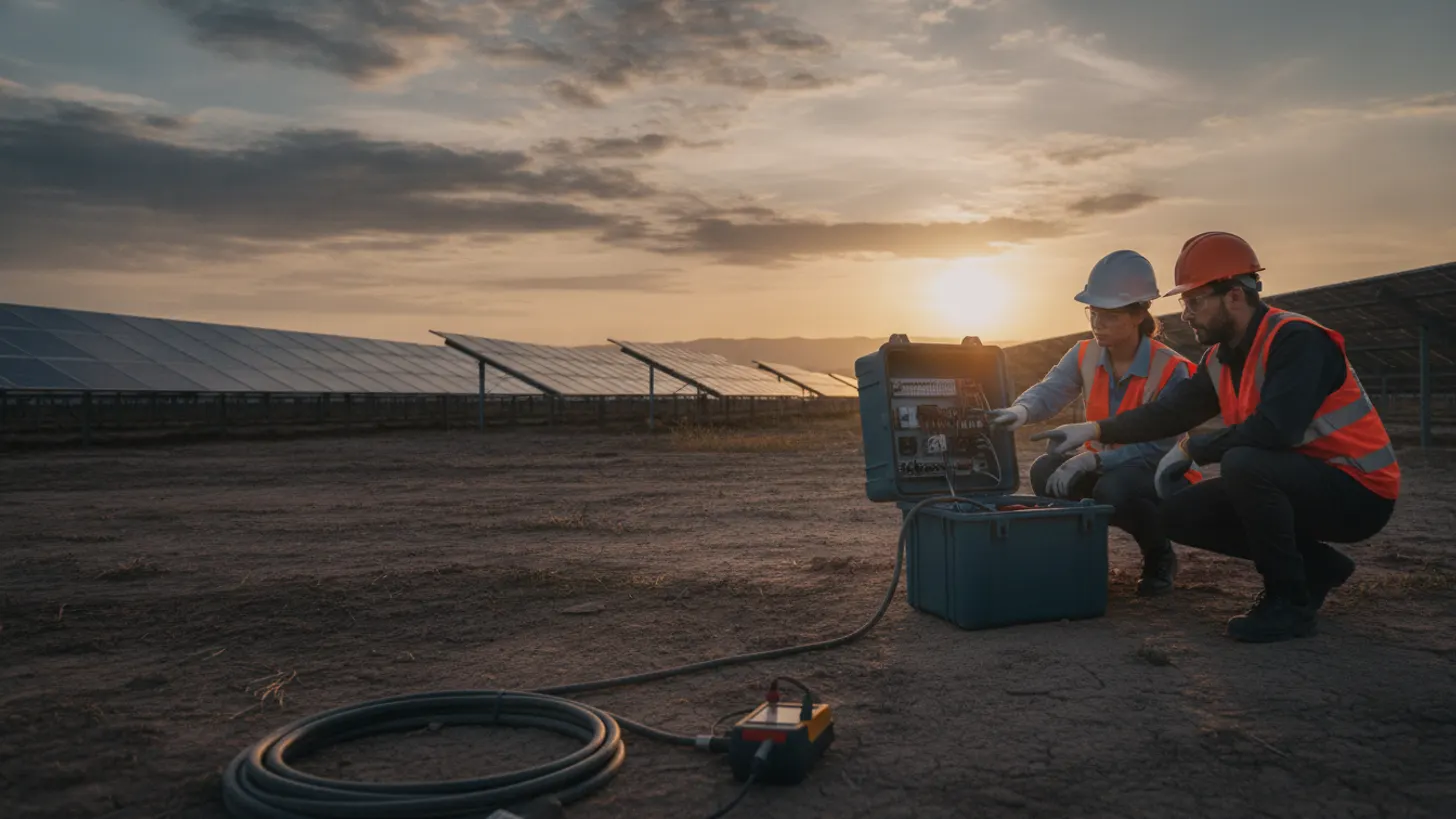
Remote attestation of point lists is not accepted by most balancing authorities. The witness engineer wants to see the test signal injected at the device, the corresponding value appear on the SCADA HMI, the command travel back from the control room, and the field device respond. That four-step verification is the only acceptance criterion that survives a later trip-event audit.
For a closer look at this, see Solar DAS commissioning: irradiance and weather QA standards.
There is a full breakdown of this topic in Solar Power Plant Controller: SCADA Integration, Setpoints, Limits.
We cover the details separately in Solar tracker SCADA integration: backtracking and tag map design.
There is a full breakdown of this topic in Solar Power Plant Controller: SCADA Integration, Setpoints, Limits.
There is a full breakdown of this topic in IEEE 1588 PTP Time Sync for Solar SCADA: GPS Clock Field Guide.
Inside the utility witness pack for solar SCADA commissioning
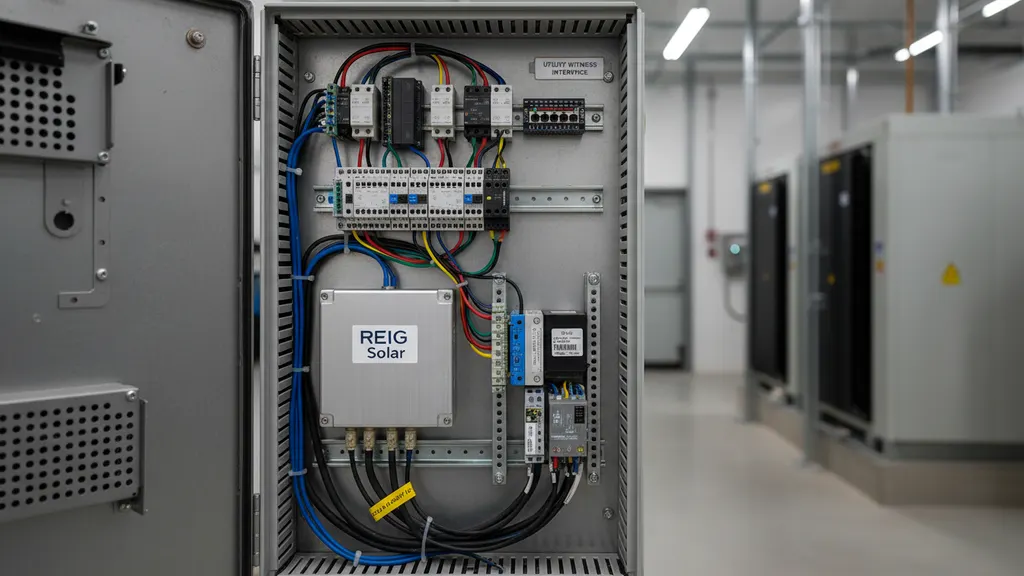
The solar SCADA commissioning witness pack is a structured binder of test results, drawings, and signed certificates the utility requires before energization. A typical pack for a 100 MW plant runs 1,800 to 2,400 pages and references roughly 3,500 tested points across the inverters, trackers, met stations, and substation relays.
Seven core documents the pack must contain
Different utilities have different cover-sheet requirements, but the underlying documents are common across PJM, ERCOT, MISO, and CAISO interconnection queues:
- Master point list with as-built tag mapping
- Point-to-point test logs with signed-off signatures
- Inverter response model and validation per NERC MOD-026-1
- Relay coordination test results with trip timing
- Communications loopback and failover test certificates
- HMI screenshot pack covering every alarm and dispatch screen
- Cybersecurity baseline per NERC CIP-002 through CIP-014
| Document | Pages | Owner |
|---|---|---|
| Master point list | 120 to 200 | SCADA integrator |
| P2P test logs | 900 to 1,400 | Commissioning lead |
| Inverter model | 40 to 80 | OEM |
| Relay tests | 200 to 300 | Protection engineer |
| Comms tests | 80 to 120 | SCADA integrator |
| HMI pack | 200 to 350 | SCADA integrator |
| Cyber baseline | 60 to 120 | OT security lead |
What gets left out and why it matters
The most common omission is the change-log entry for any tag the OEM renamed during firmware updates between factory acceptance and on-site witnessing. A second routine miss is the cyber baseline screenshot pack covering local-account audit settings. The witness team will accept a binder that has all seven documents but will reject a binder that has six.
For a closer look at this, see Solar SCADA Alarm Rules: Cut Nuisance Noise on Utility-Scale Plants.
We cover the details separately in Solar plant SCADA system modernization: a utility upgrade roadmap.
For a closer look at this, see Utility Scale Solar Monitoring vs SCADA: Roles and Layers Defined.
For a closer look at this, see SunSpec Modbus inverter: register maps for utility-scale solar plants.
For a closer look at this, see Solar SCADA cybersecurity NERC CIP: utility-scale compliance guide.
For a closer look at this, see Modbus TCP vs DNP3: solar SCADA protocol guide for utility plants.
For a closer look at this, see BESS SCADA Integration for Utility-Scale Solar Plants: A Field Guide.
There is a full breakdown of this topic in Solar Curtailment and AGC in Utility-Scale Solar Plant Operations.
We cover the details separately in Utility Scale Solar Monitoring vs SCADA: Roles and Layers Defined.
There is a full breakdown of this topic in Solar SCADA Alarm Rules: Cut Nuisance Noise on Utility-Scale Plants.
We cover the details separately in Solar drone thermal inspection: utility-scale hotspot field guide.
We cover the details separately in DC Ground Fault Detection in Utility-Scale Solar: NEC 690.5 Field Guide.
Pre-energization checks before solar SCADA commissioning starts
Pre-energization checks confirm the SCADA infrastructure is ready for solar SCADA commissioning to begin. Skipping any of them adds rework. The IEEE 1547-2018 standard governs interconnection performance, and its annex tables drive most of the static checks done before live tests start.
The pre-energization sequence covers fiber attenuation, switch configuration, time synchronization across PLCs, and SNMP polling from the utility RTU. IEEE 1547-2018 requires the inverter anti-islanding response to be witnessable from the SCADA event log, which means the recorder clock must be disciplined to GPS within 1 ms.
Time synchronization is the easiest test to fail
A plant with mismatched PTP and NTP domains will pass every individual device test and then fail the witness as soon as the engineer overlays the sequence of events. The fix is straightforward: every PLC, every protective relay, every digital fault recorder, and the SCADA historian must be slaved to the same GPS reference, and that reference must be verifiable from the witness HMI.
Point-to-point testing during solar SCADA commissioning
Point-to-point testing is the heart of solar SCADA commissioning. The integrator injects a known value at the field device, observes the corresponding value at the SCADA HMI, then issues a command from the HMI and confirms field action. Every analog input, digital input, analog output, and digital output gets four signed-off records.
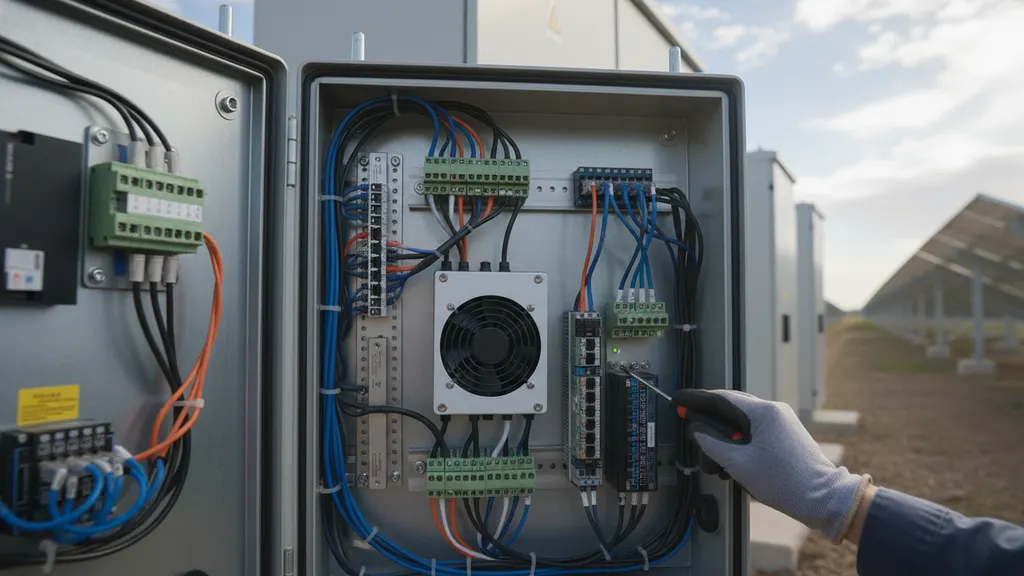
The work is methodical. Per ISA standards on industrial automation testing, the integrator builds a P2P matrix in advance and walks through it row by row with the witness engineer. Each row is timestamped, initialed, and noted with any deviation. A skipped row is treated as a failed row at audit time.
Analog scaling errors hide until the second pass
The most common deferred failure is an analog input that reads correctly at midscale and is off by 4 to 7 percent at the top of the range. The integrator should inject 0, 25, 50, 75, and 100 percent of full scale at every analog input rather than accepting a single midscale reading. NREL 2023 utility-scale commissioning guide calls this out as the leading cause of post-commercial-operation discrepancies.
There is a full breakdown of this topic in Solar DC cable insulation testing: HIPOT and megger commissioning guide.
NERC and FERC documentation requirements
Compliance shapes every solar SCADA commissioning package. NERC requires generator owners to file model data and validation results to the regional reliability coordinator within set windows. FERC Order 901 set new inverter-based-resource performance requirements that change what the witness team checks during commissioning.
Per FERC Order 901, inverter-based resources must demonstrate post-disturbance ride-through and frequency support. The commissioning team has to prove the SCADA captures the response curves at high enough resolution, typically 30 to 60 samples per second on terminal voltage and frequency.
Model verification under MOD-026 and MOD-027
MOD-026-1 covers excitation model verification and MOD-027-1 covers turbine-governor models. For solar plants the analog is the inverter dynamic response and the plant controller reactive power loop. The witness pack must include a step-change test result showing the plant reactive output follows the dispatch within the four-second response window EPRI documents in its 2022 plant controller benchmark.
Common rejection causes and corrective actions
First-attempt witness rejections cluster around five categories. NREL 2023 interconnection study found that 31 percent of rejected commissioning attempts failed on communications, 22 percent on point list mismatches, 18 percent on time sync, 15 percent on inverter model gaps, and 14 percent on relay tests.
Communications failures are usually fiber or VLAN
Communications rejections almost always trace to one of three causes: dirty fiber connectors at the substation patch panel, a misconfigured VLAN on the OT switch, or a missing entry in the utility RTU configuration. Cleaning fiber and re-running an attenuation test resolves about half of them on site, and the rest require a coordination call with the utility operations engineer.
Point list mismatches mean the as-built drifted
The most common point list mismatch is a tag the OEM renamed in a firmware update and the SCADA integrator did not track. The corrective action is a documented change-control review with the OEM release notes, plus a re-run of the affected P2P rows.
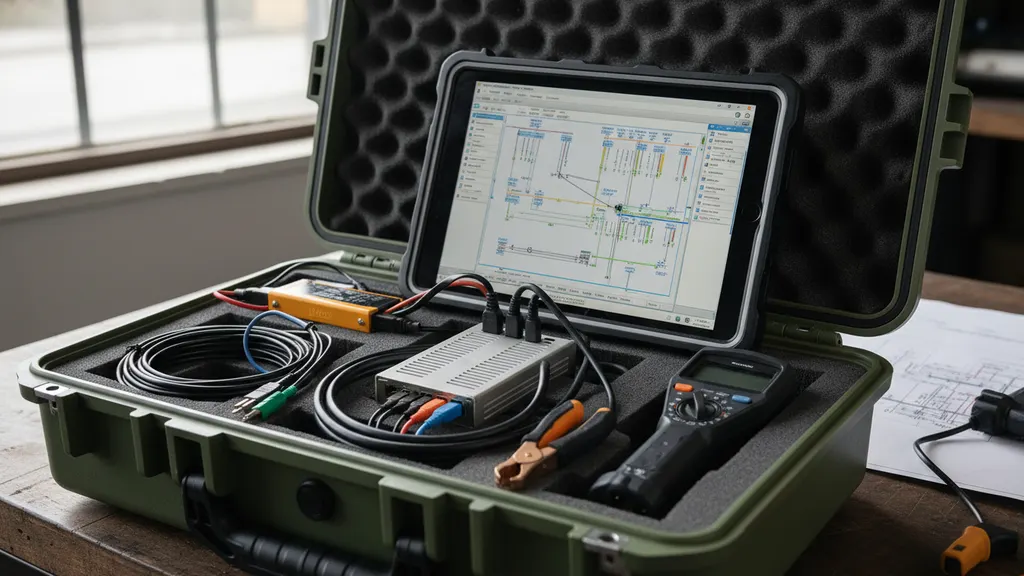
For background on broader plant patterns, see our internal note on SCADA versus DAS architecture choices and the related guide on utility-scale interconnection checklists. The DOE utility-scale solar program page publishes background on field commissioning labor benchmarks, and our deeper write-up on MOD-026 inverter model verification covers the dynamic test sequence.
Frequently asked questions
How long does solar SCADA commissioning take on a utility-scale plant?
A 100 MW solar project typically runs 4 to 7 weeks of on-site commissioning work once mechanical completion is signed. The witness portion itself is usually 3 to 5 days of utility presence at the end of that period, with the rest going to pre-witness testing and document assembly. Larger plants scale roughly linearly with inverter count rather than total megawatts, since the per-inverter signal count dominates the work. Per EPRI 2022 plant controller benchmark, commissioning labor averages 0.8 to 1.2 person-hours per inverter for a well-prepared site.
Who owns the utility witness pack after commercial operation?
The asset owner owns the pack as a permanent operating record. The SCADA integrator and the commissioning lead deliver the pack as part of project closeout, but the binder lives with the plant compliance file and is referenced any time a NERC audit, a relay setting change, or a tag rename happens after the commercial operation date. Per NERC compliance guidance, the records must remain available for the life of the asset and produced on request during a spot check.
Can solar SCADA commissioning be done remotely?
Parts of pre-witness testing can be done remotely, but the utility witness itself is on-site for every plant our team has commissioned. The witness engineer wants to see test signal injection at the device terminal, observe the SCADA HMI in the control room, and walk the substation. Remote attestation is sometimes accepted for software-only changes after commercial operation, but not for first-energization witnessing. NREL 2023 guidance treats on-site witnessing as the default for inverter-based resources above 20 MW.
What happens if the witness team rejects the commissioning?
A rejection puts the plant back on the utility schedule queue, which typically adds 2 to 6 weeks before a re-witness can be booked. The corrective action plan is filed with the regional reliability coordinator, the failing tests are re-run, and a focused re-witness covers only the rejected items. EPRI 2022 benchmark estimates each re-witness mobilization costs roughly $14,000 to $22,000 in utility and integrator labor before the plant pays its own crew callout fees.