Solar tracker SCADA integration: backtracking and tag map design
Wood Mackenzie 2024 puts single-axis trackers at more than 80 percent of new utility-scale PV in North America, and every one of those plants needs solar tracker SCADA integration that the power plant controller (PPC) and O&M team can actually trust. Tracker NCUs from Nextracker, Array Technologies, and FTC Solar each expose Modbus maps, backtracking variables, and stow command tags differently. A misaligned tag map shows up at commissioning as missed setpoints and false alarms for years afterward.
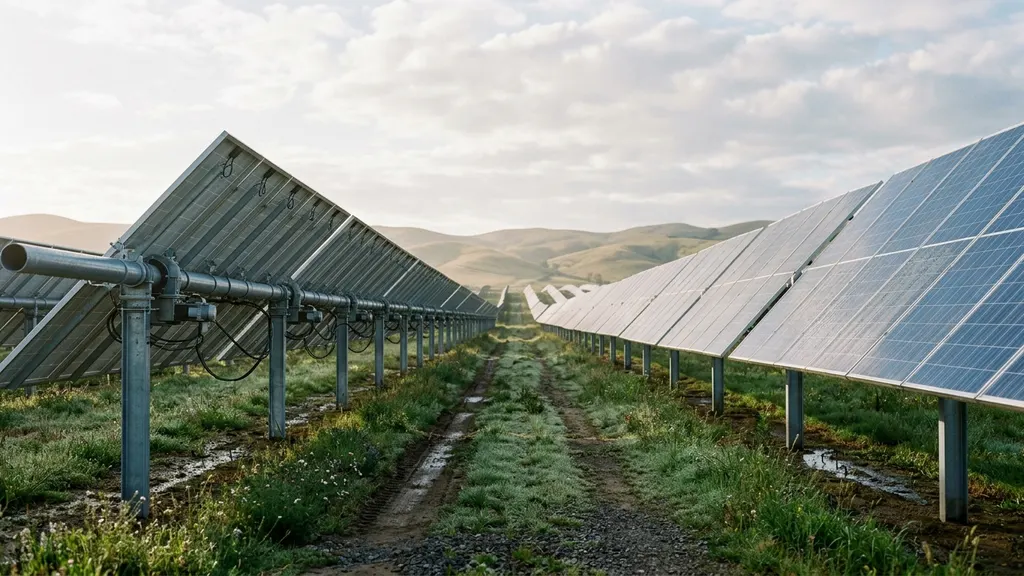
Solar tracker SCADA integration starts at the NCU
Solar tracker SCADA integration begins the moment the plant Modbus TCP poll maps vendor register offsets to a consistent tag namespace. Three NCU architectures dominate North American utility-scale sites, and each publishes a different register map with different scaling factors, command verbs, and fault bit definitions. A register offset error left uncorrected in that map will follow the plant into production and corrupt years of historian data.
Each single-axis tracker row carries a Network Control Unit, the NCU, that runs the actuator, reads the row-level inclinometer, and answers to a higher tier controller. Nextracker NX Horizon rows report through a Local Controller and a String Combiner Box before they reach the plant Modbus TCP poll. Array Technologies DuraTrack rows talk to a Master Controller that aggregates rows by combiner block. FTC Solar Voyager uses Voyager Pro hardware with its own ZigBee mesh back to a gateway. Every vendor documents a published Modbus register map, but the units, scaling, and command verbs differ.
| Tracker system | Communication protocol | Aggregation tier | Gateway type | Modbus register-map access |
|---|---|---|---|---|
| Nextracker NX Horizon | Modbus TCP | Local Controller + String Combiner Box | Ethernet | Published map, vendor-signed before factory acceptance |
| Array Technologies DuraTrack | Modbus TCP | Master Controller per combiner block | Ethernet | Published map, released at project award |
| FTC Solar Voyager | ZigBee mesh to Modbus TCP | Voyager Pro gateway | ZigBee to Ethernet | Vendor-supplied at design kick-off |
Strong solar tracker SCADA integration begins with a side-by-side register comparison: which tag carries the commanded angle, which tag carries the measured angle, which tag is the row health bit, and how each one scales to engineering units. According to the NREL Solar Energy Technologies Office field guidance, the plant SCADA poll loop should treat tracker rows as first-class assets with their own historian tags, not roll them up into a single block status. That choice protects future analytics. Row-level performance ratio cannot be computed if the SCADA only stored a block average. The mapping table belongs in the plant Functional Description Document, signed by the tracker vendor before factory acceptance. Many teams now align the tracker map with the inverter map covered in our SunSpec Modbus inverter guide so the historian schema stays clean across asset classes.
We cover the details separately in Solar SCADA cybersecurity NERC CIP: utility-scale compliance guide.
We cover the details separately in How solar SCADA reduces unplanned downtime at utility-scale plants.
There is a full breakdown of this topic in Solar SCADA Failover Architecture for High Availability Plants.
We cover the details separately in SunSpec Modbus inverter: register maps for utility-scale solar plants.
There is a full breakdown of this topic in Solar SCADA commissioning: building the utility witness pack.
For a closer look at this, see Solar Power Plant Controller: SCADA Integration, Setpoints, Limits.
For a closer look at this, see Solar plant SCADA system modernization: a utility upgrade roadmap.
We cover the details separately in Solar SCADA Alarm Rules: Cut Nuisance Noise on Utility-Scale Plants.
For a closer look at this, see Utility Scale Solar Monitoring vs SCADA: Roles and Layers Defined.
For a closer look at this, see BESS SCADA Integration for Utility-Scale Solar Plants: A Field Guide.
For a closer look at this, see Modbus TCP vs DNP3: solar SCADA protocol guide for utility plants.
For a closer look at this, see Solar Power Plant Controller: SCADA Integration, Setpoints, Limits.
We cover the details separately in IEEE 1588 PTP Time Sync for Solar SCADA: GPS Clock Field Guide.
We cover the details separately in Utility Scale Solar Monitoring vs SCADA: Roles and Layers Defined.
We cover the details separately in Solar SCADA Alarm Rules: Cut Nuisance Noise on Utility-Scale Plants.
We cover the details separately in Solar plant AC grounding and ground grid design: IEEE 80 field guide.
Backtracking algorithms inside solar tracker SCADA integration
Backtracking keeps adjacent tracker rows from shading each other when the sun sits low in the sky. The NCU calculates the maximum useful tilt for the current sun position, the row spacing, and the module width. Field data captured by Sandia National Laboratories shows backtracking typically engages once sun elevation drops below the row-to-row shading threshold, which lands around 22 to 25 degrees for a 0.40 to 0.45 ground coverage ratio. The plant power plant controller reads two angle tags at every poll: the tracking-mode angle the NCU computed from astronomy, and the actual measured angle from the inclinometer.
Solar tracker SCADA integration matters here because the delta between those two angle tags is the row tracking error. The plant historian trends it, and the O&M team gets a clean signal when a row stops following the sun. Many operators tie a tracking error above 2 degrees for more than 10 minutes to an alarm class 3 ticket, which mirrors guidance in the EPRI solar plant performance reporting framework. Backtracking inputs also include the local pyranometer reading, because under heavy diffuse light the controller may flatten rows even when geometry would still allow some tilt. Ground coverage ratio drives the geometry: tighter GCR means earlier backtracking onset and more aggressive flattening through the day.
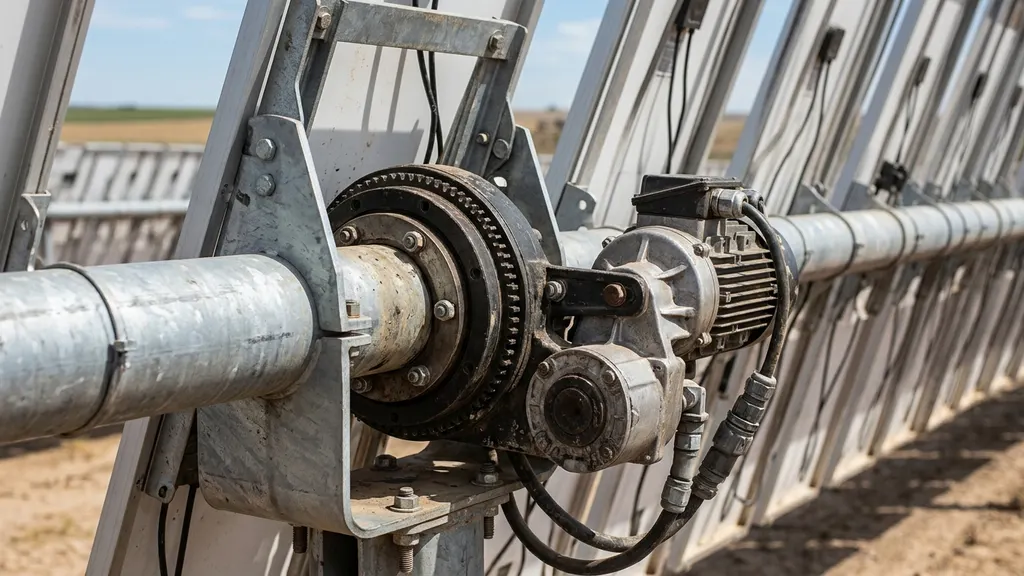
Fault tags every solar tracker SCADA integration must expose
The plant controller cannot react to what it cannot see. Solar tracker SCADA integration earns its keep when the row-level fault dataset reaches the PPC fast enough to participate in dispatch logic. The bare minimum tag list per row includes motor over-current, motor under-current, drift fault, end-of-travel limit, communication timeout, inclinometer mismatch, battery low, and current stow state.
According to the IEC 61724-1 photovoltaic monitoring standard, plant monitoring should map each of these to a standard quality flag so historians can mark suspect data. The PPC also needs visibility into the active operating mode: tracking, backtracking, manual, hail stow, wind stow, or snow stow. A row that switches into hail stow during a curtailment event will not respond to Automatic Generation Control (AGC) setpoints, and the dispatcher has to know that. Many tracker blocks add a row-level performance index too, a comparison of expected versus measured energy that triggers a soiling or shading work order through the Computerized Maintenance Management System (CMMS). Tag naming follows ISA-5 conventions so the alarm management workflow described by the ISA-18.2 alarm rationalization standard plugs in cleanly. Our breakdown of monitoring versus SCADA roles covers the layered fault routing in more detail.
Stow modes that override PPC setpoints
Stow logic sits above any tracking command and overrides PPC setpoints whenever the trigger fires. Wind stow has decades of design history. Most controllers move rows to 0 degrees once a 1-minute average wind speed exceeds a configured threshold, often 20 to 25 m/s. Snow stow tilts rows to the maximum angle so panels shed snow naturally. Hail defense arrived later and operates differently from wind or snow stow.
Nextracker NX Horizon Hail Pro uses a weather API and an onboard model to detect incoming hail and move modules to a 60 degree defensive tilt within minutes of forecast detection. Array Technologies SmarTrack hail response works the same way. Both products publish a hail stow state tag to the SCADA, and good solar tracker SCADA integration ties that tag into the operator HMI so the control room sees the override in real time. Wind stow recovery is also a tag: the system holds in stow for a configurable cooldown after wind drops below threshold, usually 5 to 15 minutes, before the PPC can resume dispatch. The U.S. Department of Energy Solar Energy Technologies Office tracks hail loss claims across the fleet.
Commissioning checklist for tracker row alignment and zenith verification
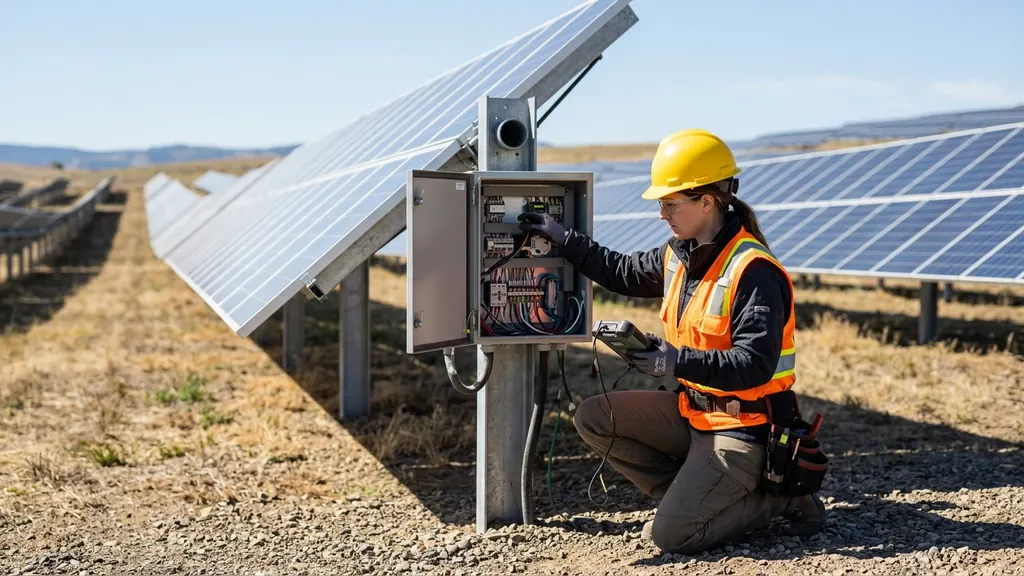
Commissioning sets the tracker block up for years of clean data, and shortcuts during commissioning show up as bad analytics forever. The recommended sequence: confirm the GPS lock and time sync at every NCU; verify the survey azimuth and tilt of the torque tube against the as-built plot plan; run a zenith verification at solar noon to confirm the inclinometer reads 0 degrees within a half-degree of true horizontal; then exercise a full east-to-west sweep with the PPC issuing commanded angles through the SCADA path.
Solar tracker SCADA integration testing during this phase catches Modbus register offset errors that would otherwise survive into production. REIG has commissioned tracker blocks at more than 20 utility-scale sites across the Carolinas, Texas, and the Southwest, and every project that ran past its commissioning deadline traced the delay to an inclinometer mismatch or a Modbus timeout that end-of-line testing would have caught. The test record belongs in the utility witness pack alongside the inverter SAT and the met station calibration. The North American Electric Reliability Corporation reliability standards treat dispatchable assets as part of the bulk electric system once they pass 75 MW, and a tracker block that cannot follow AGC setpoints exposes the plant to compliance findings. The closeout punch list should include row-by-row backtracking verification at sunrise and sunset on at least two clear days.
Frequently asked questions
How do tracker NCUs communicate with plant SCADA?
Tracker NCUs from Nextracker, Array Technologies, and FTC Solar publish Modbus TCP register maps that the plant SCADA polls through the field network. Nextracker NX Horizon rows feed a Local Controller and a String Combiner Box before the data lands at the SCADA. Array Technologies DuraTrack rows aggregate at a Master Controller. FTC Solar Voyager rides on a ZigBee gateway. The plant integrator builds a tag mapping table that converts each vendor map into the SCADA tag namespace per IEC 61724 photovoltaic monitoring guidance. Each row stays independently addressable for analytics and root-cause work.
What is backtracking and why does it matter for plant output?
Backtracking is the controller behavior that limits row tilt at low sun elevation so adjacent rows do not shade each other. The NCU calculates the maximum useful tilt from the sun position, row spacing, and module width. Sandia field testing shows the engagement threshold lands around 22 to 25 degrees sun elevation for a 0.40 ground coverage ratio. Without backtracking, the array would lose meaningful morning and evening generation to row-to-row shading. With backtracking active, the NREL O and M reference reports total daily energy gains of 2 to 5 percent.
Which row-level fault tags belong in the plant controller dataset?
At minimum, the PPC needs motor over-current, motor under-current, drift fault, communication timeout, inclinometer mismatch, battery low, current stow state, and active operating mode for every tracker row. Solar tracker SCADA integration should also expose the tracking error, the difference between commanded angle and measured angle. The ISA-18.2 alarm rationalization standard recommends grouping these into alarm priority classes so the operator sees only actionable events. Most operators tie a sustained tracking error above 2 degrees to a maintenance ticket within the CMMS workflow for a same-week truck roll.
How do hail stow and wind stow override SCADA setpoints?
Hail and wind stow modes sit above the PPC dispatch logic. When the trigger fires, the tracker controller drives the row to a defensive angle regardless of any commanded setpoint from AGC. Nextracker NX Horizon Hail Pro and Array Technologies SmarTrack use a weather API and an onboard model to move modules to a 60 degree defensive tilt within minutes of forecast detection per vendor documentation. The plant SCADA reads a stow state tag, and the operator HMI shows the override. The U.S. Department of Energy Solar Energy Technologies Office tracks hail damage data across the operating fleet.
What is the recommended commissioning sequence for a tracker block?
The clean sequence is GPS lock confirmation at every NCU, time sync verification, survey azimuth and tilt check against the as-built drawings, zenith verification at solar noon, then a full east-to-west sweep commanded by the PPC through the SCADA path. The witness pack should capture row-by-row backtracking verification on at least two clear days at sunrise and sunset. The closeout document references the IEEE 1547 interconnection standard for behaviors visible to the grid operator. Skipping any of these steps creates analytics blind spots that survive into production for years.
How does solar tracker SCADA integration interact with plant cybersecurity?
Tracker NCUs and combiner controllers sit inside the plant electronic security perimeter, and any field network that touches them falls under the NERC CIP reliability standards once the plant clears the 75 MW threshold. Strong integration practice includes air-gapping vendor remote-access ports, restricting Modbus TCP to a dedicated VLAN, and logging every command write at the SCADA historian. Solar tracker SCADA integration also means feeding tracker logs into the plant SIEM so anomalous angle commands surface to the security team. NIST SP 800-82 provides additional industrial control system guidance for operators.