Solar substation IEC 61850 GOOSE messaging: relay protection guide
IEC 61850-5 sets a 3 millisecond ceiling for high-speed GOOSE trip messages, and interconnection substations at utility-scale solar plants are being built to that clock. IEC 61850 solar substation GOOSE protection replaces copper trip wiring between bus differential relays, breaker failure logic, and inverter shutdown, cutting fault clearing time and simplifying rebuilds. REIG Solar has designed and commissioned IEC 61850 protection schemes on more than 600 MW of utility-scale solar across North and South Carolina. This field guide walks the standards, the SCL files, the commissioning traps, and the IEC 62351 controls a protection engineer needs before energization.
What GOOSE messaging solves for IEC 61850 solar substation GOOSE protection
Answer first: GOOSE (Generic Object Oriented Substation Event) messaging replaces copper trip wiring between protective relays with fast Layer 2 multicast Ethernet frames. One publishing IED broadcasts a state change, and every subscriber IED processes it inside milliseconds. In IEC 61850 solar substation GOOSE protection, that speed is what makes shared-LAN bus differential and breaker failure schemes viable on utility-scale sites.
IEC 61850-5 defines seven performance classes for message transfer. Class T6 governs high-speed protection and mandates a 3 millisecond end-to-end latency budget for events such as bus differential tripping and breaker failure. GOOSE frames carry no application-layer acknowledgement and rely on a retransmission burst (typically 1, 2, 4, 8, 8, 8 ms doubling) so a subscriber that missed one frame still receives the state change well inside the T6 window.
Compared with hardwired schemes, GOOSE lets a solar interconnection substation deliver more protection interlocks with fewer copper cores. That matters at plant scale, where a 200 MW project can have 40+ IEDs across two collector substations and one plant control building. Every hardwired trip you retire is one less cable pulled, one less relay contact aging in the switchgear yard, and one less commissioning loop check to schedule. EPRI substation automation research flags reduced copper as a durable cost lever across projects.
For a closer look at this, see IEC 61850 Solar Substation: GOOSE, MMS, and Sampled Values Guide.
We cover the details separately in Solar farm lightning protection IEC 62305 and SPD field guide.
For a closer look at this, see Solar substation transformer differential protection: IEEE C37.91 guide.
For a closer look at this, see Protection relay testing solar substation secondary injection guide.
Designing the station bus and redundancy scheme for solar relay protection
Answer first: the reference stack for an IEC 61850 solar substation GOOSE protection design uses a dual-redundant station bus on PRP or HSR for sub-1 ms switch-failure recovery, a GPS-disciplined PTP grandmaster holding offset under 200 nanoseconds, a process bus for sampled-value merging units, and IEDs from at least two vendors interoperating through published ICD files.
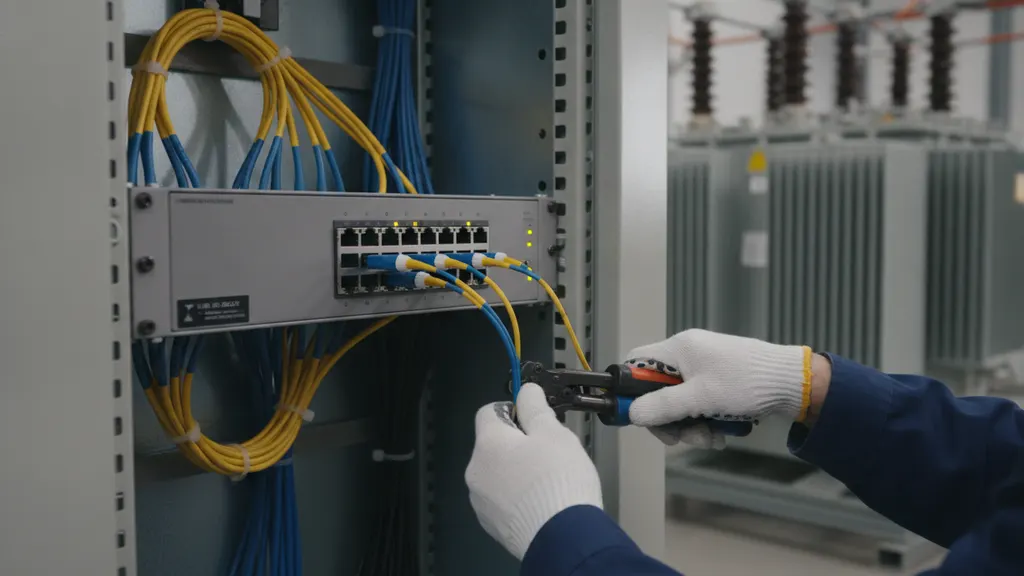
The station bus carries GOOSE, MMS reporting, and file transfer. For high-availability plants, use IEC 62439-3 Parallel Redundancy Protocol (PRP) with two physically independent LANs so a switch failure does not drop a single trip frame. Latency-critical GOOSE traffic gets VLAN priority 4 to 7 with dedicated multicast MAC addresses so it never queues behind SCADA polling. Multicast Ethernet is not broadcast, and switches must be configured to prune GOOSE to subscriber ports only or the LAN saturates as IED count grows past thirty devices.
Time distribution matters because sampled values and merging units depend on sub-microsecond IEEE 1588 PTP grandmaster accuracy. Solar sites typically deploy a GPS-disciplined boundary clock at the site perimeter and transparent clocks on every switch. If PTP offset drifts past 1 microsecond, protection quality degrades before the SCADA HMI shows any alarm, so NREL SCADA research recommends continuous PTP offset logging as a plant KPI.
SCL configuration files for IEC 61850 solar substation GOOSE protection IEDs
Answer first: Substation Configuration Language (SCL) files, expressed in XML per IEC 61850-6, are the machine-readable blueprint of an IEC 61850 solar substation GOOSE protection scheme. Four file types (ICD, SSD, SCD, CID) each represent a different lifecycle stage and must stay in sync from factory acceptance testing through operations.
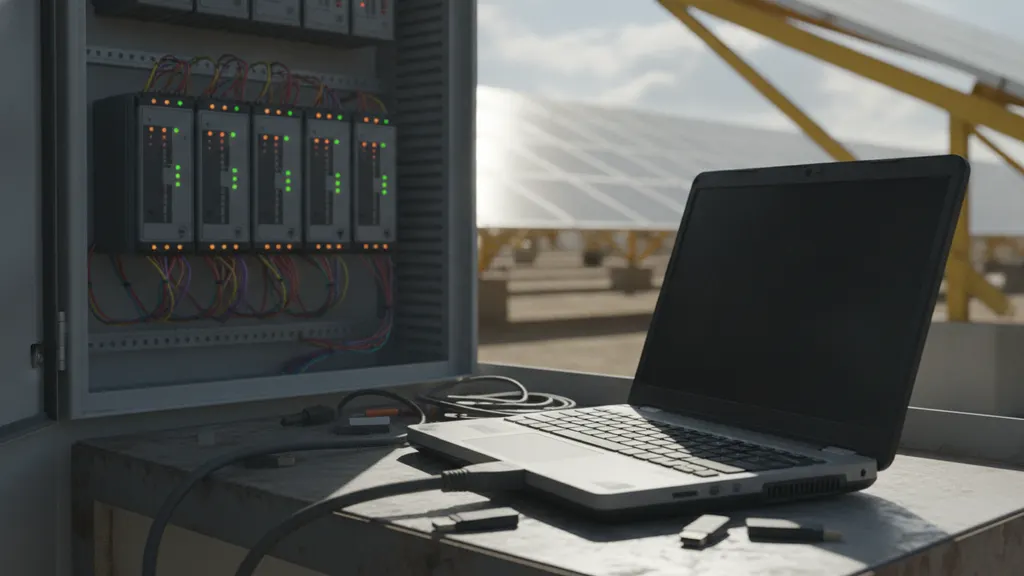
ICD (IED Capability Description) is the vendor published capability file for a specific relay firmware. SSD (System Specification Description) is the plant designer single-line and function specification with no vendor detail. The system integrator merges ICDs against the SSD in an IEC 61850 system configurator tool to produce the SCD (Substation Configuration Description), which becomes the single source of truth for GOOSE publisher and subscriber mappings, dataset content, and network addresses.
The CID (Configured IED Description) is the extracted per-IED file downloaded to each relay. IEC 61850 Edition 2.1, published in 2018, expanded SCL to cover distributed energy resource logical nodes so solar inverter and plant controller data models can round-trip through the same tool chain. Version-control the SCD in git or a purpose-built substation asset management system per IEEE C37.239; an out-of-sync SCD is how GOOSE subscribers silently drop trip frames after a relay firmware update.
| File | Owner | Contents | Stage |
|---|---|---|---|
| ICD | IED vendor | Capabilities, logical nodes, data model | Bid / preselection |
| SSD | Owner engineer | Single-line, functions, vendor-neutral | Design |
| SCD | System integrator | GOOSE map, datasets, addresses | Engineering |
| CID | Integrator to IED | Per-IED configured file | Commissioning |
Commissioning GOOSE-based protection schemes during energization
Answer first: commissioning an IEC 61850 solar substation GOOSE protection scheme requires end-to-end testing that injects a real fault current at the CT and VT inputs of the publisher IED and measures the actual GOOSE frame arrival at every subscriber, then verifies the subscribed trip contact operates the correct breaker inside the T6 budget.
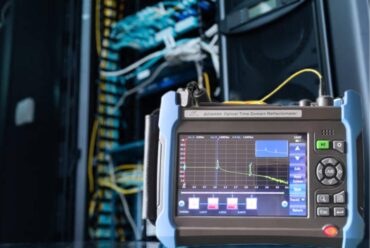
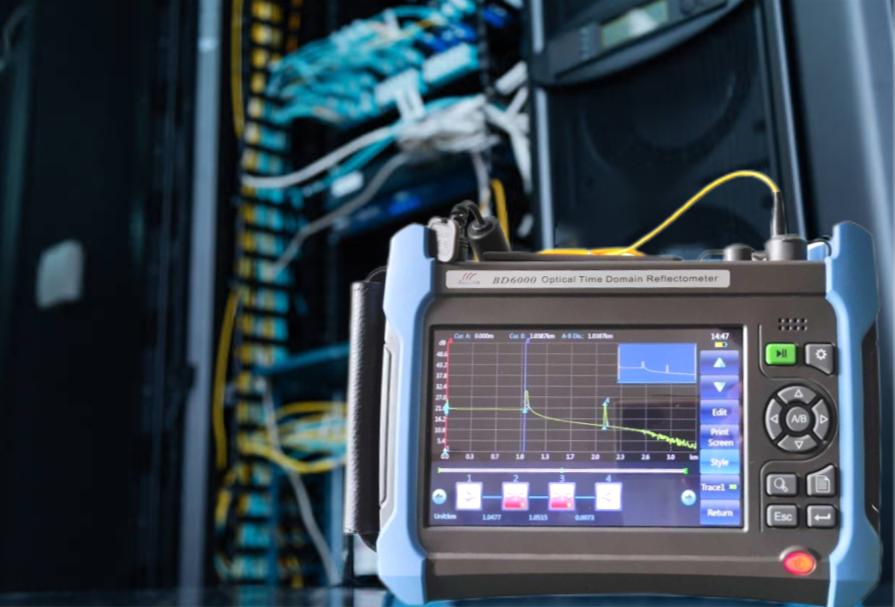
The standard test workflow starts with GOOSE sniffer verification: capture published messages with a network analyzer loaded with the IEC 61850 dissector, confirm the dataset content matches the SCD, and confirm the multicast MAC address and VLAN ID. Next, use an OMICRON CMC 356 or equivalent relay test set to inject a phase-to-ground fault at the busbar CT inputs, capture the timestamp of the GOOSE state change (bit stNum increment per IEC 61850-7-2), and measure the subscriber binary output pickup time against the IEC 61850-10 factory acceptance test procedure, clause 6. Round-trip time under 4 ms is a healthy commissioning result on a properly engineered station bus. Run the injection sequence for every publisher-subscriber pair defined in the SCD, covering both primary and fall-back signal paths, before closing the energization work package.
Document every GOOSE trip path in the utility witness pack with published dataset, subscriber IED, action taken, and measured latency. On a 240 MW North Carolina interconnection substation, REIG’s IEC 61850 solar substation GOOSE protection commissioning review found a VLAN priority mismatch during FAT; correcting priority from 4 to 6 brought round-trip GOOSE latency to 2.1 ms on the PRP station bus. NERC PRC standards and interconnection agreements increasingly require this record. NERC reliability guidance on substation communications treats undocumented GOOSE trips the same as untested hardwired trip circuits during post-event review.
IEC 62351 cybersecurity controls for IEC 61850 solar substation GOOSE protection
Answer first: IEC 62351 is the family of security standards that overlays authentication, encryption, and role-based access control on IEC 61850. IEC 62351-6 covers cryptographic signing of GOOSE and sampled values, and IEC 62351-8 covers role-based access control for engineering operations against IEC 61850 solar substation GOOSE protection assets.
Signed GOOSE frames add an HMAC to the reserved field, giving a subscriber a cryptographic check that the publisher is authentic. This closes the classic replay attack on flat station buses. Adoption is uneven because signing adds CPU load on legacy relays and can push against the 3 ms T6 budget, so many operators isolate GOOSE on a dedicated VLAN or physically separate LAN and apply MACsec at the switch instead. NIST cybersecurity framework guidance maps well to this defense-in-depth pattern.
For plants above the 75 MW NERC CIP threshold, IEC 61850 substation networks must align with NERC CIP requirements: electronic security perimeter, dial-in access controls, patch management, and event logging. Coordinate the IEC 62351 role definitions with the CIP-004 role-based access matrix during design so the same identities work across substation engineering tools and enterprise IAM. DOE grid cybersecurity guidance recommends threat modeling every published GOOSE dataset before energization.
Frequently asked questions
How fast is GOOSE messaging in IEC 61850 solar substation GOOSE protection systems?
IEC 61850-5 performance class T6 sets a 3 millisecond end-to-end transfer time budget for high-speed protection GOOSE messages. In a properly engineered dual-redundant station bus with managed switches, VLAN priority tagging, and PTP time sync, measured round-trip GOOSE latency on utility-scale solar substations typically sits between 2 and 4 milliseconds. Anything above 4 milliseconds points to switch queuing, wrong VLAN priority, or an oversubscribed link, and needs investigation per IEC 61850-5 clause 13. Achieving sub-3 ms results on every measured trip path requires GOOSE multicast VLAN priority set to 6 or 7 per IEEE 802.1Q, hardware multicast queuing enabled on every managed switch per IEC 61850-5 clause 13, and GPS-disciplined PTP grandmaster offset held under 1 microsecond.
What is the difference between SSD, SCD, ICD, and CID files?
All four are SCL files defined in IEC 61850-6, but they represent different points in the engineering lifecycle. ICD is the IED vendor capability file for one relay firmware. SSD is the owner system specification with no vendor content. SCD is the merged substation configuration produced by a system integrator, containing GOOSE publisher and subscriber maps, datasets, and addresses. CID is the per-IED configuration extracted from the SCD and downloaded to the relay. The SCD is the single source of truth and must be version controlled, per IEEE C37.239 guidance.
Do I still need hardwired trip circuits with IEC 61850 solar substation GOOSE protection?
For safety-critical trip paths such as transformer differential lockout, most utility interconnection agreements still require a hardwired backup regardless of GOOSE performance. NERC PRC standards do not yet fully accept unbacked GOOSE for high-consequence trips. GOOSE fits as the primary for speed-sensitive schemes such as bus differential and breaker failure, with hardwired 86 lockout relays retained as backup for transformer and reactor protection. The result is a shared-LAN scheme that meets the 3 ms budget for typical fault clearing while satisfying utility protection philosophy and NERC reliability guidance.
Which vendors interoperate reliably for GOOSE on solar plant SAS?
Interoperability is contract-driven, not brand-driven. Every major protection relay vendor publishes IEC 61850 ICD files, but subtle differences in dataset ordering, quality bits, and GOOSE burst timing show up during integration. Insist on IEC 61850 Edition 2.1 support with published IEC 61850-10 conformance certificates from an accredited lab. During factory acceptance testing, build a mixed-vendor test bench with publisher relays from Vendor A and subscriber relays from Vendor B, exchange the SCD, and confirm every subscribed signal appears with correct quality. Documented interop testing shifts warranty risk away from the plant owner.
How does IEEE 2030.5 relate to solar plant SAS communication layers?
They serve different layers. IEEE 2030.5 (Smart Energy Profile 2.0) is a distribution utility control protocol used for DER dispatch and Common Smart Inverter Profile (CSIP) compliance over the internet. IEC 61850, and specifically IEC 61850-90-7 DER models, cover the plant level over the substation LAN. Most utility-scale plants run IEC 61850 inside the fence for protection and control, and terminate IEEE 2030.5 at a plant controller gateway that maps CSIP commands into IEC 61850 setpoints on inverters and plant controllers. The two coexist rather than compete.
What cybersecurity is required for GOOSE on a utility-scale solar plant LAN?
At minimum: physical separation of the substation LAN from corporate networks, an electronic security perimeter per NERC CIP for plants above the 75 MW threshold, VLAN segregation of GOOSE traffic, and centralized logging of engineering access. IEC 62351-6 GOOSE signing adds a cryptographic check but should be piloted before broad deployment because signing overhead can affect the T6 3 ms budget on older IEDs. Many operators apply MACsec on the switching fabric instead, keeping GOOSE unsigned but ensuring the wire is protected. NIST framework guidance supports this layered approach.