
Solar Power Plant Controller: SCADA Integration Guide

Key Takeaways
- The solar power plant controller is the closed-loop device that owns active power, reactive power, voltage, and frequency at the point of interconnection. SCADA monitors and historizes. The PPC writes setpoints. They are different jobs in different latency bands.
- Most US ISOs dispatch AGC setpoints at a 4-second cadence, and the PPC has roughly 100 to 250 milliseconds to arbitrate and write commands to inverters. NREL field tests at a 300 MW PV plant showed regulation accuracy 24 to 30 points better than fast gas turbines, per the NREL First Solar AGC demonstration.
- IEEE 2800-2022, FERC Order 901 (October 19, 2023), and NERC MOD-026-2 (effective April 1, 2026) move PPC performance proof from optional to mandatory. MISO interconnection agreements signed after January 1, 2025 already reference IEEE 2800.
- NERC PRC-029-1 takes effect with the 2026 cutover and forces the PPC to keep inverters online through 56 to 64 Hz for 6 seconds with ROCOF up to 5 Hz per second. SCADA historians sampling slower than 100 ms on POI signals create audit gaps.
- US utility-scale solar reached about 279 GWdc cumulative installed capacity by year-end 2025 per SEIA, with 34.7 GWdc added in 2025 alone. Every plant added past this point has to commission against the new IBR rules on day one.
The solar power plant controller decides whether a plant earns or burns the next megawatt-hour of dispatch. On a typical 180 MW utility-scale PV project we audit in ERCOT, the Human-Machine Interface (HMI) operator screen kicked off an unrelated diagnostic poll on the same Modbus segment as the active power command path during summer peak. The inverters answered the previous AGC setpoint for one full cycle before the next one landed. The plant did not trip. It just dispatched wrong for 4 seconds, and the settlement penalty arrived in the next monthly statement. This guide is for project managers, commissioning leads, SCADA engineers, and O&M teams running utility-scale PV in the United States interconnection footprint who need the solar power plant controller and SCADA layer to behave as one defensible system from day one.
The solar power plant controller translates a utility command into a fleet of inverter actions. It is not SCADA. SCADA monitors the plant. The PPC controls it. Treating them as one system is the most common architectural mistake REIG sees in proposal reviews, and it is the mistake that turns into the post-COD settlement disputes nobody wants to defend. About 279 GWdc of utility-scale PV nameplate is online in the US as of year-end 2025 per SEIA's 2025 Year in Review, with 34.7 GWdc added during the year, and projects in interconnection queues now sign agreements that reference IEEE 2800-2022 and NERC PRC-029-1 by name. Therefore, the architecture decisions made on the next plant you commission have to land correctly the first time.
Solar Power Plant Controller vs Solar SCADA: What Each Actually Does
The solar power plant controller is a deterministic industrial computer running closed-loop logic in the 100 to 250 millisecond cycle band. Its job is simple to describe and hard to deliver: read the setpoint at the POI, decide how to split that setpoint across the inverter fleet, write commands to each inverter block, and verify the response matches the command before the next cycle begins. SCADA runs at human-time scales. It logs every device every 1 to 5 seconds, builds a historian, runs alarm rationalization per ANSI/ISA-18.2, and gives the operator a screen. SCADA does not own setpoints. The PPC does.
The boundary between the two systems is consistent across hybrid plant controller documentation REIG has reviewed at proposal stage: the PPC sits between the substation Remote Terminal Unit (RTU) and the inverter array. SCADA sits above the PPC and reads everything. Mixing the two layers, putting setpoint logic into the SCADA HMI or trying to historize PPC arbitration in the SCADA tag database, breaks under AGC load. The controller and SCADA must be designed as two cooperating systems with one shared time reference and one shared tag dictionary, never as one merged platform.
| Dimension | Solar Power Plant Controller | SCADA |
|---|---|---|
| Primary job | Closed-loop setpoint control at POI | Monitor, historize, alarm, present |
| Cycle time | 100 to 250 ms deterministic | 1 to 5 s (operator-relevant) |
| Owns the setpoint? | Yes, writes to inverters | No, reads only |
| Talks to utility | DNP3 secure auth, telemetry to RC | Indirect, via PPC |
| Logs survive an audit? | Arbitration log, every decision | Outcome historian |
| Failure cost | Missed dispatch, settlement penalty | Operator confusion, alarm storms |
Solar Power Plant Controller Architecture: The Setpoint Hierarchy from POI to Inverter
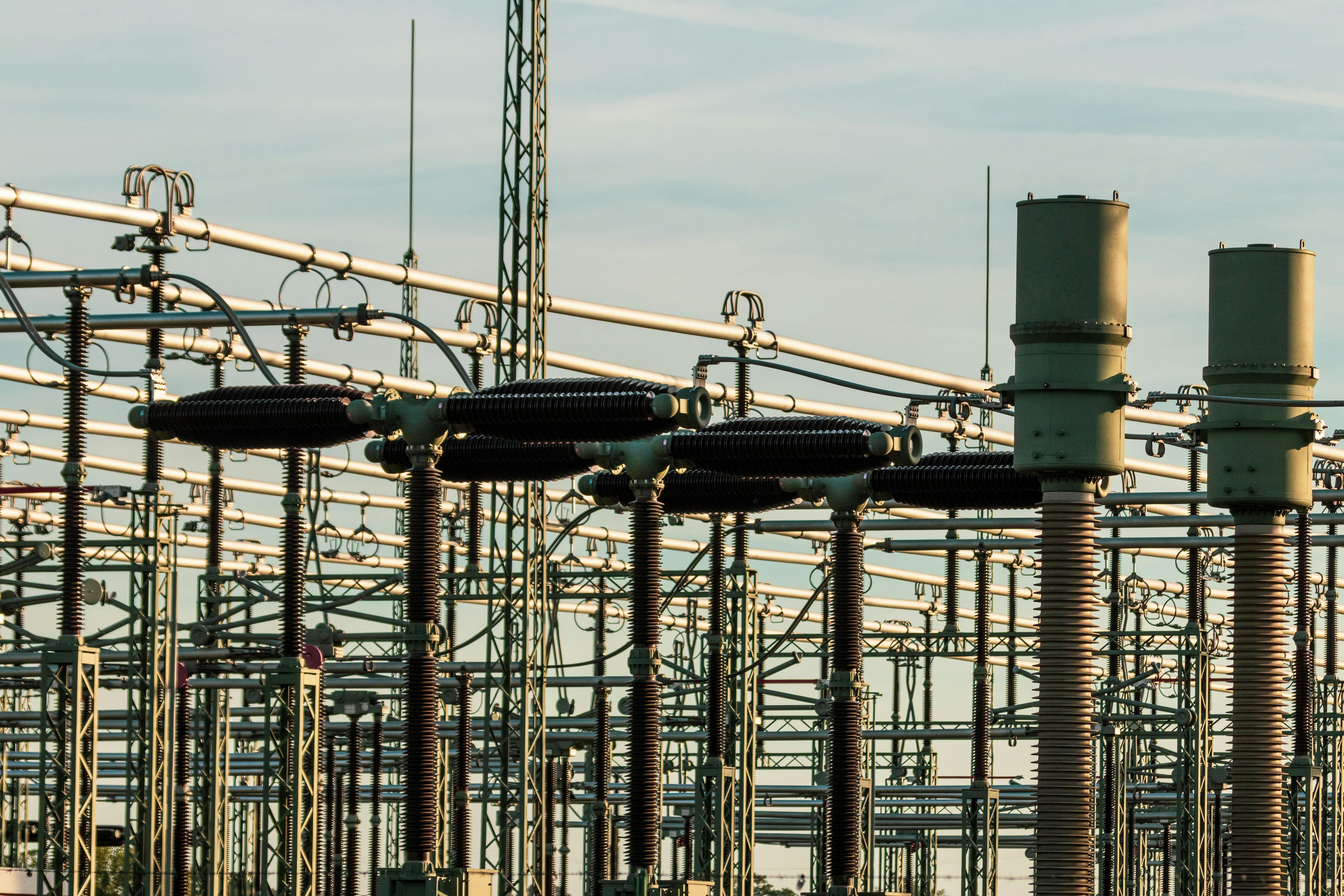
The setpoint hierarchy on a utility-scale plant is a four-layer chain. First, the utility or ISO sets the active power and reactive power requirement at the point of interconnection on a 4-second AGC cadence in most US markets, including CAISO, ERCOT, PJM, and MISO. Second, the substation RTU forwards the value to the solar power plant controller over DNP3 with secure authentication, typically inside 200 milliseconds. Third, the PPC runs its arbitration logic and writes a curtailment ratio or absolute MW cap to each inverter block. Fourth, the inverters track the command and feed back acknowledgement and measured output. The whole chain has to close inside the AGC window or the plant is dispatched wrong.
REIG describes this chain with the same Measurement, Meaning, Control framework used on every commissioning project. Measurement is the raw signal from the POI revenue meter and the inverter feedback. Meaning is the plant-level interpretation, the active power answered, the deviation from setpoint, the reason for the deviation. Control is the arbitration decision the PPC writes, in real time. The solar power plant controller is the only device on the plant where all three live in the same cycle.
The same setpoint hierarchy applies to reactive power, voltage regulation, and frequency response. PV plants reach the new operating point almost immediately after inverters receive the command. Consequently, the bottleneck is rarely inverter physics. It is the solar power plant controller arbitration logic and the SCADA telemetry that close the loop.
What Standards Require Your Solar Power Plant Controller to Prove
The standards stack governing solar power plant controller behavior expanded sharply between 2022 and 2026. As a result, the witness pack a commissioning lead presents to the utility today carries 30 to 40 percent more testable points than the same pack from 2020. Below is the regulatory environment every PPC integration has to satisfy.
| Standard or order | Effective date | What the PPC must prove |
|---|---|---|
| IEEE 2800-2022 | Published 2022-04-22; MISO IAs after Jan 1, 2025 | IBR transmission interconnection performance, including ride-through, reactive capability, primary frequency response, disturbance monitoring |
| IEEE 1547-2018 + UL 1741 SB | UL 1741 SB published Sept 2021 | Distribution-side interconnection, smart inverter functions, interop testing per IEEE 1547.1-2020 (DNP3, IEEE 2030.5, or SunSpec) |
| NERC PRC-024-3 | Approved July 9, 2020; effective Oct 2022 | Frequency and voltage protection settings for generating resources, no-trip zones |
| NERC PRC-029-1 | FERC accepted 2025; replaces PRC-024-3 in 2026 cutover | IBR-specific ride-through, 56 to 64 Hz for 6 seconds, ROCOF tolerance up to 5 Hz/s, event monitoring |
| FERC Order 901 | Issued Oct 19, 2023; staged deadlines through Nov 4, 2026 | IBR data sharing, model validation, planning studies, performance requirements; full implementation by 2030 |
| NERC MOD-026-2 | Effective April 1, 2026; full compliance Apr 1, 2030 | Field-validated electromagnetic transient models for voltage and frequency control verification |
Why IEEE 2800-2022 Is the Hinge Standard for PPC Design
IEEE 2800-2022 was published on April 22, 2022. The standard defines mandatory technical performance for inverter-based resources interconnecting at transmission voltage. Active power control, reactive power capability across the operating envelope, voltage and frequency ride-through, primary frequency response, and disturbance monitoring at sub-cycle resolution all become PPC obligations. MISO incorporated IEEE 2800 into Appendix G language for interconnection agreements signed after January 1, 2025. PJM, CAISO, and ERCOT are at varying stages of integration, with exception windows tightening through 2026 as FERC Order 901 milestones land.
For commissioning, the change is concrete. Specifically, witness testing now includes step-response tests at multiple operating points, reactive capability sweeps at part load, and ride-through evidence captures at sub-cycle resolution. Therefore, the historian sample rates and the alarm rationalization plan have to be designed for IEEE 2800 evidence on day one. Retrofitting them after COD is more expensive than getting them right the first time.
Solar Power Plant Controller Performance Specs: AGC Response, Curtailment, and Volt-VAR
AGC update interval in CAISO and most US ISOs runs at 4 seconds. The PPC gets 100 to 250 milliseconds to arbitrate, write commands to inverters, and verify response. Active power accuracy must hold within 1 percent of setpoint at steady state. Reactive response must close in 1 to 5 seconds per IEEE 2800-2022 Volt-VAR curve definition. Primary frequency response must engage within 1 second of frequency crossing the deadband. These are the targets every PPC has to meet on a US utility-scale plant, not vendor marketing claims.
- AGC update interval: 4 seconds in CAISO and most US ISOs. Some markets run faster intervals for ancillary services.
- PPC cycle time: 100 to 250 milliseconds deterministic, fast enough to follow AGC, slow enough to avoid fighting inverter-level controls.
- Active power ramp rate: configurable per interconnection agreement, typically 5 to 20 percent of nameplate per minute. Test pack must show the PPC enforces ramp limits during curtailment.
- POI active power accuracy: typically within 1 percent of setpoint at steady state.
- Reactive power response: 1 to 5 seconds from voltage deviation to corrective Q, per IEEE 2800-2022 Volt-VAR curve definition.
- Frequency response: primary frequency response within 1 second of frequency deviation crossing the deadband.
- Ride-through capture: historian sample rate ≤ 100 ms on POI frequency, voltage, and active power, per PRC-029-1 evidence requirements.
PV inverters reach the new operating point almost immediately after the command lands. Consequently, the latency budget lives in the PPC and the SCADA telemetry, not in the inverters themselves. That is where solar power plant controller design earns its money.
Curtailment matters financially as well as technically. CAISO curtailed 3.4 million MWh of solar and wind in 2024, a 29 percent year-over-year increase, with solar accounting for 93 percent of the curtailed energy per EIA reporting based on CAISO data. The first four months of 2025 alone delivered 738,000 MWh of additional CAISO curtailment. ERCOT Q1 2025 curtailment hours were up 12 percent. Each missed setpoint inside the 4-second AGC window is a small loss. Multiplied across thousands of dispatches per month, those small losses become measurable revenue erosion. The solar power plant controller is the device that decides whether the plant earns or burns those MWh.
Communication Protocols at the PPC Layer: Modbus TCP, IEC 61850, DNP3, IEEE 2030.5
In practice, a working solar power plant controller speaks at least three protocols simultaneously. First, inside the plant fence the PPC reads inverter feedback over Modbus TCP, with command-to-response latency in the 50 to 200 millisecond range. Second, to multi-vendor DER fleets the PPC may use IEC 61850-7-420 logical nodes for semantic interoperability and GOOSE messages for sub-millisecond protection signaling. Finally, outbound to the utility, the PPC sends DNP3 with secure authentication per IEEE 1815-2012, the protocol most US Reliability Coordinators accept for telemetry to the wide-area control room. Sites built to UL 1741 SB add IEEE 2030.5 or SunSpec Modbus to the stack for interoperability conformance per IEEE 1547.1-2020.
The protocol stack is layered, not flat. Each layer carries different latency, security, and semantic expectations. REIG's Modbus TCP vs DNP3 selection guide walks the binary protocol pick. Adding a PPC turns that binary pick into a layered architecture, and the architecture has to support every standard above without rewriting the SCADA tag dictionary at the next vendor swap.
Failure Modes: Where Solar Power Plant Controller Integrations Break in the Field
Solar power plant controller integrations fail in patterns. Across 22 utility-scale PPC commissioning audits REIG ran in PJM, ERCOT, and MISO between 2022 and 2025, six failure modes show up on more than 60 percent of the sites. Each failure maps cleanly to one of the three legs of the Measurement, Meaning, Control framework: bad signal capture (Measurement), wrong interpretation between PPC and historian (Meaning), or unstable closed-loop logic at the controller (Control). Catch them in design review and they cost a meeting. By contrast, catch them at FAT and they cost a week. Catch them at SAT or after COD and they cost a quarter or worse. The list below is the one we run on every PPC proposal review.
Setpoint Cascading Errors and Inverter Saturation
The PPC writes a curtailment ratio every cycle. However, if the ratio changes faster than inverters can ramp, the inverters saturate at their maximum ramp limit and the plant tracks behind the setpoint. As a result, the fix is a damped controller with explicit ramp-aware logic. REIG's testable point list at FAT includes a step-response test at multiple operating points to catch this before it lands at SAT.
Tag Mismatch Between PPC and SCADA Historian, the Two Truths Problem
The PPC writes a setpoint to the inverters. In addition, the SCADA historian logs the inverter feedback. However, if the two systems use different tag names or different scaling factors for the same physical quantity, the operator sees one number and the audit sees another. As a result, the plant cannot prove which value was correct in a settlement dispute. The fix is a unit and scope sanity sheet at FAT, signed by both the PPC vendor and the SCADA integrator, that maps every register from device to historian to operator screen.
Volt-VAR Loop Instability and Hunting
Voltage regulation runs as a closed loop on the PPC against POI voltage measurements. However, incorrect droop coefficients or under-damped tuning cause the loop to hunt, swinging between leading and lagging Q every few cycles. In one 2024 ERCOT commissioning, the PPC droop was set 4 times too aggressive, and the plant oscillated reactive power for 90 seconds before the utility witness team called the test invalid. The fix is bench tuning at FAT against a digital twin, not field tuning at SAT against the live utility. SCADA ROI on the controls side hinges on getting Volt-VAR right at FAT, not after.
Time Sync Drift Between PPC, RTU, and Plant Historian
If the PPC clock and the substation RTU clock drift relative to the plant historian, the AGC dispatch log stamps arrive offset. Then, the historian record cannot prove the plant answered the dispatch within the 4-second window. The fix is documented in the historian sampling and retention guide: every device on the OT network has to time-sync to the same plant grandmaster clock, Network Time Protocol (NTP) or Precision Time Protocol (PTP), and the sync state has to be a SCADA tag the operator can see.
AGC Dispatch Logging Gaps During Communication Loss
When the substation comms link drops for 30 seconds during an AGC dispatch, the PPC has to do something defensible. Common bad answers include freezing the last setpoint, defaulting to 100 percent active power, or dropping to 0 percent. By contrast, the right answer is documented in the interconnection agreement and tested at FAT, not invented during the first comms outage at SAT. Also, the SCADA must historize the comms-loss event with the same timestamp resolution as the dispatch log, or the audit cannot reconstruct what happened.
Curtailment Ramp-Rate Violations During Recovery
In practice, when a curtailment ends and the PPC releases inverters back to maximum power point tracking, the active power ramp rate must stay inside the interconnection agreement limit. For example, on an MISO 200 MW plant in 2025, REIG audited a recovery sequence where the PPC released curtailment in one step and the plant ramped at 60 percent per minute, well above the 20 percent per minute interconnection limit. The fix is explicit ramp-rate enforcement on both directions, not just on the way down.
The pattern is consistent across regions. The plants where the solar power plant controller and SCADA were designed as one cooperating system pass IEEE 2800 witness testing on the first attempt. By contrast, the plants where they were treated as one merged platform fail at least one test, usually the reactive capability sweep at part load or the ride-through capture during a frequency event. Therefore, the PPC architecture decision lands at the design phase, not at SAT. Plant KPI tracking against PR, availability, and curtailment depends on getting the PPC right first.
Where REIG Fits: Commissioning-Ready PPC and SCADA Integration
REIG runs the PPC and SCADA design review, the FAT and SAT execution, and the post-COD evidence pack on every utility-scale PV project we touch. The Measurement, Meaning, Control framework is what we apply at every gate: Measurement is the signal chain from POI revenue meter to inverter feedback, Meaning is the unit-and-scope sanity sheet that makes PPC and historian reconcile, Control is the arbitration log that survives a settlement dispute. The deliverables are commissioning-ready from day one: a testable point list, ride-through evidence captures sampled at 100 ms or faster, and a defensible record of every dispatch decision. RenergyWare hardware packages, our field-proven NEMA 4 and UL-listed enclosures, ship with the network and time-sync architecture pre-configured to the standards stack above. The plants we commission do not have to retrofit the historian after COD.
For developers and EPCs at the proposal stage, the conversation starts with which standards your interconnection agreement references and which witness tests the utility will run. From there, the PPC architecture, protocol stack, and SCADA tag dictionary fall into place. The RenergyWare hardware page documents the standard enclosure tiers, and the Contact page opens the design review. The plants commissioning today will operate under IEEE 2800-2022 and PRC-029-1 for their entire 30-year life. So getting the solar power plant controller right at the procurement RFP, rather than at SAT, is the highest-impact decision in the project.
Frequently Asked Questions
What is a solar power plant controller and how is it different from SCADA?
A solar power plant controller (PPC) is the closed-loop industrial controller that owns active power, reactive power, voltage, and frequency at the point of interconnection. It receives a setpoint from the utility or ISO every 4 seconds and decides how to distribute that command across hundreds of inverters in roughly 100 to 250 milliseconds. SCADA sits one layer above the PPC. SCADA monitors, historizes, and presents data to operators. The PPC writes setpoints. They are different jobs and they live in different latency bands. Treating them as the same system is the most common architectural mistake on a utility-scale solar plant.
How fast does a solar power plant controller respond to an AGC setpoint change?
Most US ISOs send AGC setpoints at a 4-second cadence. The solar power plant controller has to receive the new value, run its arbitration logic, and dispatch updated commands to inverters before the next AGC update arrives. PV plants reach the new operating point almost immediately after the inverters receive the command, much faster than wind or thermal plants. NREL field demonstrations of a 300 MW PV plant with First Solar and CAISO showed regulation accuracy 24 to 30 points better than fast gas turbine technologies. The bottleneck is rarely inverter physics. It is PPC arbitration logic and SCADA telemetry.
What does IEEE 2800-2022 require a solar power plant controller to demonstrate?
IEEE 2800-2022 was published on April 22, 2022 and defines mandatory technical performance for inverter-based resources connecting to transmission. The PPC must demonstrate active power control, reactive power capability across the operating envelope, voltage and frequency ride-through compliant with NERC PRC-029-1, primary frequency response, and disturbance monitoring with sub-cycle telemetry. MISO interconnection agreements signed after January 1, 2025 incorporate IEEE 2800 by reference. PJM, CAISO, and ERCOT are at varying stages of integration. The witness test pack expands by roughly 30 to 40 points when a plant is built to IEEE 2800 instead of legacy IEEE 1547 expectations.
How does NERC PRC-029-1 affect PPC commissioning in 2026?
NERC PRC-029-1 replaces PRC-024-3 in the 2026 cutover and tightens the ride-through envelope inverter-based resources must hold. The PPC has to keep PV inverters and any co-located BESS online through frequency excursions of 56 to 64 Hz for 6 seconds of continuous operation, and tolerate a Rate of Change of Frequency up to 5 Hz per second. The SCADA layer must capture each ride-through event with timestamped telemetry fast enough to avoid aliasing the disturbance. Historian sample rates slower than 100 milliseconds on POI frequency, voltage, and active power create compliance gaps the Reliability Coordinator can audit and penalize.
Why does the PPC need its own historian record separate from SCADA?
The PPC produces a stream of setpoint decisions every cycle. The split between PV and BESS, the curtailment ratio applied to each inverter block, the deviation from the AGC instruction, and the time-stamped acknowledgement from each device. SCADA logs the operational outcome. Settlement, dispute resolution, and Reliability Coordinator audits often need both records. A PPC arbitration log proves what command was sent. The SCADA historian proves what the plant actually delivered. When the two records do not reconcile within tolerance, that gap is the dispute. Sites that historian only the SCADA outcome lose the ability to defend their dispatch.
Which protocols does a PPC speak inside the plant and to the utility?
Inside the plant the PPC typically speaks Modbus TCP to inverters and BMS units, with latency in the 50 to 200 millisecond range. Some sites use IEC 61850-7-420 logical nodes for multi-vendor DER fleets and GOOSE messages for sub-millisecond protection signaling. Outbound to the utility the PPC sends DNP3 with secure authentication per IEEE 1815-2012, the protocol most US Reliability Coordinators require for telemetry. Newer interconnection agreements may also require IEEE 2030.5 or SunSpec Modbus as part of UL 1741 SB interoperability testing. A typical site runs all three layers simultaneously.
Note: this guide describes typical US utility-scale solar power plant controller behavior under IEEE 2800-2022, NERC PRC-029-1, and the FERC Order 901 directives current as of May 2026. Specific interconnection agreements, ISO market rules, and NERC standard versions may impose additional requirements. Always confirm the standards stack referenced in your project's interconnection agreement before locking PPC architecture.
If you are sizing a PPC and SCADA for a new build, or running a recovery on an existing plant that missed witness testing, the place to start is the testable point list. Bring the interconnection agreement and the proposed protocol stack. We will walk through the witness pack against the standards above and tell you exactly where the design needs to land before the FAT pack is locked. Reach out via the REIG contact form or browse RenergyWare hardware packages to see which enclosure tier matches your project scope.
- Further reading: Solar Plant SCADA System: Network Topology, VLANs, Firewalls, and OT Zones
- Further reading: Solar SCADA Commissioning to COD: Timeline and Milestones
- Further reading: Solar SCADA Architecture and Control Signals for Utility-Scale PV
- Further reading: Utility-Scale Solar Monitoring KPIs: PR, Availability, and Curtailment
References
- IEEE Standard 2800-2022, Interconnection and Interoperability of Inverter-Based Resources, available at standards.ieee.org/ieee/2800/10453/.
- NERC Reliability Standard PRC-029-1, Frequency and Voltage Ride-Through for Inverter-Based Resources, available at nerc.com/standards/reliability-standards/prc/prc-029-1.
- FERC Order No. 901, Reliability Standards to Address Inverter-Based Resources, issued October 19, 2023; staged compliance milestones through November 4, 2026.
- Demonstration of Essential Reliability Services by a 300 MW Solar PV Power Plant, NREL technical report fy17osti/67799, available at docs.nrel.gov/docs/fy17osti/67799.pdf.
- SEIA Solar Market Insight Report, 2025 Year in Review, available at seia.org/research-resources/solar-market-insight-report-2025-year-in-review/.
- EIA Today in Energy, California's solar and wind curtailments increase, 2024 data, available at eia.gov/todayinenergy/detail.php?id=65364.
- IEEE Standard 1815-2012, DNP3 with Secure Authentication, available at standards.ieee.org/standard/1815-2012.html.