

Solar performance ratio IEC 61724-3: PPA compliance reporting guide
Most PPA acceptance disputes come down to one calculation: the solar performance ratio IEC 61724-3 capacity test result delivered during the commissioning window. Independent engineers reject roughly one in five reports the first time around, usually for missing exclusions, ambiguous plane-of-array data, or inverter availability gaps. This guide walks through how to build the data pipeline, calculate PR defensibly, and survive a third-party audit without weeks of rework on the back end.
What solar performance ratio IEC 61724-3 means for PPA acceptance
Solar performance ratio IEC 61724-3 is the audited ratio of metered AC energy at the delivery point to the theoretical energy a nameplate DC array should have produced at the measured plane-of-array irradiance. PPA acceptance hinges on this number, and almost every dispute traces back to how the ratio was framed.
Three closely related metrics frequently get conflated in early-stage commissioning meetings. Plain PR is the raw ratio, sensitive to temperature, soiling, and seasonal irradiance shape. Temperature-corrected PR normalizes for module temperature against a 25 degC reference, smoothing out the summer dip and giving a more stable comparison across months. Energy Performance Index (EPI) goes further, dividing measured energy by a model-predicted energy that already accounts for weather, spectral effects, and forecast soiling. Each metric has its place. PPAs in the US largely use plain PR or temperature-corrected PR for capacity tests, while EPI shows up in monthly availability accounting and in lender models.
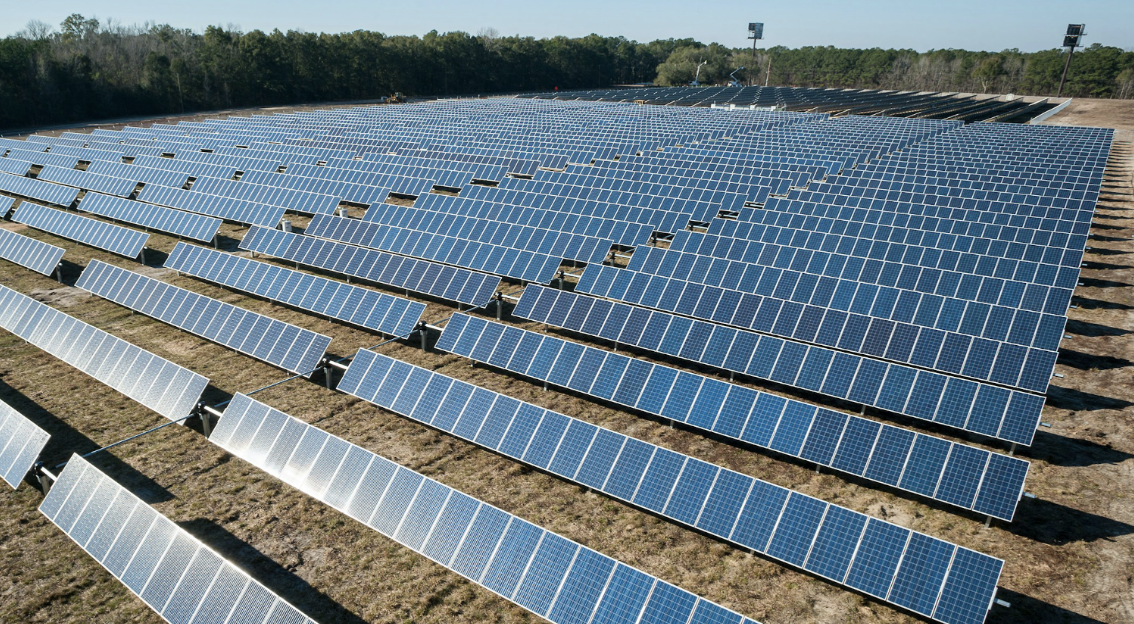
On a 78 MW fixed-tilt plant we commissioned in South Carolina in 2023, the initial capacity test report used a bifacial module temperature coefficient that had been transposed in the SCADA historian tag map. The reported PR came back 1.6 points above the independent engineer’s parallel calculation, a gap large enough to trigger a formal data query before the offtaker would sign off on acceptance. The Intertek commissioning engineer flagged the delta during the final sensor cross-validation review, comparing our historian output against a separate reference logger installed for the audit. We traced the gap to a single input field, corrected the tag, reran the analysis against the same 30-day window, and resubmitted the corrected report five days ahead of the acceptance deadline. The independent engineer accepted the revised figures without calling for a full retest. That kind of discrepancy is exactly why metric selection and input traceability matter before the test window opens, not after it closes.
| Metric | Calculation inputs | Seasonal stability | Primary PPA use case |
|---|---|---|---|
| Plain PR | Metered AC energy, POA irradiance, nameplate DC capacity | Low. Summer heat depresses PR 3 to 6 points versus winter for crystalline silicon plants. | Capacity test acceptance threshold in most US utility-scale PPAs |
| Temperature-corrected PR | Plain PR inputs plus back-of-module temperature, referenced to 25 degC | High. Thermal normalization holds the monthly value within 1 to 2 points year-round. | Long-term monthly reporting and lender model benchmarks |
| Energy Performance Index (EPI) | Measured energy versus a weather-adjusted simulation (PVLib or proprietary model) | Very high. Model absorbs spectral variation, forecast soiling, and irradiance shape. | Availability accounting, insurance claims, and repowering business cases |
The reason solar performance ratio IEC 61724-3 anchors PPA language is straightforward. The standard, published by the International Electrotechnical Commission in 2016, defines a uniform methodology that independent engineers and offtakers can audit without arguing about every clause. Before 61724-3, every contract handcrafted its own calculation, and the disputes were brutal. The question now shifts from how do we measure to did you follow the standard and can you prove it from raw data.
If you are setting up a new plant, treat the capacity test as the contract within the contract. Read more in our companion guide on solar SCADA commissioning and the utility witness pack. The capacity test result locks in the operating baseline, and every subsequent monthly report is judged against it.
For a closer look at this, see Solar met station sensor selection and ISO 9060 compliance guide.
How solar performance ratio IEC 61724-3 defines the capacity test
The solar performance ratio IEC 61724-3 capacity test methodology specifies a continuous measurement window of at least 30 days, a defined set of valid data filters, and an arithmetic procedure for comparing measured AC energy against the calculated theoretical energy at the reference condition for the plant.
In practice, the 30-day window is the minimum, and most contracts call for the longer of 30 days or a full irradiance season. The test calculates an aggregated PR using only filtered, valid intervals. Intervals are filtered for irradiance below a contract-specified floor (commonly 200 W/m^2 POA), for inverter availability, and for grid availability at the point of interconnection. Anything below the floor is excluded because the measurement uncertainty grows large at low light.
The theoretical energy calculation uses POA irradiance integrated across each interval, multiplied by the rated DC capacity and divided by the standard test condition irradiance of 1000 W/m^2. The measured AC energy comes from the revenue meter or the agreed proxy at the high-voltage side of the substation transformer. The NREL solar performance modeling framework publishes the analytical baseline that many US asset managers use as a sanity check on this calculation.
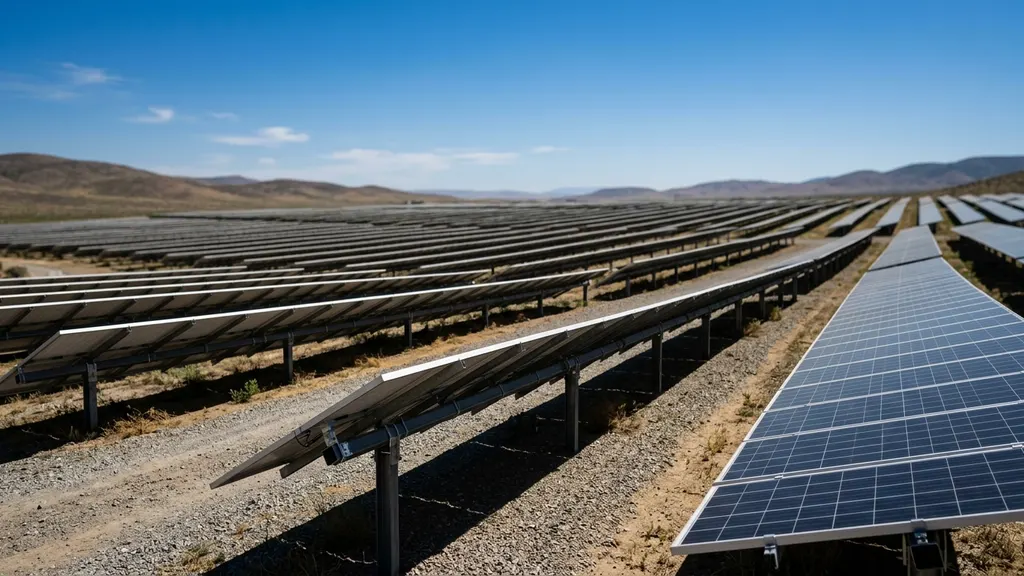
A clean capacity test report under solar performance ratio IEC 61724-3 includes the raw data set, the filter logic with timestamps, the temperature correction model and inputs, and a reconciliation between SCADA historian and revenue meter. If any of those four pieces are absent, expect the independent engineer to request a rerun. Build the report template before commissioning starts, not after.
SCADA data points required for solar performance ratio IEC 61724-3 reporting
The solar performance ratio IEC 61724-3 calculation requires a minimum data set tied to specific SCADA historian tags: plane-of-array irradiance, ambient and module temperature, plant AC energy export, and inverter availability state. Without those four pillars at one-minute granularity, the report cannot be reproduced or audited.
POA irradiance is the load-bearing measurement. IEC 61724-3 recommends Class A pyranometers per ISO 9060, with at least two sensors per array block and a redundant reference cell for cross-checking. If a sensor drifts or fails, the standard provides substitution logic, but only if you have a documented sensor pairing scheme in advance. Our companion piece on solar met station sensor selection and ISO 9060 compliance goes deeper on this topic.
Module temperature comes from back-of-module thermocouples or RTDs bonded to a documented set of representative modules, typically one sensor per megawatt of capacity. The standard does not let you back-calculate module temperature from a single weather station for utility-scale plants. DOE solar monitoring guidance reinforces the multi-sensor requirement for plants above a few megawatts.
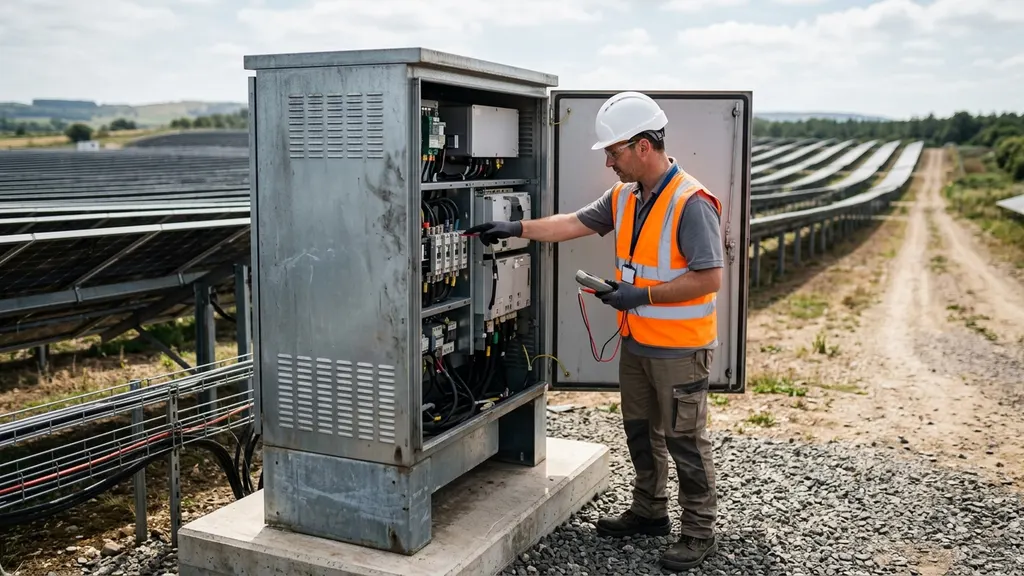
AC energy comes from the revenue-grade meter at the point of interconnection. Plants with multiple substations need a summing logic that survives a meter outage, and the SCADA historian needs to store both raw meter pulses and integrated kWh totals so the audit chain is intact. Inverter availability is tagged per device using either the manufacturer’s Modbus status word or a SCADA-side state machine. The reporting workflow treats every non-available inverter interval as excluded from the numerator and the denominator. Disputes over capacity test results usually surface when one of these tag schemes is sloppy or undocumented.
On a 240 MW tracker plant we supported in West Texas in 2022, a monthly PR report overstated inverter availability because a spare inverter’s Modbus status word defaulted to available during a firmware update window. The error inflated the denominator for eleven days before an asset manager cross-checked SCADA alarms against the inverter OEM’s event log and caught the mismatch. We rebuilt the availability tag logic to poll a secondary heartbeat register instead of trusting the primary status word alone, and the fix has held clean across four subsequent reporting cycles. The lesson carried straight back into how we scope solar performance ratio IEC 61724-3 tag mapping on every new commissioning job.
Handling curtailment and force majeure exclusions in monthly PR reports
Curtailment and force majeure are the two largest sources of monthly PR variance. The solar performance ratio IEC 61724-3 framework requires every excluded interval be timestamped, classified, and logged with the triggering event, then removed from both the measured energy numerator and the theoretical energy denominator before the ratio is computed.
The classification matters. A grid operator dispatch curtailment under an AGC setpoint is a contract-excused event in nearly every US PPA. Voluntary curtailment that the plant chose for revenue or maintenance reasons is generally not excused. The NERC GADS event classification gives a defensible taxonomy for tagging each interval. Mapping plant SCADA alarm states to a GADS class up front prevents months of back-and-forth with the offtaker.
Our companion piece on solar curtailment and AGC in utility-scale solar plant dispatch covers the technical side of curtailment logging. The reporting side comes down to three rules. First, an interval cannot be partially excluded under solar performance ratio IEC 61724-3. If a curtailment event lasted 14 minutes inside a 15-minute interval, document it and exclude the full 15. Second, the exclusion must be traceable to a SCADA alarm record or a grid operator dispatch log, not just a note in the operations diary. Third, force majeure events such as wildfires, hurricanes, and grid blackouts use the same exclusion logic as curtailment, but with a different documentation chain that ties to FERC filings or insurance claim numbers.
A clean monthly report breaks out the exclusions in a sidebar table that shows hours excluded, kWh excluded from the denominator, and the cited event ID. Independent engineers approve those reports far faster than the alternative.
Automation patterns for PPA-grade reporting
Automating the monthly PR report cuts the analyst workload from days to hours and shrinks the dispute rate. The dominant patterns we see in US fleets fall into four categories: vendor-bundled reporting modules, business intelligence tools fed from the historian, custom Python pipelines, and hybrid stacks that combine all three.
Bazefield and Inaccess are the two most-cited vendor reporting platforms in US asset management. Both ship with built-in solar performance ratio IEC 61724-3 templates that handle the filter logic, temperature correction, and exclusion taxonomy if you wire the tags in correctly. The trade-off is platform lock-in and an annual license cost that scales with plant count.
Power BI fed from a historian (PI, GE Proficy, or AVEVA OSI) is the second pattern. Asset management teams that already run Power BI dashboards for finance often extend the same data model to PR reporting. The challenge is reconciling Power BI’s interval logic with the filter requirements of the standard, which is not natively supported and needs custom DAX or M code.

Custom Python pipelines built on top of PVLib are the third pattern, popular with independent engineers and large IPPs that own their reporting stack. NREL’s PVLib analytical library exposes the core PR calculation primitives and integrates with PVPMC reference cases for QC. IEEE 1547 interconnection standards aligned templates are also seeing more adoption alongside PVLib for hybrid solar-plus-storage plants. We covered the broader data acquisition picture in our solar DAS commissioning and irradiance QA guide. The fourth pattern is hybrid: a SCADA-bundled report for daily monitoring plus a Python pipeline for monthly defensible deliverables.
Frequently asked questions
How long does an IEC 61724-3 capacity test usually take?
The standard requires at least 30 continuous days of valid measurement intervals, but most US PPA contracts extend the window to 60 or 90 days to capture a wider irradiance distribution. Independent engineers prefer a window that crosses a solstice or equinox when possible. If filter logic strips out heavy outage days, the test window can extend further before the data set is considered complete. Plan on a 45 to 75 day commissioning window in practice, per IEC 61724-3 Annex B guidance.
Do I have to use Class A pyranometers, or are reference cells acceptable?
Both are acceptable, with a documented preference for Class A pyranometers under ISO 9060 as the primary POA reference. Reference cells are allowed as supplementary sensors, since they respond similarly to the modules under spectral and angle-of-incidence shifts. The standard requires redundancy regardless. Most US utility-scale plants run two Class A pyranometers per array block, plus a reference cell co-located with one of them, with cross-validation logic in the SCADA historian flagging drift above 2 percent. Documenting the sensor pairing scheme and calibration certificate dates before the test window opens protects the report if a sensor swap becomes necessary mid-test.
How do you handle module degradation in long-term PR reports?
IEC 61724-3 separates the initial capacity test from longer-term degradation tracking. The capacity test gives the as-built baseline, measured in the first 30 to 90 days after commissioning. Year-on-year reports then compare measured PR against the degradation-adjusted nameplate using a contractually agreed degradation rate, typically 0.5 to 0.7 percent annually for crystalline silicon and somewhat higher for thin-film modules. NREL field studies support those ranges as expected for well-installed plants. Asset managers log each year’s measured PR against that curve in the annual O&M report, not just in the original capacity test file. If actual degradation runs faster than the agreed rate, the offtaker has grounds for a warranty claim against the module supplier.
What is the difference between solar performance ratio IEC 61724-3 and the older IEC 61724-1?
IEC 61724-1 covers continuous performance monitoring methodology, the day-to-day reporting framework that runs for the life of the plant. IEC 61724-3 specifically covers capacity testing for acceptance and recommissioning, a narrower and more contractually loaded scope. The two standards share sensor and data quality requirements, including the same POA irradiance and temperature measurement classes, but 61724-3 adds the capacity test procedure, the exclusion framework, and the prescribed reporting format that US PPAs rely on for acceptance sign-off. Use solar performance ratio IEC 61724-3 for acceptance testing and any major repowering event. Use 61724-1 for the routine monthly reporting cycle that runs in between those milestones.
Can I run a solar performance ratio IEC 61724-3 capacity test on a plant that includes battery storage?
The standard does not yet directly cover hybrid solar-plus-storage configurations, so most US contracts modify the methodology to measure only the solar contribution at a defined electrical boundary, typically the inverter AC bus before the BESS interconnection point. The BESS round-trip efficiency losses and dispatch behavior are excluded from the PR calculation entirely, since folding them in would conflate two different pieces of equipment under one metric. Expect the standard to evolve here as hybrid plants reach a majority of new utility-scale builds over the next few years. Our guide on BESS SCADA integration for utility-scale solar plants walks through the boundary measurement decisions, meter placement, and tag mapping in more detail.
What happens if the capacity test result falls below the PPA threshold?
Most PPAs spell out a cure period, a liquidated damages calculation, and a retest right. The cure period gives the seller a defined window, often 30 to 90 days, to identify the root cause and apply a remediation plan. Common findings include defective combiner fuses, soiling above design assumptions, undersized transformer cooling, or sensor calibration drift. After the cure, the seller can call for a retest under the same IEC 61724-3 methodology. When a retest is called, the same 30-day minimum measurement window applies, and both parties typically agree in advance on the engineer of record who will validate the data set. Having the original SCADA historian tags, filter logic, and calibration records intact from the first test compresses the retest setup from weeks to days. Settling these disputes without a defensible data trail can cost millions per plant, per NIST measurement traceability guidance.