
Fiber Optic Installation on a Solar Farm: Route Design + Splice Planning
Solar Farm Fiber Installation: Route Design + Splice Planning
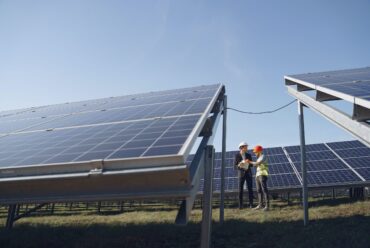
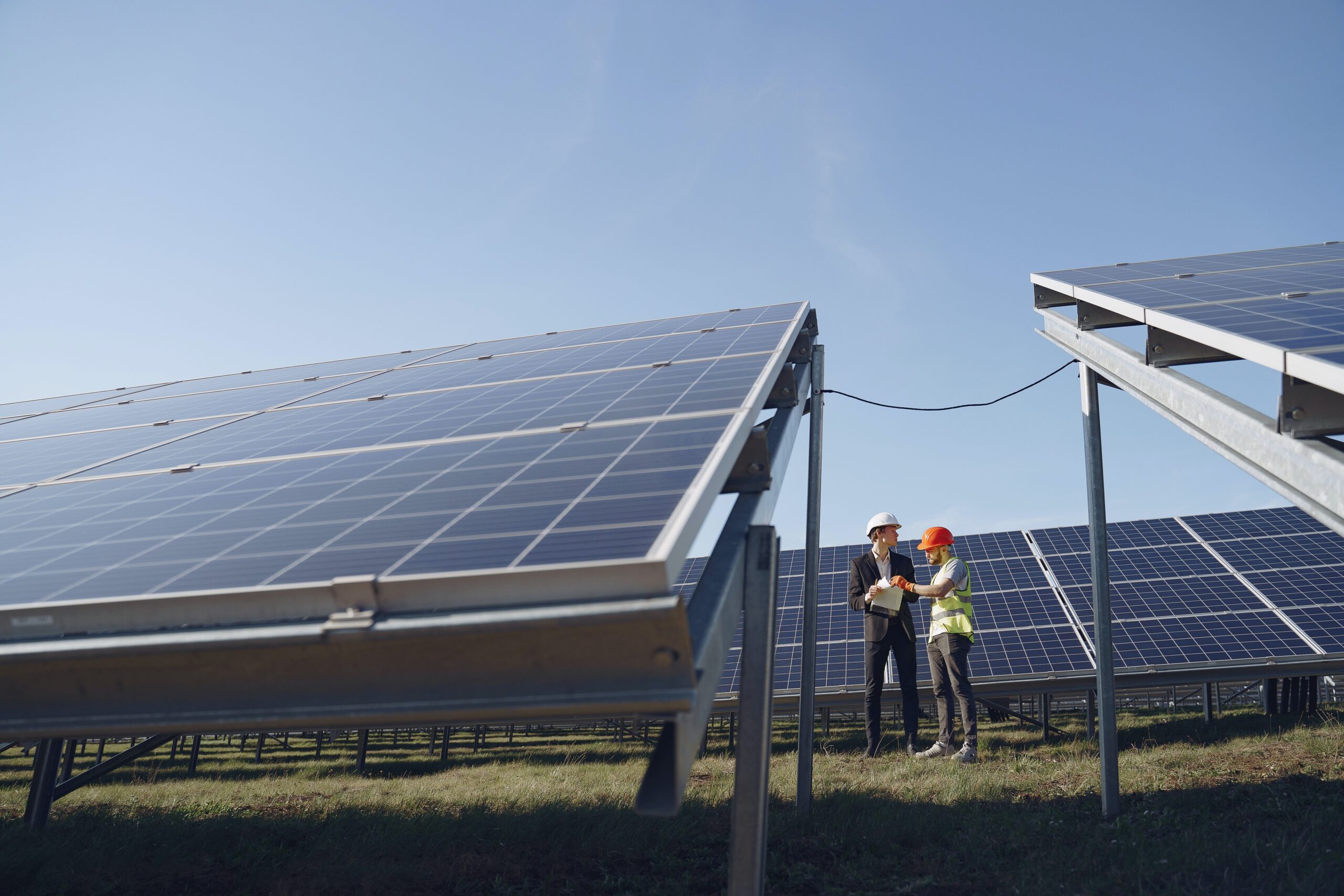
On a utility-scale solar farm, solar farm fiber installation is often the backbone of SCADA and DAS communications. When the fiber route is unclear, splice points are improvised, or documentation is incomplete, the project may still “turn on.” However, commissioning drags, data gaps appear intermittently, and troubleshooting becomes guesswork.
In short, this article is for EPCs, owners/operators, commissioning leads, SCADA/DAS engineers, and O&M teams who want a practical approach to solar farm fiber installation planning—specifically route design and splice planning—so the network is reliable at COD and maintainable for the next 20+ years.
Solar farm fiber installation: why route design and splice planning matter for SCADA + DAS
Fiber problems rarely show up as “fiber problems” in the control room. Instead, they show up as symptoms: missing inverter data, intermittent MET station dropouts, false availability losses, alarm floods, or failed utility telemetry tests. In utility-scale solar, fiber is used because it supports long distances and avoids the electromagnetic interference (EMI) challenges that can impact copper in high-power environments.
For context, Fluke’s overview of fiber optics in utility-scale solar highlights why fiber is common on large sites: long link distances across large footprints and electrical isolation advantages around high-voltage and high-current equipment.
(Source)
Quick definitions for solar farm fiber installation (so we’re speaking the same language)
solar farm fiber installation: route design vs splice planning
First, align on these two terms:
- Route design: where the fiber physically runs (trenches, conduit paths, handholes/vaults, cabinet entries), and how those runs support topology and redundancy.
- Splice planning: where and how fibers are joined, where slack is stored, how closures are placed, and how every event is labeled and documented.
OTDR vs OLTS (and why you usually want both)
Next, clarify the testing terms:
- OTDR (Optical Time Domain Reflectometer): sends a light pulse and uses backscatter/reflections to locate events like splices, connectors, bends, and breaks.
- OLTS (Optical Loss Test Set): measures end-to-end insertion loss and confirms a link meets a loss budget.
Practical takeaway: OTDR helps you find where a problem is; meanwhile, OLTS helps you confirm the link meets overall performance requirements.
Step 1: solar farm fiber installation starts with the communications architecture
Before you draw a fiber path, define what the network must support: inverter blocks, tracker controllers, MET stations, substation/POI equipment, PPC/RTU/RTAC interfaces, and any utility/ISO telemetry boundaries. In practice, clear architecture is the fastest way to reduce rework in route design and commissioning.
When architecture is vague, routes become guesswork and splices get placed “where the trench ended,” not where the system will be maintainable. As a result, a site network may work on day one but still be hard to prove, isolate, or repair quickly.
Common solar farm topologies (and what they mean for routing)
| Topology | What it is | Why teams choose it | Routing implication |
|---|---|---|---|
| Star (home-run) | Each field node returns to a central point | Simpler logical layout | Longer runs; central aggregation becomes a single point of failure |
| Ring | Fiber loops through nodes and returns to form a ring | Can support redundancy with the right switching/protocol | Requires tight labeling/as-builts so failure domains are clear |
| Hybrid | Rings within blocks plus a backbone to the control house | Balances redundancy and complexity | Handoff points must be documented (patch panels, ODFs, cabinets) |
Real-world case studies of solar networks commonly emphasize managed switching and topology decisions because recovery behavior can determine whether data gaps become operational incidents. For example, Planetech’s solar network case study discusses fiber use for EMI immunity and highlights ring approaches and recovery expectations as design drivers.
(Source)
Step 2: Decide early: direct buried vs conduit-installed fiber
This decision changes trenching, material requirements, repairability, and future expandability. Both methods can be correct; however, it helps to select intentionally based on lifecycle and risk—especially for long-term solar farm fiber installation maintenance.
Field-practical decision table
| Decision factor | Direct buried fiber | Conduit-installed fiber |
|---|---|---|
| Upfront cost and speed | Often faster and lower cost | More materials and planning |
| Repair / replacement | Usually requires excavation | Potentially pull/replace cable if conduit is intact |
| Future capacity | Expansion typically means new trenching | Spare ducts can support repowers, new sensors, cameras, etc. |
| Mechanical protection | Depends on armor/jacket and install quality | Conduit adds protection in rocky soil and high-traffic zones |
Whatever you choose, treat cable handling limits as design constraints. Additionally, basic installation guidance stresses not exceeding bend radius or pulling tension limits, because that can cause damage you won’t discover until commissioning (or later).
(Source)
Step 3: solar farm fiber installation route plan that is commissioning-ready (not just buildable)
A buildable route gets cable in the ground. By contrast, a commissioning-ready route makes it easy to validate, document, and troubleshoot—especially when multiple trades are active and schedules are tight.
solar farm fiber installation route design checklist
- First, define failure domains: what goes down if a segment is cut (one inverter block vs half the site).
- Next, avoid common-mode trenching: don’t place “redundant” paths in the same trench if redundancy is a requirement.
- Additionally, plan access to all splice/handhole points: avoid locations that are routinely flooded or unsafe to service.
- Also, respect bend radius and pulling tension: especially at cabinet entries, sweeps, and road crossings.
- Moreover, coordinate with civil and electrical scopes: fiber is often damaged during backfill, grading, and subsequent trenching unless routes are clearly communicated and protected.
- Finally, document crossings: roads, drainage, culverts, and high-traffic zones deserve extra protection and clear as-builts.
Industry guidance on fiber installation emphasizes that planning and process discipline prevent the majority of field problems. Therefore, route decisions should be communicated early, not discovered during commissioning.
(Source)
Step 4: solar farm fiber installation splice locations an O&M team can inherit
Splices are not inherently bad; instead, undocumented or poorly located splices are. In a solar plant, splice planning is about maintainability, water risk, and the ability to isolate events quickly from OTDR traces and splice matrices.
Where splice planning usually goes wrong on solar sites
- For example, closures placed in wet locations: low-lying handholes and poor drainage increase water intrusion risk.
- Additionally, no slack strategy: insufficient slack means repairs require extra splices or full segment replacement.
- As a result, unlabeled trays: if fibers aren’t labeled consistently, troubleshooting time rises dramatically.
- Finally, improvised mid-span entries: unplanned mid-span access increases error and rework risk.
A practical splice planning framework
- First, minimize splices where practical: fewer events often means fewer loss/reflection risks, but don’t sacrifice maintainability.
- Next, place closures where they can be serviced: prioritize safe access and future repair logistics.
- Additionally, standardize closure types: fewer unique parts and methods reduces field variability.
- Moreover, standardize labeling: cable ID, handhole ID, closure ID, tray ID, fiber number/color, and direction must be unambiguous.
- Finally, design slack storage intentionally: leave enough slack to re-terminate or re-splice without replacing long segments.
Step 5: Specify fiber type and count with a future troubleshooting mindset
Most utility-scale solar backbones use single-mode fiber (commonly OS2) because distances are long and electrical noise immunity matters. Additionally, Fluke notes that utility-scale solar typically uses point-to-point Ethernet over fiber rather than passive optical networks (PON), which aligns with distributed switches and field cabinets.
(Source)
Two practical recommendations that help commissioning and O&M:
- Don’t cut strand count too close: spare fibers are cheap compared to remobilizing a crew later.
- Reserve fibers by function: dedicate strands for SCADA/DAS backbone vs security/cameras vs utility interface vs spares. Finally, document this in the strand allocation plan.
Step 6: solar farm fiber installation test and acceptance plan (before crews start)
Testing should not be a “last week” activity. Instead, it should be a construction workflow that catches bad segments while crews and equipment are still mobilized—so you don’t carry hidden defects into commissioning.
solar farm fiber installation acceptance deliverables for a plant
- OTDR traces for each link (and each fiber, per spec), saved with a naming convention matching the as-built route and link IDs.
- OLTS insertion loss results to validate end-to-end performance against the loss budget.
- Connector inspection and cleaning discipline at critical endpoints (control house, substation/POI, block aggregation cabinets).
Why “clean connectors” belongs in the plan (not a footnote)
In practical field work, connector contamination is a common cause of poor performance and intermittent issues. For that reason, data center guidance (which translates well to control houses and ODF environments) emphasizes disciplined handling and avoiding stress, pinching, and over-tightening during cable management.
(Source)
Step 7: solar farm fiber installation as-built documentation that reduces downtime
In solar SCADA/DAS, documentation is part of reliability. Specifically, the goal is that an O&M technician or SCADA engineer can isolate a comms problem without excavating, guessing, or calling three vendors.
Minimum turnover package (fiber scope)
- Route as-builts: paths, handhole/closure locations, and documented deviations from IFC drawings.
- Splice matrices: fiber-to-fiber mapping by closure and tray.
- Labeling schedule: cable IDs, panel/ODF ports, cabinet ports, and fiber numbering conventions.
- OTDR/OLTS results: trace files plus summary reports organized by link ID.
- Photos: closure internals before sealing, panel terminations, and key route markers.
Compliance note: use components rated for the environment
Outside-plant (OSP) fiber components and installation practices differ from premises cabling. Therefore, FOA’s installation reference emphasizes following applicable codes and using appropriately rated components for the environment and application.
(Source)
Common edge cases on solar farms (plan for these early)
“Fiber passes light” but SCADA still has data gaps
This can be dirty connectors, marginal terminations, poor splices, or water intrusion. However, it can also be network-layer configuration (managed switch settings, ring protocol behavior, duplex/autonegotiation mismatches). Planetech’s case study reinforces that copper is constrained by distance and EMI and that fiber is typically selected for reliability. Even so, it still requires correct network design and commissioning discipline to deliver that reliability.
(Source)
Mixed vendor boundaries and unclear ownership
One team installs fiber, another terminates, another configures switches, and another owns SCADA polling. When something fails, everyone can claim their piece is “done.” To avoid that, require end-to-end commissioning evidence that ties fiber baselines to network performance and point availability.
Long-term O&M reality: baseline evidence matters
Large PV O&M programs benefit from repeatable documentation and best practices that reduce downtime and speed fault isolation. For example, NREL’s PV O&M best practices guide is a useful reference for building disciplined turnover and long-term maintenance programs.
(Source)
Success metrics: how to know your route + splice plan worked
- Commissioning speed: fewer comms-related hold points and faster end-to-end validation.
- Data availability: low rate of intermittent dropouts in critical points (inverters, meters, MET data).
- Mean time to isolate faults: faster identification of whether the issue is device, network, or fiber segment.
- Documentation usability: O&M can locate closures/handholes and interpret splice matrices without “tribal knowledge.”
Where REIG fits: commissioning-ready SCADA + DAS integration
Renewable Energy Integration Group (REIG) supports utility-scale solar SCADA + DAS projects with end-to-end design, installation, commissioning, and ongoing support. This includes solar farm fiber installation route planning, fusion splicing, OTDR/OLTS verification, and turnover packages intended to be usable long after COD.
Conclusion: design the route, plan the splices, and prove the network
Solar farms don’t just need fiber installed; they need results that support commissioning, reliable SCADA/DAS communications, and long-term maintainability. When you define topology early, choose an installation method with lifecycle trade-offs in mind, place splice points intentionally, and deliver OTDR/OLTS baselines plus clean as-builts, you reduce rework and eliminate many comms issues that quietly inflate downtime.
If you want fiber routes, splice points, and test documentation that hold up through commissioning and make troubleshooting faster after COD, REIG can help you build a commissioning-ready path to reliable plant communications.
FAQ
How do I choose between a fiber ring and a star topology on a solar farm?
Start with uptime requirements and what you expect to happen when a cable is cut. Rings can improve resilience with the right managed switching and configuration; however, they demand stronger labeling and as-built discipline to troubleshoot quickly. Star topologies can be simpler, but central aggregation points can become single points of failure and home-runs can increase total route length and repair impact.
Where should splice closures be placed on a utility-scale solar site?
Place closures where technicians can access them safely and where water intrusion risk is low. For example, avoid low-lying handholes that routinely flood and locations that require special equipment or traffic control just to open a lid. Plan slack storage so future repairs can be completed without replacing long segments.
Do we need OTDR testing if we already have OLTS insertion loss results?
Yes in many cases, because the tests answer different questions. OLTS confirms end-to-end loss meets the budget; however, it doesn’t show where loss or reflections occur. OTDR traces identify and locate events (splices, connectors, bends) and create a baseline that speeds future troubleshooting.
What’s the most common cause of intermittent communications on solar farm fiber networks?
Connector contamination and marginal terminations are frequent contributors, especially when multiple trades handle patching and cabinet work. Additionally, water intrusion in closures and undocumented route changes can cause intermittent issues that are hard to isolate. Some “fiber” symptoms can be switch configuration or topology behavior. That’s why commissioning should validate the full chain from device to SCADA/historian.
What should be included in a fiber turnover package for SCADA/DAS?
At minimum, include route as-builts, splice matrices, and a labeling schedule that ties cable IDs to handholes/closures and panel ports. Then, provide OTDR trace files and OLTS summaries organized by link ID so future teams can compare against a baseline. Photos of closure internals and panel terminations can dramatically reduce future rework and error risk.
Further reading
- Single-mode vs. multi-mode fiber: choosing the right fit
- What is an OTDR and why it matters for commissioning
- Direct buried vs. conduit fiber for renewable projects
- Solar SCADA architecture and control signals
- Overcoming fiber network installation challenges
- Contact REIG about commissioning-ready SCADA + DAS integration
References
- Fiber Optics in Utility-Scale Solar Installations (Fluke)
- Case Study: Solar Farm Network Requirements (Planetech USA)
- The FOA Reference Guide to Fiber Optics: Fiber Optic Installation (FOA)
- Best Practices for Operation and Maintenance of Photovoltaic and Energy Storage Systems, 3rd Edition (NREL)
- 15 Best Practices for Data Center Fiber-Optic Cabling Installation (Cable Express)
Next step
If you want fiber routes, splice points, and OTDR/OLTS documentation that hold up through commissioning and reduce troubleshooting time after COD, talk with REIG. Share your site layout, comms architecture, and schedule and we’ll help you deliver commissioning-ready SCADA + DAS communications.