
OPC UA for Utility-Scale Solar SCADA: IEC 62541 Integration Guide
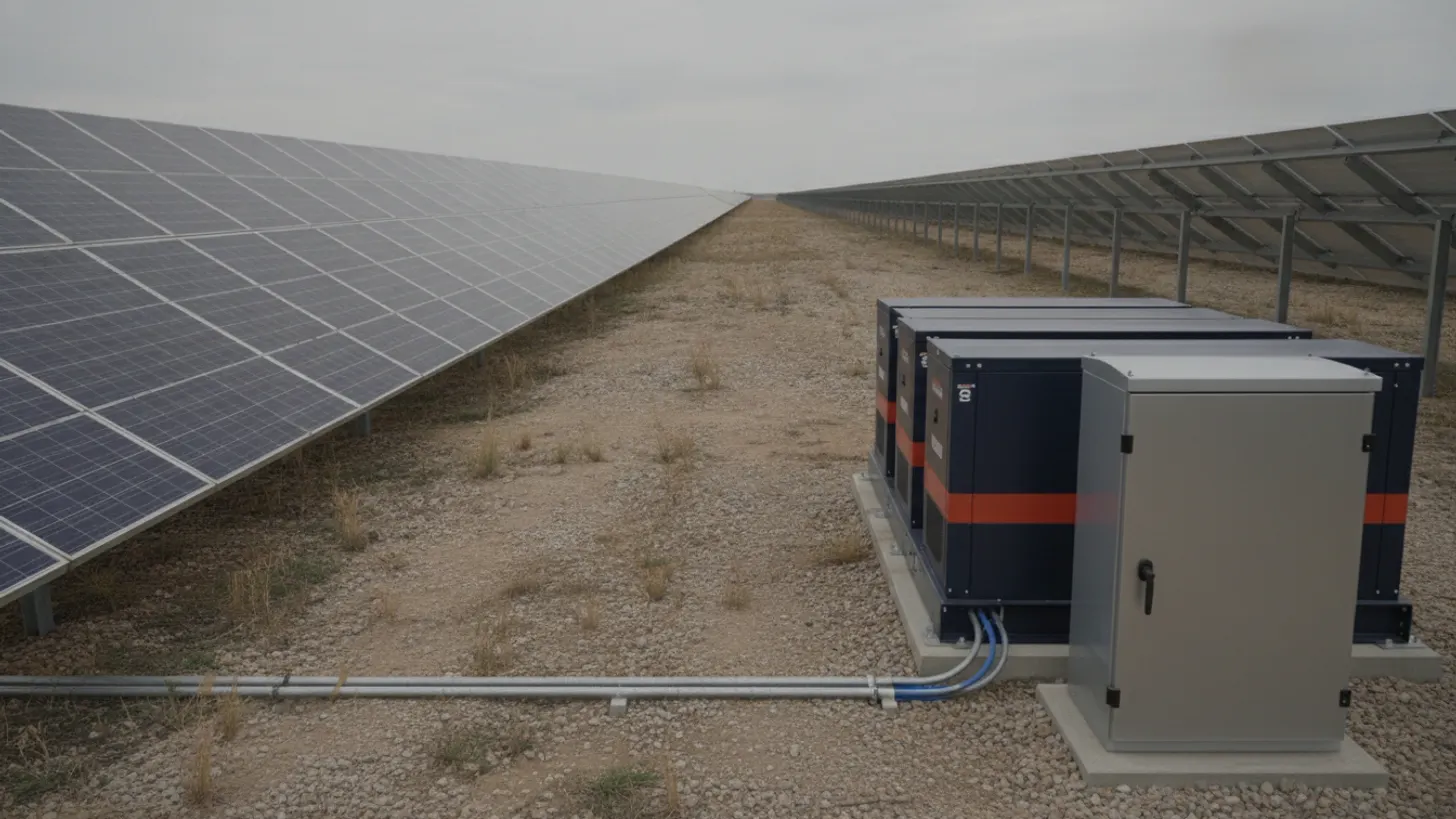
IEC 62541 spans 14 parts and defines the data model that utility-scale solar operators adopt when Modbus TCP polling breaks down across fleets with hundreds of inverters. OPC UA solar SCADA integration matters because it delivers publish-subscribe telemetry, mutual X.509 authentication, and vendor-neutral information models that older field protocols do not offer. Part 14 (IEC 62541-14:2020) is the single most consequential update; the SunSpec companion specification maps existing SunSpec Modbus models directly into the OPC UA address space; and the built-in security stack aligns with NERC CIP-007 controls.
Brian Otto has led OPC UA commissioning programs at utility-scale solar plants across North Carolina, South Carolina, and Texas since 2017, covering more than 1.2 GW of installed capacity. The protocol tradeoffs in this guide come directly from that field work: replacing Modbus TCP polling networks at three plants above 150 MW where aggregator latency became measurable during curtailment events, and standing up plant certificate authorities for OPC UA mutual authentication from scratch on greenfield sites.
OPC UA solar SCADA integration versus Modbus TCP and DNP3
OPC UA solar SCADA integration replaces two protocol limits at fleet scale: Modbus TCP polling latency and the RTU-endpoint bias baked into DNP3. Modbus TCP is a register-read protocol with no built-in authentication, no encryption, and no event model. DNP3 adds unsolicited reporting and secure authentication in version 5, but was designed for grid RTUs, not vendor-neutral inverter data.
OPC UA solves both problems. Its address space carries object-oriented information models, its publish-subscribe transport delivers events without polling, and its security stack starts with mutual certificate authentication. For a 200 MW plant with 800 inverters, each publishing 200 data points, polling every 5 seconds across Modbus TCP means 32,000 poll transactions per second. OPC UA PubSub delivers the same telemetry over UDP multicast or MQTT without hammering the network, per the IEC 62541 series overview.
| Protocol | Data model | Authentication | Transport | Best fit |
|---|---|---|---|---|
| Modbus TCP | Register list | None | Poll and response | Single-device legacy interfaces |
| DNP3 (IEEE 1815) | Object groups | Secure Auth v5 | Unsolicited responses | Substation and RTU telemetry |
| OPC UA (IEC 62541) | Address space objects | Mutual X.509 | Client-server and PubSub | Fleet SCADA and enterprise historians |
For a deeper protocol tradeoff, see our Modbus TCP versus DNP3 solar SCADA protocol guide. DNP3, defined in IEEE 1815, remains the right choice for utility-owned substations; OPC UA is where fleet-level supervisory logic lands.
IEC 62541 standard series parts for utility-scale solar plants
Nine of IEC 62541's 14 parts carry direct weight in a utility-scale OPC UA solar SCADA integration. Part 1 defines the system architecture and reference model. Part 2 covers the security model. Part 3 defines the address space. Part 4 documents the services. Parts 5 and 6 handle base information models and protocol mappings.
Part 8 defines data access, the read/write semantics for real-time values. Part 10 defines programs, used when a supervisory system needs to command inverters to change setpoints. Part 14 (IEC 62541-14:2020) added the publish-subscribe communication model, which enables one-to-many data distribution without client polling. For utility-scale solar, Part 14 is the single most consequential update.
We cover the details separately in Utility-scale BESS capacity testing: EPRI methods for owners.
SunSpec companion spec anchors OPC UA solar SCADA integration
OPC UA solar SCADA integration only scales if inverter vendors expose the same tag names, units, and status enumerations. The SunSpec Alliance solved that with a companion specification that maps existing SunSpec Modbus information models (models 1xx, 7xx, 8xx) into the OPC UA address space as objects, methods, and events.
A SunSpec-compliant string inverter already exposes model 103 (three-phase inverter measurements), models 120 through 124 (nameplate and settings), and model 160 (multi-string tracking). The companion spec re-expresses those as OPC UA object types under a well-known namespace. A supervisory client browsing an OPC UA server sees Inverter.ThreePhaseMeasurements.ActivePower with an engineering unit code, a data type, and a status timestamp, with no proprietary vendor driver required.
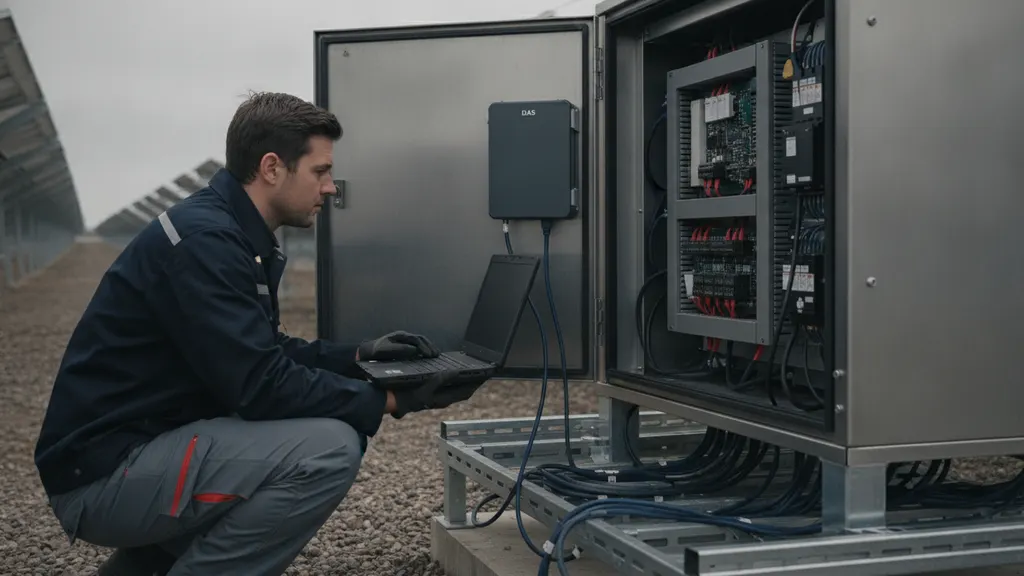
Meters and met stations follow the same pattern. Revenue meter models (203, 204) map to Meter object types. Met station models (307, 308) map to Environmental object types with pyranometer, back-of-module temperature, and wind sensor variables. The commercial payoff: an EPC can swap one vendor inverter for another and the supervisory tag map stays identical, per the SunSpec Alliance published mapping tables.
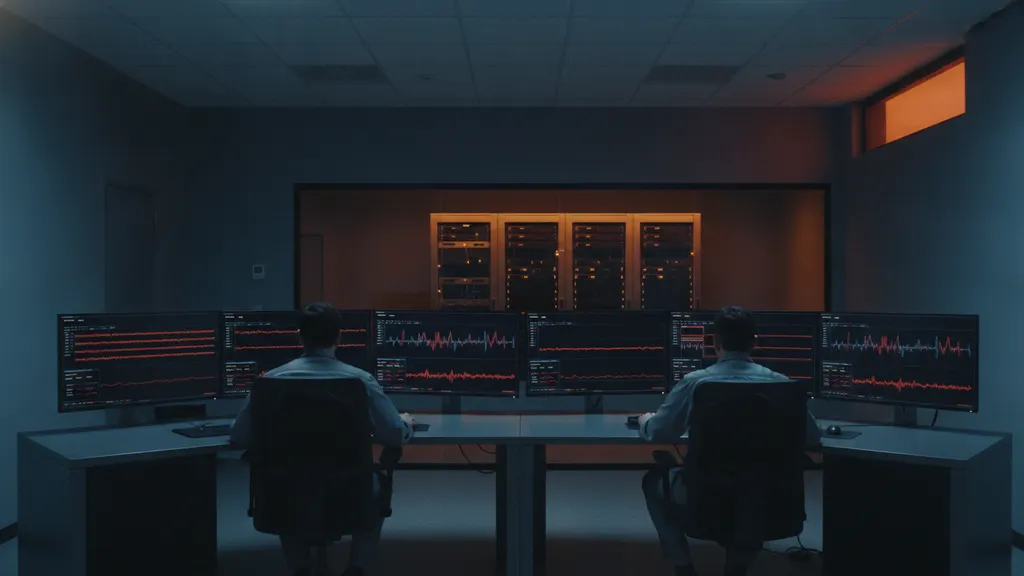
Security controls in OPC UA solar SCADA integration meet NERC CIP-007
OPC UA solar SCADA integration meets NERC CIP-007-6 communication security controls out of the box. IEC 62541-2 defines the security model: mutual X.509 certificate authentication, per-message signing, and TLS 1.2 or higher for encrypted transport. Every OPC UA session negotiates a security policy that binds the client certificate, the server certificate, and the cipher suite.
NERC CIP-007-6 R1 requires that only necessary logical network ports be enabled. OPC UA operates over a single defined TCP port (typically 4840 for binary), which simplifies port control. R4 requires event logging; OPC UA servers log every session, every failed authentication, and every write attempt. R5 requires system access controls and interactive user password management, which OPC UA identity tokens (username, certificate, JWT) satisfy directly. Full standard text is available through the NERC CIP standards library.
NIST SP 800-52 rev 2 sets the government baseline for TLS configuration in critical infrastructure. OPC UA implementations that ship with TLS 1.3 support meet that baseline directly, per NIST SP 800-52 rev 2. For a wider cybersecurity view, our solar SCADA cybersecurity NERC CIP guide walks through the full standard family.
Server deployment architecture from field to enterprise historian
An OPC UA solar SCADA integration deployment follows ISA-95 layers. Level 1 servers sit inside inverters, meters, and met stations. Level 2 servers run inside the Power Plant Controller (PPC) or gateway. Level 3 servers host the plant SCADA HMI and short-term historian. Level 4 aggregates across the fleet into an enterprise historian or portfolio dashboard.
Each layer adds context. Level 1 exposes raw device tags. Level 2 adds plant-level calculations (site power, POI-referenced setpoints, curtailment commands). Level 3 adds alarm shelving, operator commands, and short-term storage. Level 4 aggregates across plants for portfolio analytics. Full ISA-95 layer definitions are specified in the ANSI/ISA-95 standard series.
The Power Plant Controller is where OPC UA meets grid dispatch. See our solar Power Plant Controller SCADA integration guide for setpoint and limit handling at Level 2.
OPC UA solar SCADA integration deployment checklist
OPC UA solar SCADA integration projects that skip a structured commissioning sequence average three to four weeks of rework per 100-inverter block, based on REIG field data from six plants across North Carolina and Texas. These six checkpoints, applied in order, keep the schedule and produce the NERC CIP-007-6 audit documentation trail:
- Confirm each inverter, meter, and met station firmware supports the SunSpec OPC UA companion specification version 1.0 or later.
- Generate a plant certificate authority and issue X.509 certificates to every server and client; rotate on a documented schedule.
- Restrict OPC UA traffic to TCP port 4840 (binary) and block all unused ports at the plant firewall to satisfy NERC CIP-007-6 R1.
- Set security policy to Basic256Sha256 or Aes256_Sha256_RsaPss; retire Basic128Rsa15, which uses deprecated cipher suites.
- Configure publish-subscribe intervals per data class: 1 second for inverter AC power, 10 seconds for weather sensors, 60 seconds for meter revenue registers.
- Log every session, failed authentication, and write attempt to a SIEM feed for CIP-007-6 R4 evidence.
Frequently asked questions
Does OPC UA replace Modbus TCP entirely at the inverter level?
No. Most utility-scale inverters still ship with a Modbus TCP interface as the primary field protocol, and OPC UA typically runs alongside it or through a gateway that translates SunSpec Modbus registers into OPC UA nodes. The migration path most solar operators follow is Modbus TCP at Level 1, OPC UA aggregation at Level 2 in the Power Plant Controller, and OPC UA end-to-end above that. Full replacement at the inverter is only economical when refreshing an entire plant fleet, per the NREL solar research library.
What is the difference between OPC UA client-server and PubSub for solar plants?
Both are core to OPC UA solar SCADA integration but serve different needs. Client-server uses request-response semantics over TCP: a client subscribes to variables and the server pushes updates on change. PubSub, added in Part 14 of IEC 62541, publishes data over UDP multicast or MQTT so any number of subscribers can consume it without maintaining sessions. For a 500-inverter plant with 100,000 data points, PubSub cuts network chatter substantially because publishers do not track individual subscribers. Client-server remains the right choice for commanded writes and browse operations.
Is OPC UA certified for NERC CIP compliance?
NERC CIP does not certify protocols; it certifies the controls applied to Bulk Electric System Cyber Systems. OPC UA provides the technical primitives (mutual authentication, encryption, logging) that make CIP-007-6 R1, R4, and R5 achievable. Auditors evaluate the deployment, not the protocol. Solar plants classified as medium or high impact under CIP-002 must apply all applicable controls regardless of protocol choice. Reference the audit workbooks published under the North American Electric Reliability Corporation compliance monitoring program.
Which OPC UA security policy should a new solar plant deploy?
Deploy Basic256Sha256 or Aes256_Sha256_RsaPss. Basic256Sha256 was the widely adopted baseline for OPC UA over the last decade and remains the interoperability floor. Aes256_Sha256_RsaPss adds RSA-PSS signatures and is the current recommendation for new installations. Avoid Basic128Rsa15 and Basic256; both use SHA-1 signatures and are deprecated. Plan to rotate plant CA certificates annually and end-entity certificates every two years; document the rotation schedule before the plant enters commercial operation. Align cryptographic policy with plant risk classification using NIST cybersecurity framework guidance.
How does OPC UA handle time synchronization for event ordering?
Every OPC UA variable value carries a source timestamp and a server timestamp. Accurate event ordering across a solar plant requires that field-device clocks stay within a few milliseconds of the plant master, which typically means IEEE 1588 Precision Time Protocol (PTP) over the plant network. OPC UA does not define its own time-sync protocol; it consumes whatever the underlying network provides. See our IEEE 1588 PTP time sync field guide for GPS clock deployment across plant switches.
Can existing SCADA historians ingest OPC UA data directly?
Modern enterprise historians (OSIsoft PI, AVEVA Historian, Canary, Ignition) all ship native OPC UA client interfaces. Configure the historian client with the plant CA certificate, the server endpoint URL, and the tag mapping. For plants above 50,000 tags, use a filtered browse or a pre-built node-ID import file; unscoped address-space browses can time out on servers with deep node hierarchies. Legacy historians that only speak OLE-based OPC DA or OPC HDA require an OPC UA gateway to bridge the protocols. New installations should specify OPC UA client support as a mandatory historian requirement, aligned with the IEC 62541 series interoperability profile.