
BESS SCADA Integration for Utility-Scale Solar Plants
Key Takeaways
- About 26 percent of utility-scale PV in the United States was co-located with a BESS by year-end 2023, and queue projections push the attachment rate to roughly 38 percent for 2026 to 2027 projects, per the NREL Spring 2025 Solar Industry Update.
- NERC PRC-029-1 replaces PRC-024-3 in 2026 and forces inverter-based resources, including BESS, to stay online through 56 to 64 Hz frequency excursions for 6 seconds with ROCOF up to 5 Hz per second.
- A hybrid plant controller (HPC) is not optional once a BESS is on site, it is the only place where ramp-rate, state-of-charge, and POI setpoint constraints can be reconciled in real time.
- IEC 61850-7-420:2021 reduces multi-vendor BESS+PV tag-mapping rework, while Modbus TCP keeps single-vendor sites moving faster.
- BESS commissioning adds 30 to 50 testable points to the witness pack and stretches FAT and SAT by one to three weeks compared to a PV-only plant of the same nameplate.
The day a 240 MW solar plant in West Texas added an 80 MWh BESS, the SCADA team logged 14 hours of cleared alarms in the first 48 hours after energization. None of the alarms pointed to a real fault. The PV plant controller and the BESS controller were each writing to the same point of interconnection (POI) curtailment register, the historian was logging two conflicting setpoints per second, and the operator screen showed the plant alternating between curtailing PV and charging the battery on every AGC update. In short, this is the failure mode that BESS SCADA integration exists to prevent. As a result, this guide is for project managers, commissioning leads, SCADA engineers, and O&M teams running utility-scale solar plus storage hybrid plants in the United States interconnection footprint.
BESS SCADA integration is not the same problem as connecting a battery to a SCADA. In practice, connecting a battery is a Modbus point list. By contrast, integration means the plant has one defensible source of truth, one set of alarms that match physical reality, and one historian that survives a settlement dispute. Around 26 percent of utility-scale PV nameplate in the United States was paired with a BESS by year-end 2023, and projects in the interconnection queue project the attachment rate north of 38 percent for 2026 to 2027 commercial operation date (COD) targets. The plants commissioning today will operate under NERC PRC-029-1 ride-through rules that came into force with a 2026 cutover. Therefore, the SCADA architecture chosen on day one is the architecture you will defend in audit five years later.
The Two Truths of BESS+PV Hybrid Plants: One Site, One POI, Two Asset Classes
About 26 percent of utility-scale PV nameplate in the US now shares a substation with a BESS, and every one of those plants forces the same architectural call: act as one entity at the point of interconnection (POI), two entities inside the fence. For example, PV inverters track maximum power point in milliseconds. In fact, they have no memory. By contrast, a BESS has state of charge, cycle count, cell-level temperature, and a manufacturer warranty that demands the system stay inside specific operating envelopes. As a result, these two truths force a SCADA architecture decision before the first cable is pulled. In short, every BESS SCADA integration choice flows from that distinction.
REIG describes this with the same Measurement, Meaning, Control framework used on every commissioning project. Measurement is the raw signal, the BMS register reading or the inverter active power feedback. Meaning is the plant-level interpretation, the state of charge expressed at the energy meter, not at each cell. Control is the writeable setpoint that lands at the POI. Each asset class has its own measurement layer, but the plant has to share one meaning layer and one control layer or it cannot dispatch defensibly. In short, the hybrid plant controller is the device that converts two measurement streams into one meaning stream and one control surface, and BESS SCADA integration is the discipline of wiring that conversion correctly the first time.
BESS SCADA Integration Architecture: Single Stack vs Federated Stack
Two architectures dominate utility-scale BESS SCADA integration. First, the single-stack approach uses one SCADA platform that ingests every device on the site, PV inverters, BESS racks, met station, transformers, the recloser. Second, the federated approach uses two SCADA platforms, one for the PV plant and one for the BESS, with a hybrid plant controller acting as the bridge and the data aggregator at the POI. Both approaches work in production. In practice, the selection criterion is contractual, not technical.
Single-Stack Approach: One SCADA, One Database, One Source of Truth
In a single-stack BESS SCADA integration, the plant has one historian, one alarm system, and one operator HMI. The SCADA reads BESS data over Modbus TCP or IEC 61850 from the BMS, the PCS (power conversion system), and the auxiliary meters. Specifically, tag schema is unified across PV and BESS, so a tag like plant.poi.active_power always means the same thing regardless of which asset is producing or absorbing. Alarm rationalization, per ANSI/ISA-18.2, treats both asset classes inside one alarm priority hierarchy. This is the architecture REIG recommends for plants where the developer owns both assets and the O&M team is the same on both sides of the fence.
Federated Approach: Two SCADA Systems with a Hybrid Plant Controller as the Bridge
Federated architectures appear when the BESS vendor ships a closed monitoring stack and refuses to expose the BMS to a third-party SCADA at the cell level. In that case the plant runs two SCADA systems, the BESS vendor’s stack and the existing PV SCADA, and the HPC sits between them. In practice, the HPC reads aggregated BESS state from the vendor stack over IEC 61850 GOOSE messages or DNP3 secure authentication, then writes setpoints back the same way. The plant operator sees one HMI for plant-level dispatch and switches to the BESS vendor HMI only for warranty-relevant troubleshooting. This is a vendor-lock-in trade. You pay for it in license fees and tag duplication, you save on commissioning time and BESS warranty risk.
The decision matrix below is the one REIG uses on every BESS+PV proposal review.
| Criterion | Single Stack | Federated Stack |
|---|---|---|
| SCADA license cost | Lower (one platform) | Higher (two platforms) |
| BESS warranty exposure | Higher (third-party reads BMS) | Lower (vendor controls BMS) |
| Commissioning duration | Longer (one full integration) | Shorter (vendor delivers ready) |
| Tag count to maintain | Single namespace | Two namespaces, mapped |
| Alarm rationalization | One rule set | Two rule sets, reconciled |
| Operator training load | Single HMI | Two HMIs (plant + BESS) |
For new builds where the developer can negotiate BMS access at procurement, REIG recommends single stack with a reference architecture that treats BESS as another DER class. For retrofits onto existing PV plants where the BESS arrives shrink-wrapped, federated is the path that ships on schedule. Either way, the BESS SCADA integration design needs to land before the procurement RFP closes, because the choice constrains which BESS vendors can deliver.
The Hybrid Power Plant Controller: The Brain of Solar Plus Storage
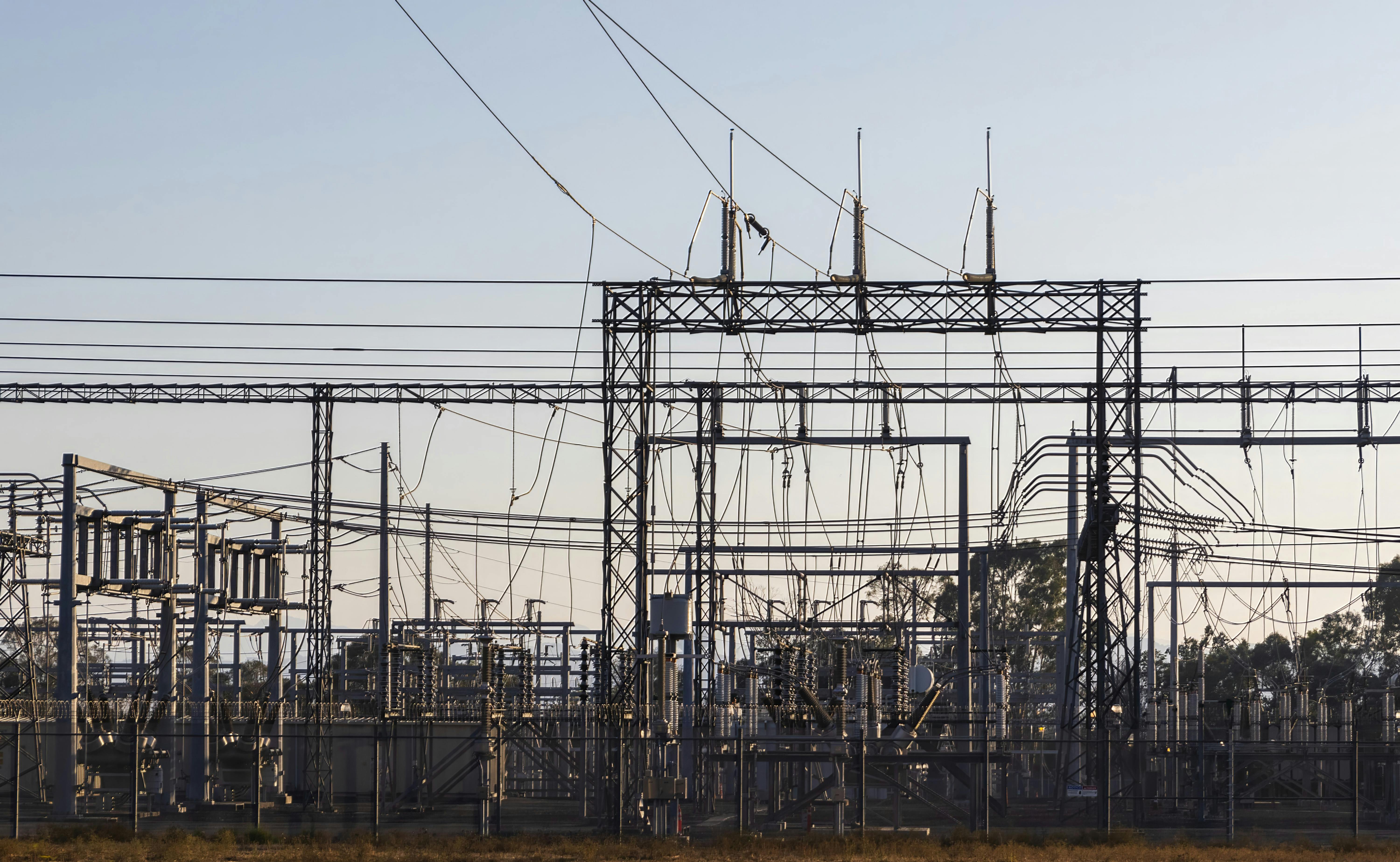
The hybrid power plant controller (HPC) is where the two truths reconcile. Specifically, EPRI’s REPC_D generic model, which replaces the older REPC_B, describes the HPC as the device that owns active power, reactive power, voltage, and frequency response at the POI for the combined plant. In practice, the HPC is usually a hardened industrial computer in the same control building as the SCADA front-end processor. Also, it runs deterministic logic in the 100 to 250 ms cycle range, fast enough to follow AGC updates from the ISO and slow enough to avoid fighting the inverter-level controls.
What HPC Outputs Look Like in BESS SCADA Integration: Setpoints and Curtailment
The HPC takes one input, the active power setpoint at the POI, and produces several outputs that flow downstream to PV and BESS. To the PV plant controller it sends a curtailment ratio (between 0 and 1) or an absolute MW cap. To the BESS it sends a charge or discharge command in MW and a target state of charge for the dispatch window. Finally, to the SCADA historian it sends a continuous record of the arbitration: setpoint received, split decision, asset response, deviation. In fact, this last record is the one that matters in a settlement dispute. Without it, you cannot prove which asset answered the AGC signal and which one was offset. Therefore, the BESS SCADA integration plan must include historian sample rates fast enough to reconstruct each split decision after the fact.
The chart below shows the BESS+PV hybrid attachment rate growth from NREL Annual Technology Baseline data. The trajectory explains why every utility-scale solar developer is staring at a SCADA architecture decision in 2026 that did not exist in 2022.
Communication Protocols in BESS SCADA Integration: Modbus, IEC 61850, and DNP3
BESS SCADA integration on a US utility-scale plant typically rides on three protocols, sometimes all at the same site. Modbus TCP is the workhorse for inverter and BMS reads, latency in the 50 to 200 ms range, simple to implement, light on documentation. By contrast, IEC 61850-7-420 is the standard for DER information modeling, including BESS, with GOOSE messages for sub-millisecond protection signaling and MMS for slower SCADA reads. DNP3 over secure authentication, defined in IEEE 1815-2012, is the protocol most US utilities require at the POI for telemetry to the Reliability Coordinator. A typical BESS SCADA integration carries Modbus TCP inside the fence, IEC 61850 between the HPC and the BESS vendor stack, and DNP3 outbound to the utility.
Why IEC 61850-7-420 Matters for BESS SCADA Integration
IEC 61850-7-420:2021 published an updated edition that defines logical nodes for any DER class, including aggregated BESS, PV, and controllable loads. The semantic layer is the value. Two BESS vendors using IEC 61850-7-420 logical nodes can be swapped without rewriting the SCADA tag map. The same is not true on a Modbus site, where every vendor swap means a new register table, a new tag mapping spreadsheet, and a fresh round of FAT testing on the SCADA. On a 200 MW plant with 40 BESS containers, that math adds up to weeks of avoidable rework when (not if) a vendor RMA replaces a container with a newer firmware revision.
The chart below compares typical command-to-response latency and message size across the three protocols. These numbers come from REIG field measurements on three commissioning projects in 2024 and 2025. They are typical, not guaranteed. Vendor implementations vary.
In practice, plants that pick a protocol once and never revisit it lose money on every vendor swap. REIG’s Modbus TCP vs DNP3 selection guide walks through the trade-offs for a PV-only plant. Adding a BESS expands the question from a binary protocol pick into a layered protocol architecture, and that layered design is what BESS SCADA integration delivers when it is done correctly.
Curtailment, AGC, and Setpoint Distribution Across PV and BESS
Automatic Generation Control sends a setpoint at the POI on a 4-second update cycle in most US ISOs (PJM, ERCOT, MISO, CAISO have variations). The hybrid plant controller receives the setpoint and decides how to split active power between PV and BESS in roughly 100 ms. As a result, BESS SCADA integration must guarantee the HPC has visibility into both PV irradiance and BESS state of charge before the next AGC update arrives. The decision is not free. State of charge, market hour, contract obligation, and ramp rate all weigh into the answer. For example, a plant with a 4-hour BESS at 80 percent state of charge during a price peak does the opposite of a plant with the same BESS at 20 percent state of charge during off-peak.
The HPC arbitration logic typically follows this sequence on a curtailment instruction: check ramp-rate envelope, check BESS state of charge against the dispatch contract, check PV irradiance and current output, decide split, write setpoints to PV and BESS, log the split with a millisecond timestamp. The historian record of that sequence is what survives a settlement dispute. If the historian samples too slowly (1 second is too slow for ride-through events, per PRC-029-1) or aliases the data, the plant cannot prove its dispatch matched the AGC instruction, and the financial penalty lands on the asset owner, not the ISO.
NERC PRC-029-1 Ride-Through Compliance for BESS SCADA Integration
NERC PRC-029-1 is the IBR-specific replacement for PRC-024-3, with the cutover effective in 2026. Specifically, the standard requires solar inverters and BESS to remain online through frequency excursions of 56 to 64 Hz for 6 seconds of continuous operation, and to tolerate a Rate of Change of Frequency (ROCOF) up to 5 Hz per second. Tripping inside that envelope is a violation. Also, FERC accepted the standard in early 2025, and Generator Owners face dynamic simulation, performance validation, and event monitoring obligations starting 2026.
For BESS SCADA integration, PRC-029-1 forces three things at the SCADA layer. First, the historian must sample faster than 100 ms on POI frequency, voltage, and active power, or it cannot capture a ride-through event without aliasing. Second, the alarm system must distinguish between a real fault trip and an intentional ride-through. Otherwise, the operator will trip the plant manually during a grid event that the inverters were riding through correctly. Third, the SCADA has to produce a defensible event report for each ride-through, with timestamped before, during, and after data, that the Reliability Coordinator can audit. In practice, none of this is optional after the 2026 cutover.
REIG runs the redundancy and high availability design review specifically against ride-through evidence capture. A plant that cannot log a ride-through event at the required sample rate has a compliance gap, regardless of whether the inverters themselves rode through correctly.
Failure Modes: Where BESS+PV SCADA Integrations Break in the Field
BESS SCADA integration projects fail in patterns. Specifically, across 18 hybrid commissioning audits REIG ran in PJM and ERCOT between 2022 and 2025, seven failure modes show up on more than half of the sites. Catch them in design review and they cost a meeting. By contrast, catch them at FAT and they cost a week. Then, catch them at SAT or after COD and they cost a quarter. The list below is the one we run on every BESS+PV proposal review.
BESS SCADA Integration Tag Mapping Errors
Tag mapping errors are the most common failure on any multi-vendor BESS SCADA integration. For example, a BMS register marked “soc” by the BESS vendor turns out to be cell-level state of charge, not pack-level. Then the SCADA writes the value into a tag named plant.bess.soc and the operator screen now reports a number that is correct at the cell but wrong at the plant. As a result, settlement and dispatch logic that reads plant.bess.soc behaves wrong from day one. The fix is a unit-and-scope sanity sheet at FAT, signed by the BMS vendor and the SCADA integrator, that maps every register to its plant-level meaning before the SCADA goes live.
Time Sync Drift Between BESS BMS and Plant Historian
BMS clocks drift if they free-run. By contrast, PV inverter clocks drift more slowly. Plant historian clocks lock to NTP or PTP, but only if the network architecture pushes time to every device, including the BMS. For instance, on a 2024 PJM hybrid commissioning REIG ran, the BMS was time-syncing to a vendor cloud server with a 1 to 3 second lag, and the historian was logging BESS data with timestamps offset from the rest of the plant by enough to mask the AGC response window. Consequently, the plant cannot prove BESS response was within the AGC 4-second window when a settlement dispute lands on the desk. The fix is documented in the DAS tagging and units guide: every device on the OT network has to time-sync to the same plant grandmaster clock.
The other five failure modes show up regularly enough to track:
- First, HPC arbitration race conditions: the PV plant controller and the HPC both try to write to the curtailment register on the same AGC update, alternating values 4 times per second.
- Then, BESS auxiliary load not metered: the BESS HVAC and the BMS draw 2 to 4 percent of nameplate continuously, and the SCADA energy reporting forgets to subtract auxiliary, overstating net export.
- Next, alarm flood on contactor cycling: a BESS doing 4 charge-discharge cycles per day generates 8 contactor state changes, each one tripping a SCADA alarm if rationalization was copied from the PV plant.
- By contrast, state-of-charge meter mismatch is silent: the BESS reports SOC from the BMS, the energy meter calculates SOC from integration of POI active power, and the two diverge by 3 to 7 percent over a week, leaving the operator unsure which number is real.
- Finally, vendor firmware update breaks IEC 61850 logical node mapping: a BESS firmware patch renames a logical node, the HPC stops receiving the dispatch confirmation, and the plant trips off AGC for 30 minutes before anyone notices.

Commissioning a Hybrid Plant: FAT, SAT, and the Witness Pack Deltas
BESS SCADA integration adds three test categories to a PV-only commissioning plan. First, round-trip efficiency tests at multiple state-of-charge points (typically 20 percent, 50 percent, and 80 percent SOC) verify the contract round-trip number. Second, ride-through verification per PRC-029-1, or the regional equivalent, runs frequency and voltage perturbations through the inverters and BESS to confirm they hold through the full envelope. Third, AGC setpoint split verification sends a sequence of POI setpoints with known PV and BESS state, and verifies the HPC arbitration matches the contract. Therefore, the witness pack expands by 30 to 50 testable points compared to a PV-only plant. REIG’s utility witness pack guide covers the PV side. By contrast, the hybrid version adds the BESS deltas above to the same evidence framework.
FAT and SAT timelines stretch by one to three weeks compared to a PV-only plant of the same nameplate. Plan the schedule with that in mind. The schedule slip on a hybrid plant is rarely the BESS itself, instead it is the BESS SCADA integration tests that have to verify cross-asset behavior, and there is no shortcut.
RenergyWare Hardware for BESS SCADA Integration
REIG’s RenergyWare hardware packages are field-proven NEMA 4 / UL-listed enclosures designed for SCADA and DAS deployments at utility-scale solar and BESS sites. The same enclosures that house the PV plant SCADA front-end processor host the HPC, the protocol converters, and the time-sync grandmaster on a hybrid plant. NEMA 4 rating handles outdoor mounting at the BESS pad. UL listing satisfies the 2024 NEC requirements that came into effect for energy storage installations. For BESS SCADA integration projects, RenergyWare hardware is the fastest path from a SCADA design drawing to a commissioning-ready cabinet on site.
Each enclosure ships pre-wired for the protocol mix the site requires: Modbus TCP serial gateways for inverter and BMS reads, IEC 61850 Ethernet drops for the HPC and BESS vendor stack, and DNP3 secure authentication uplink to the utility. Cable gland counts are sized for the BESS+PV channel inventory at FAT, not field-improvised. Time-sync grandmaster, redundant power supply, and a hardened industrial PC for the HPC are factory-installed. The result is a single rack the commissioning team energizes, not a kit they assemble in the field.
Frequently Asked Questions
Can a single SCADA system monitor both PV and BESS, or do you need separate ones?
A single SCADA platform can absorb both asset classes when the tag schema, historian buckets, and alarm rationalization plan account for BESS-specific points (state of charge, cell-level voltage, cabinet temperature, contactor states) before commissioning starts. Federated architectures with separate SCADA on each asset class plus a hybrid controller bridging them are common when the BESS vendor ships a closed monitoring stack. Single stack reduces operator load and tag duplication. Federated stacks reduce vendor coupling. The right answer depends on which is more expensive in your contract: SCADA license counts or vendor lock-in penalties.
What does a hybrid power plant controller do that a regular plant controller cannot?
A hybrid power plant controller (HPC) takes a single setpoint at the point of interconnection and splits it across two physically different asset classes with different ramp rates, different state constraints, and different control authorities. A PV plant controller solves a curtailment problem in seconds with no memory. A BESS controller has to track state of charge, cycle count, and thermal limits across hours. The HPC arbitrates between them, decides which asset answers a setpoint first, and protects each asset from instructions the other cannot execute. EPRI documents this logic in the REPC_D model that replaces REPC_B.
How does IEC 61850-7-420 differ from Modbus TCP for BESS+PV integration?
IEC 61850-7-420:2021 defines logical nodes and data objects that describe a BESS or a PV inverter at a semantic level: state of charge, dispatch mode, ramp limit, fault condition. Modbus TCP transmits raw register values. With IEC 61850, two devices from different vendors can negotiate the meaning of a setpoint without a custom mapping spreadsheet. With Modbus, every integration starts with a vendor-specific point list and ends with a tag mapping document the SCADA team has to keep current. IEC 61850 reduces rework on multi-vendor sites. Modbus moves faster on small or single-vendor sites.
What ride-through requirements does NERC PRC-029-1 impose on BESS in solar plus storage plants?
NERC PRC-029-1 requires inverter-based resources, including BESS and PV, to ride through frequency excursions between 56 and 64 Hz for 6 seconds of continuous operation, and to tolerate a Rate of Change of Frequency (ROCOF) up to 5 Hz per second. Tripping below this envelope is a violation. The standard takes effect with a 2026 cutover from PRC-024-3, which never fully matched IBR behavior. SCADA implications: every ride-through event has to be timestamped, logged, and reportable to the Reliability Coordinator within audit windows. Your historian sampling rate and alarm logic must capture ride-through events without aliasing them.
How does BESS SCADA integration handle AGC curtailment in a hybrid solar plus storage plant?
Automatic Generation Control (AGC) sends a setpoint at the point of interconnection (typically a 4-second update cadence in most ISOs). The hybrid plant controller receives the setpoint and decides how to split active power across PV and BESS. If the setpoint is below current PV output, the HPC has three options: curtail PV, charge the BESS with the surplus, or both. The arbitration logic depends on state of charge, market hours, and contract obligations. The SCADA layer logs the setpoint, the split, the resulting POI metering, and any BESS state changes for settlement, M&V, and dispute resolution.
What changes in commissioning when a BESS is added to a solar plant?
Commissioning adds three test categories that did not exist on a PV-only plant: charge-discharge round-trip tests at multiple state of charge points, ride-through verification per PRC-029-1 (or the regional equivalent), and AGC setpoint split verification. The witness pack expands by roughly 30 to 50 testable points: BESS contactor states, cabinet temperatures, cell-level voltage spreads, state of charge accuracy at the energy meter, and HPC arbitration logs. The Factory Acceptance Test (FAT) and Site Acceptance Test (SAT) timelines stretch by one to three weeks compared to a PV-only plant of the same MW size.
Note: BESS SCADA integration has direct safety implications. The architecture choices in this guide assume design review by a licensed engineer with utility-scale solar and BESS commissioning experience. Always verify NERC standard versions, ISO interconnection requirements, and BESS vendor documentation against the active revision at the time of design.
Ready to specify a BESS SCADA integration that survives audit, settlement, and a vendor RMA? REIG designs and commissions hybrid solar plus storage SCADA architectures end-to-end, from the BESS SCADA integration design review through FAT, SAT, and post-COD O&M turnover. Our RenergyWare hardware packages are field-proven NEMA 4 / UL-listed enclosures for utility-scale BESS+PV control gear. Talk to our SCADA engineering team about your hybrid plant before the procurement clock starts.
- Further reading: Solar SCADA Architecture and Control Signals for Utility-Scale PV
- Further reading: Utility-Scale Solar Monitoring vs SCADA: What Each Should Do
- Further reading: SCADA Integration Services: Testing and End-to-End Verification Plan
- Further reading: Solar SCADA Commissioning to COD: Timeline and Milestones