
Direct Buried vs. Conduit Fiber: Making the Right Choice for Your Project
When designing a fiber optic network, one of the most important early decisions is how to install the cable. Should you place it directly in the ground, or run it through protective conduit? Both methods – direct buried and conduit installation are widely used in renewable energy, utility, and telecommunications projects. Each approach has unique advantages and trade-offs that can affect cost, reliability, and long-term maintenance. Understanding these differences is essential for making the right choice for your project.
Direct Buried Fiber
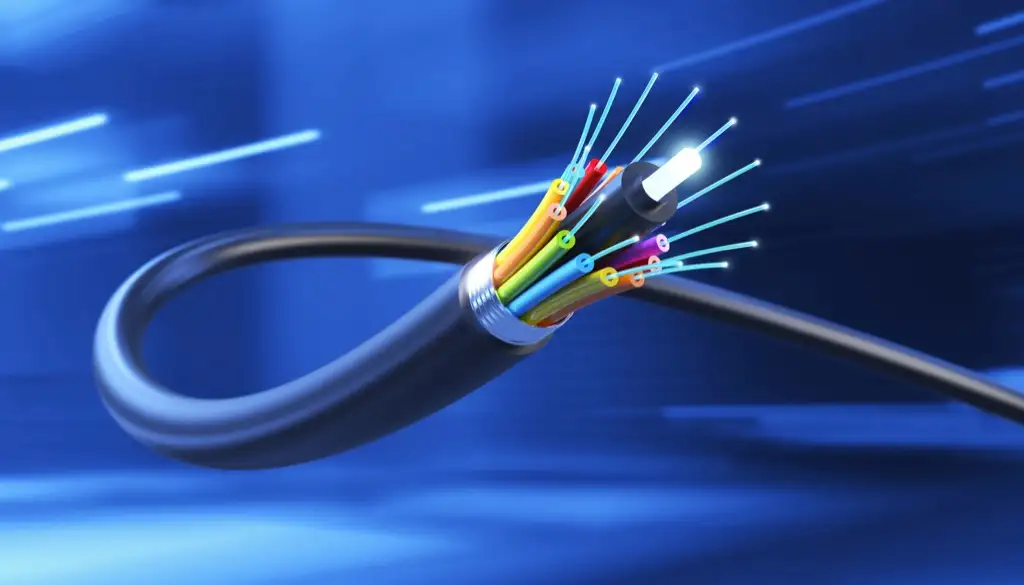
Direct buried fiber is manufactured with an armored jacket that allows it to be placed directly in the ground without additional protective conduit. This armor—often corrugated steel or dielectric materials—provides durability against moisture, rodents, and soil pressure.
Advantages
Lower upfront cost:
Since no conduit or innerduct is required, installation is often faster and cheaper.
Efficient for rural projects:
On large renewable energy sites or long transmission routes, direct burial reduces material and labor costs.
Durability:
Armored cable is designed to withstand harsh underground environments, including soil pressure and moisture exposure.
Considerations
Repairs are disruptive:
If the cable is damaged, excavation is required to access it, which can be time-consuming and costly.
Limited flexibility:
Future expansions or reroutes often require new trenching and cable installation.
Soil conditions matter:
In rocky or unstable soil, direct burial can increase the risk of damage.
Conduit Fiber
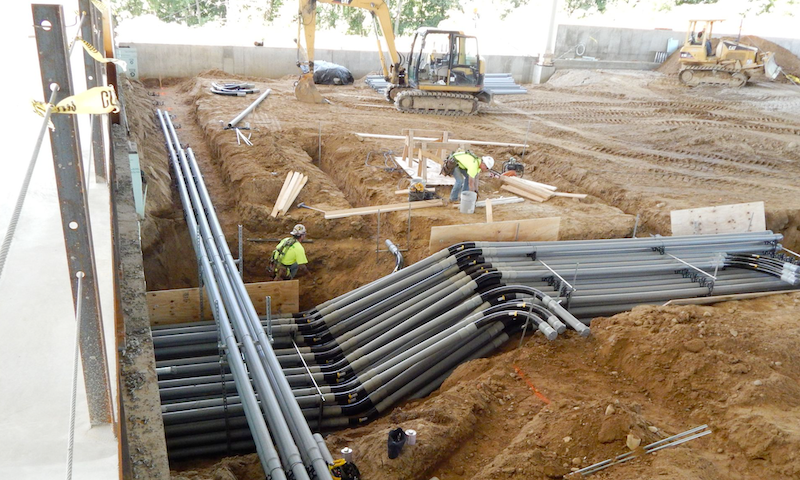
Conduit installation involves pulling or blowing fiber optic cable through a protective plastic or steel conduit that has been buried underground. Often, multiple ducts are placed in the same trench, allowing for additional capacity in the future.
Advantages
Ease of maintenance:
Damaged cables can be replaced or upgraded without new trenching simply pull in new fiber.
Future-proofing:
Spare ducts provide capacity for growth, making this ideal for expanding campuses, data centers, or utility substations.
Enhanced protection:
Conduit shields fiber from crushing forces, moisture, and rodents better than armor alone.
Considerations
Higher upfront cost:
Materials and labor for conduit installation are more expensive than direct burial.
Complex installation:
Requires careful design to avoid bends, obstructions, or excessive pulling tension.
Space requirements:
Conduit systems need larger trenches compared to single direct buried cables.
How to Decide
- Project Size and Scope
- Large, linear projects (solar farms, transmission lines) often favor direct buried to save cost and time.
- Projects with multiple buildings, substations, or campuses often benefit from conduit to allow future upgrades.
- Budget vs. Longevity
- If minimizing upfront cost is the priority, direct buried is attractive.
- If long-term flexibility and reduced repair costs are more important, conduit provides better lifecycle value.
- Environmental Conditions
- Rocky soil or areas prone to rodent activity may justify conduit’s added protection.
- Stable rural soils often suit armored direct burial.
The choice between direct buried and conduit fiber isn’t one size fits all. Direct buried cable offers speed and cost savings for large-scale projects, while conduit systems provide flexibility, protection, and long-term scalability. By weighing site conditions, budget, and future needs, project teams can select the installation method that ensures reliable, cost-effective communications for years to come.