
Solar SCADA cybersecurity: NIST controls field guide for PV plants
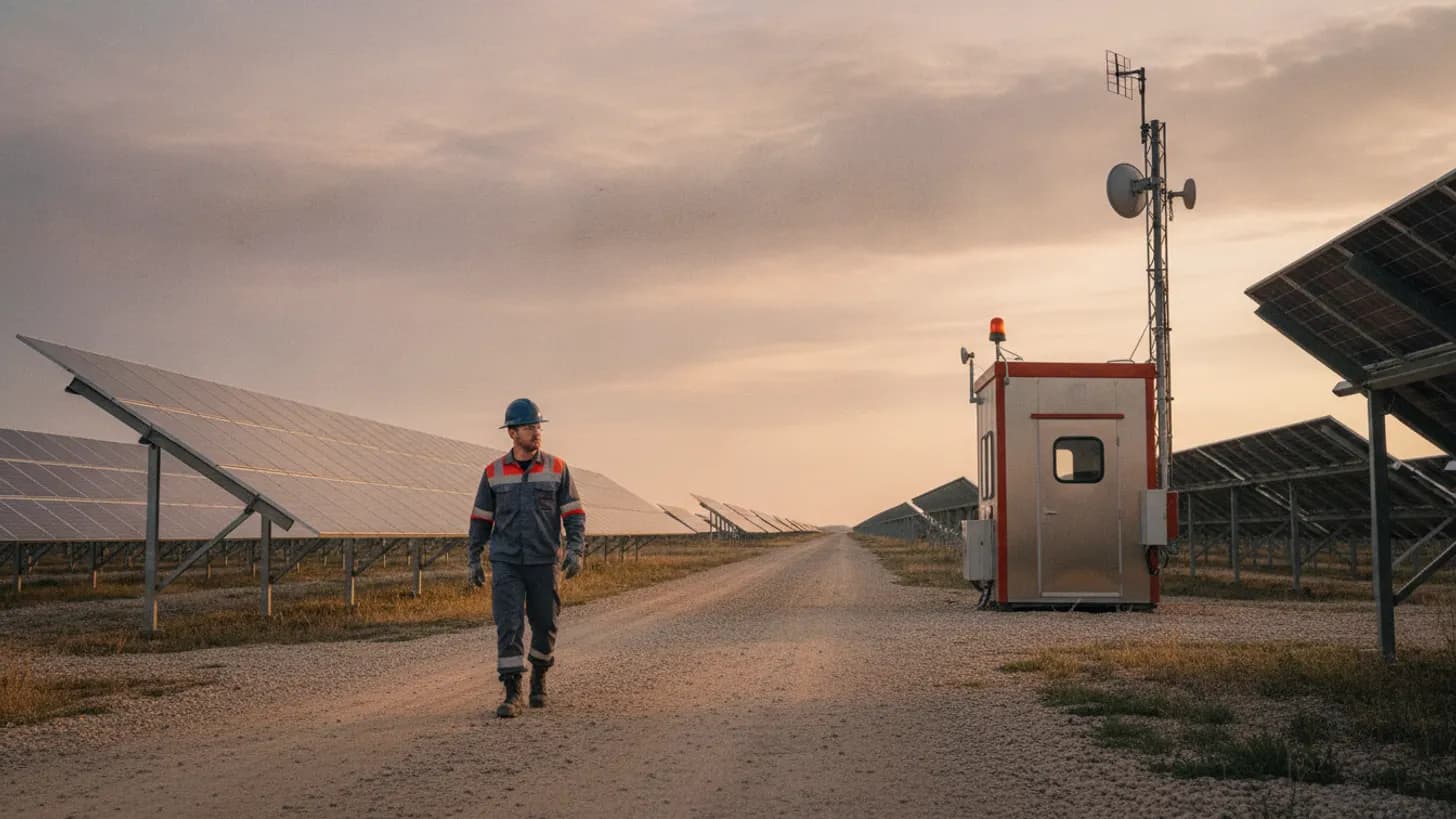
NIST published Cybersecurity Framework 2.0 in February 2024 with six functions and 22 categories, and the new Govern function is the one most solar owners skip. That gap is where solar SCADA cybersecurity programs fail a review: the firewall rules exist, the ownership does not. This guide maps CSF 2.0, NIST SP 800-82 Rev. 3, and ISA/IEC 62443 onto a working utility-scale plant, zone by zone.
What makes solar SCADA cybersecurity different from plant IT
A solar plant runs deterministic control traffic over protocols built without authentication, on hardware that stays in service for two decades. IT security tolerates a reboot; a controller reboot during a voltage ride-through event can cost a trip and a curtailment dispute. Safety and availability come first, then integrity, then confidentiality.
NIST says this directly: operational technology security has to account for performance, reliability, and safety requirements, which is why an enterprise baseline dropped onto an inverter block network breaks things. The NIST SP 800-82 Rev. 3 guide to operational technology security is the document to hand your IT group before they scan anything. Practical solar SCADA cybersecurity work begins by accepting that a plant controller cannot be patched on Tuesday night like a file server.
Protocols that trust the network
Modbus TCP and DNP3 without secure authentication carry no identity at all: any host that can reach port 502 can write a setpoint. IEC 61850 GOOSE publishes multicast trip messages with no handshake, so segmentation does the work the protocol will not, as covered in our solar substation IEC 61850 GOOSE messaging guide. OPC UA is the exception in a modern plant, carrying certificate-based authentication and signed or encrypted channels; the OPC UA for utility-scale solar SCADA integration guide covers how to configure it. Time sources deserve the same scrutiny, because an unauthenticated clock feed skews every log you later depend on for forensics, a point expanded in the IEEE 1588 PTP time synchronization field guide.
That gap is not theoretical. During 2024 commissioning at a 48 MW PV plant in the Southeast, a contractor's laptop stayed bridged to the office network and reached the inverter block's Modbus TCP segment, writing a setpoint change with no prompt and no log entry tied to a user. The plant's operations team caught it only because an alarm fired on a block scheduled for maintenance downtime. Tracing the path, revoking the access, and rerunning a factory acceptance test on the affected inverters took three weeks and cost the EPC close to $40,000 in engineering time and schedule slip.
Assets with twenty-year service lives
Inverters, trackers, met stations, protection relays, RTUs, managed switches, and cellular gateways ship with vendor accounts, open diagnostic services, and firmware that may not have changed since factory acceptance testing. Device standards in the IEEE catalogue, including IEEE 1547 for interconnection, set functional behavior rather than network hardening, so hardening falls to the owner. Treat the commissioning punch list as the first security baseline: default credentials removed, unused ports disabled, firmware recorded per serial number.
We cover the details separately in Solar substation breaker failure protection: testing field guide.
How to apply NIST CSF 2.0 to solar SCADA cybersecurity
Start with Govern. The NIST Cybersecurity Framework 2.0, published in February 2024, added Govern as a sixth function so risk ownership, policy, and supply chain expectations stop living in email threads. For a plant fleet, Govern is where you name who approves a firmware change.
The framework spreads 22 categories across those six functions, and the distribution shows where it expects documented effort. The chart below plots category counts per function from the CSF 2.0 Core.
Mapping functions to field work keeps solar SCADA cybersecurity from becoming a paperwork exercise. The table pairs each function with one plant action and the artifact that proves it happened.
| CSF 2.0 function | Field action at a PV plant | Evidence artifact |
|---|---|---|
| Govern | Name the approver for inverter and relay firmware changes | Signed change control policy |
| Identify | Inventory every addressable device per block, trackers and met stations included | Asset register with firmware versions |
| Protect | Enforce zone boundaries and remove shared vendor accounts | Firewall rule export and account review |
| Detect | Mirror the control VLAN to a passive protocol monitor | Alert log with tuning records |
| Respond | Run a tabletop on loss of the plant controller link | Exercise report with timestamps |
| Recover | Restore a relay and inverter configuration from backup on the bench | Dated restore test record |
Zones, conduits, and remote access for solar SCADA cybersecurity at utility-scale plants
Draw the plant as zones with named conduits between them, then prove each conduit with a rule export. ISA/IEC 62443 defines security practices across the lifecycle of industrial automation and control systems, and its zone and conduit model fits a PV plant better than a flat VLAN list.
The ISA/IEC 62443 series of standards sets target security levels per zone, which gives procurement something enforceable to write into an EPC scope. Most solar SCADA cybersecurity gaps found in the field are boundary gaps: a vendor laptop on the control VLAN, a cellular router with an exposed management port, or a historian reaching down into Level 1 to poll an inverter directly.
A solar SCADA cybersecurity baseline for remote access
Vendors need access; standing inbound tunnels to Level 1 devices are not how to give it. Route every session through a monitored jump host with multi-factor authentication, time-box the account to the work order, record the session, and close it when the ticket closes. Guidance from the U.S. Department of Energy's Office of Cybersecurity, Energy Security, and Emergency Response and NREL research on distributed energy resource and inverter security lands on the same point: the access path matters more than the appliance brand.
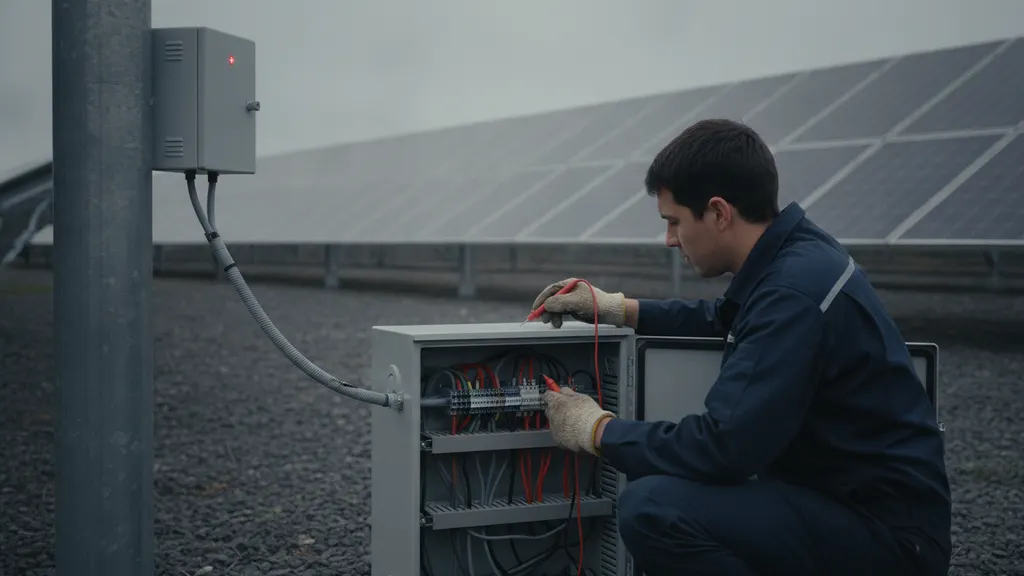
How to test solar SCADA cybersecurity without tripping the plant
Test in the order that cannot hurt production: passive first, bench second, live last. Field data on legacy RTUs and relay cards puts the fault rate from unthrottled active scans near one device in twenty, so a mirrored port and a protocol-aware collector that surface undocumented hosts and plaintext writes come first, before any packet reaches the control network.
Active scanning is where plants get hurt. Legacy RTUs and relay communication cards can fault on malformed or high-rate probes, so scan a spare or bench unit first, hold rate limits, and schedule anything live inside a planned outage with the operator on the line. The discipline matches solar tracker commissioning practice: known state, one change at a time, documented rollback. Entities within NERC CIP standards scope also record the change before the test rather than after it, and EPRI research on operational technology security testing is worth reading before a first live window. Disciplined solar SCADA cybersecurity testing produces a report the O&M team can act on, not a plant trip.
Evidence EPCs and owners keep for audits and incident response
Keep the artifacts that answer three questions: what is connected, who changed it, and when recovery was last proven. Auditors, insurers, and incident responders ask for the same records, so build the set once and keep it with the plant documentation.
- Asset register per block with make, model, firmware, and address, reconciled at every outage.
- Zone and conduit drawing with a firewall rule export that matches it line for line.
- Remote access log showing account, session recording, and the work order it served.
- Firmware and configuration backups, plus a dated restore test on a bench device.
- Change records tied to the approvers named in your governance documentation.
- Incident timeline template with the synchronized clock source identified.
Mature solar SCADA cybersecurity programs store these as plant records next to the as-builts, not in a folder nobody opens. Incident handling structure from NIST Computer Security Resource Center publications on incident handling gives the shape of the response, while reliability reporting obligations approved by the Federal Energy Regulatory Commission set the clock. One record pays for itself early: the communications scope agreed during the solar grid interconnection study often dictates which utility-facing conduits exist at all.
Frequently asked questions
Does NERC CIP apply to a utility-scale solar plant?
Scope follows registration and the BES Cyber System definition, not panel count. If the facility connects to the bulk electric system and its control systems meet that definition, requirements attach, usually at low or medium impact for a single generating facility. Low impact still carries awareness, physical access, electronic access, and incident response obligations. Current requirement text and applicability tables are published on the NERC standards site. Document the scoping analysis before an audit, because the common finding is not a weak control, it is an undocumented scoping decision nobody can reconstruct.
Where should a solar SCADA cybersecurity program start?
With an inventory and a passive capture, in that order. You cannot zone a network you have not drawn. Pull a device list per block covering inverters, trackers, met stations, relays, RTUs, switches, and gateways, then mirror the control VLAN into a passive collector for a week and compare what talks against what the drawing claims. Nearly every solar SCADA cybersecurity review finds hosts nobody owns. The method and its operational cautions follow NIST guidance on operational technology security, which treats availability and safety as design constraints rather than afterthoughts.
Can the inverter network share a firewall with the office network?
A shared appliance is acceptable; a shared rule set is not. Plenty of plants run one firewall with separate physical interfaces and distinct zones, which satisfies the zone and conduit model as long as inter-zone traffic is denied by default, logged, and limited to named services. What fails review is a flat policy where an office subnet can reach port 502 on an inverter gateway. Target security levels per zone, defined in the ISA standards program for ISA/IEC 62443, give a defensible basis for which conduits exist and what each one carries.
How often should solar plant SCADA firmware be patched?
On risk, not on a calendar. Subscribe to vendor advisories for inverters, relays, RTUs, and network gear, rank them by exposure and exploitability, then stage any update on a bench unit or spare before touching production. Apply during a planned outage with a configuration backup taken first and a tested rollback ready. Some devices will never receive a fix, which turns the decision into compensating controls: tighter conduits, stricter remote access, closer monitoring. Advisory sources and sector patching practice are covered through U.S. Department of Energy cybersecurity programs for the energy sector.
Is ISA/IEC 62443 required if we already follow the NIST framework?
They answer different questions, so use both. CSF 2.0 organizes outcomes and ownership, which is what an owner, lender, or board wants to review. ISA/IEC 62443 supplies engineering requirements, security levels, and zone definitions you can write into an EPC specification or a factory acceptance test. A workable solar SCADA cybersecurity program uses CSF 2.0 for governance and reporting while citing 62443 clauses in procurement documents. The series and its coverage of industrial automation and control system lifecycles are catalogued by the IEC publications catalogue.
What should we do first if a plant SCADA system looks compromised?
Preserve, then isolate at the boundary. Capture logs, historian data, and the clock reference before anyone reboots anything, because a lost time source destroys the timeline you will need later. Cut suspect conduits at the firewall rather than pulling controllers off line, since dropping a plant controller can create the outage an attacker could not. Notify according to registration and contract obligations, and run the response against a written plan. Roles, evidence handling, and reporting structure are set out in NIST incident handling publications.