Solar Curtailment and AGC for Utility-Scale Solar Plants
Key Takeaways
- CAISO curtailed 3.4 million megawatt-hours of wind and solar in 2024, a 29 percent jump from 2023, with solar making up 93 percent of the total per the U.S. Energy Information Administration.
- Solar curtailment shows up as a four-second AGC setpoint at the point of interconnection, and the plant controller has to ramp linearly between targets without exceeding interconnection-defined ramp limits.
- NERC PRC-029-1 takes effect in 2026 and requires inverter-based resources to ride through 56 to 64 hertz for six seconds with a 5 hertz per second ROCOF tolerance per NERC.
- IEEE 2800-2022 defines uniform transmission-connected IBR requirements for active power, reactive power, and fast voltage support that curtailment logic must respect, per IEEE Standards.
- The seven AGC failure modes most often missed during commissioning are setpoint scaling errors, missing loss-of-comms failsafe, reactive coordination drift, ramp-rate divergence between PPC and inverters, dead-time exceeding the audit window, telemetry latency assumed instead of measured, and curtailment vs ride-through events confused in alarm logic.
Solar curtailment never comes with an explanation. The ISO sends a setpoint, and the plant has four seconds to respond. That response is what the audit reads twelve months later when settlement disputes appear.
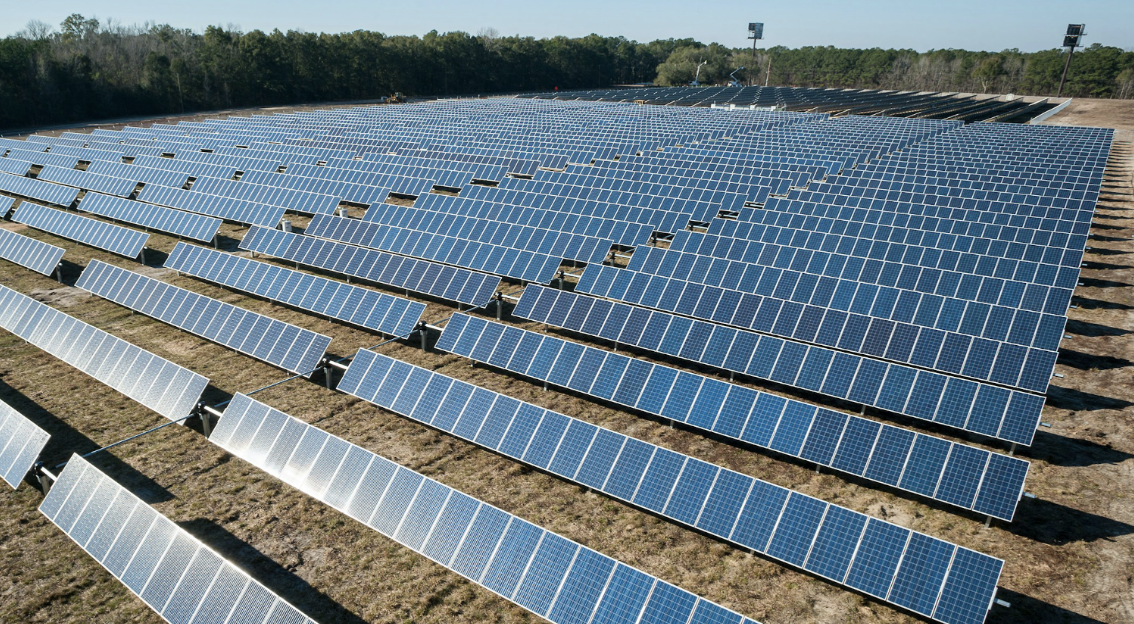
Most utility-scale solar teams already know curtailment is rising. CAISO crossed 3.4 terawatt-hours of wind and solar curtailment in 2024, with solar at 93 percent of the total, per the U.S. Energy Information Administration. ERCOT is on the same path from a smaller base, with utility-scale solar curtailment projected to reach 19 percent by 2035 versus 9 percent in 2022, per EIA Today in Energy. The macro story is well covered. This post focuses on what happens inside the plant: how a curtailment instruction moves from ISO to inverter, what gets logged, what gets audited, and which failure modes show up at FAT and SAT.
This post is for project managers, commissioning leads, SCADA engineers, and O&M teams who need AGC participation to be defensible from day one.
How Solar Curtailment and AGC Connect at the Plant Level
Solar curtailment is an instructed reduction in active power output. The plant could deliver more, but it is being told not to. Automatic Generation Control, or AGC, is the mechanism that delivers that instruction in real time. It does so four seconds at a time over the same telemetry channel the plant uses to report actual output back.
Still, the two are not the same thing. Solar curtailment is the policy decision: economic dispatch, transmission congestion, voltage stability, or ride-through. AGC is the transport. A plant can be curtailed without AGC if the operator schedules a manual setpoint at a market interval. A plant can also be on AGC and never receive a curtailment instruction because the setpoint continues to track available output.
This distinction matters during commissioning. The alarm logic, historian schema, and witness pack are different for each case. A scheduled solar curtailment is a slow event with audit trails measured in minutes. An AGC-driven curtailment is a tight loop measured in seconds. When teams merge the two in one alarm rationalization spreadsheet, plants often ship with dispatch behavior that looks online but is functionally wrong.
Setpoint Path: How a 4-Second AGC Signal Reaches the Inverter
CAISO sends a direct megawatt setpoint to participating units every four seconds, per the CAISO AGC Requirements and Telemetry document. The setpoint moves linearly from the starting value to the target across one or more four-second intervals, subject to an agreed ramp rate. ERCOT runs Security-Constrained Economic Dispatch on a five-minute cadence, with AGC layered on top for frequency response. The transport protocol is typically ICCP for the ISO link, with DNP3 or Modbus TCP carrying the same signal from the plant gateway to the Power Plant Controller.
The chain looks simple on a diagram. In the field, it has six places to fail.
ISO Mapping and Gateway Timing
The first failure point is ISO-side mapping. A setpoint is just a number with a unit. That unit can be megawatts, per-unit normalized to plant nameplate, or a percentage of available output, depending on the balancing authority. Teams that work across multiple ISOs almost always see at least one project where the setpoint is scaled wrong by a factor of ten on the first FAT day.
The second failure point is the plant gateway. ICCP-to-DNP3 conversion at the substation gateway usually adds 0.5 to 2 seconds of latency in a tuned system. Legacy installations can be slower. If the gateway timestamps the message at receipt rather than at ISO emit time, the historian can look compliant even when the actual plant response was late.
PPC and Inverter Execution
The third failure point is the PPC. The Power Plant Controller has to translate the setpoint into per-block targets. It also has to apply the active ramp limit, reactive priority, and any voltage-droop trim. When PPC ramp rates disagree with inverter ramp settings, the response oscillates around the target instead of tracking it cleanly.
The fourth failure point is the inverter. Inverter-level response is fast. Milliseconds are typical, not seconds. The bottleneck is rarely the silicon. The problem is usually configuration: enabled modes, override flags, power factor coordination, or reactive priority fighting active priority during a curtailment event.
Telemetry Return and Historian Resolution
The fifth failure point is telemetry return. Real-time MW, MVAR, voltage, and frequency at the point of interconnection must land back at the ISO with timestamps aligned to the same four-second clock. NTP drift on the gateway clock can turn a clean response into a phantom violation in the audit log.
The sixth failure point is the historian. Sampling rates below one sample per second alias the response. A plant can ramp cleanly across a four-second AGC tick and still look like it overshot or undershot once the historian compresses the event into a thirty-second average. That sampling decision is made early in system design, and it is expensive to change after COD.
Solar Curtailment by ISO: 2024 Numbers and What Drives Them
The macro picture in 2024 was the largest annual solar curtailment increase CAISO has ever recorded. The drivers, however, are not symmetric across regions. That matters when an EPC designs a plant for one ISO and signs PPAs that settle against another.
CAISO: Midday Oversupply
In CAISO, oversupply during spring midday hours is the main driver. Solar output peaks while load remains moderate. Demand-side reduction is limited, and the grid reaches a soft ceiling on what neighboring balancing authorities will accept through the Western Energy Imbalance Market. In 2024, that market took 274,000 MWh of would-be curtailment off the table, about 8 percent of the annual total, per EIA Today in Energy. Battery capacity in CAISO also grew 45 percent in 2024 to 11.6 gigawatts. That growth helped absorb shoulder-hour solar output that previously spilled.
ERCOT: Transmission Congestion
ERCOT is different. Its primary driver is transmission congestion on coastal export interfaces. Wind and solar together met 36 percent of demand in the first nine months of 2025, with solar generation up 50 percent year over year, per EIA. The 2024 ERCOT Constraints and Needs report also flags coastal wind curtailment as a transmission-driven event tied to the South Texas export interface. Similar exposure is rising for solar in the lower Rio Grande Valley.
The pattern is similar across regions: solar curtailment is growing faster than underlying capacity. That gap sits between deliverable hours and bid hours. It is also the operating metric asset managers watch against PPA economics. The curtailment-aware KPI framework we use during monitoring setup separates economic and reliability events on one dashboard, so operators do not have to trace the cause through three different historians.
The Power Plant Controller’s Role in AGC Execution
The PPC is the layer that turns ISO instructions into plant behavior. On a pure PV plant, it tracks four priority modes: active power (P), reactive power (Q), voltage (V), and power factor (PF). Frequency response (F) is layered on top as an autonomous primary response in jurisdictions that require it. Most plants run in P-priority during normal AGC dispatch, with Q-priority enforced during voltage events at the point of interconnection.
Mode Arbitration
The arbitration logic between modes is where field surprises usually live. A reactive power command from the ISO may demand more MVAR than the inverters can supply while still holding active power at setpoint. The PPC then has to choose. That choice must be configured, witnessed, and logged. Default vendor logic that derates active power to satisfy reactive demand without telling SCADA is a common reason plants miss commercial obligations in the first month after COD.
Hybrid Plant Split Logic
Hybrid plants add another layer. The hybrid plant controller has to split one setpoint between PV inverter blocks and a battery bank with very different response characteristics. The PV array reacts in seconds and has no memory. The BESS has to manage state of charge, cycle count, and thermal limits over hours. We covered that arbitration logic in our BESS SCADA integration playbook. Curtailment behavior is a narrower subset of that same control problem.
What Belongs in the Witness Pack
What ends up in the witness pack is a documented test of every priority mode under realistic field conditions. It is not a benchtop simulation. The pack should include loss-of-comms behavior, ramp-rate divergence between PPC and inverters, and reactive coordination during a voltage transient. On a 200-megawatt plant, the point list for an AGC FAT usually runs 80 to 120 testable points. The SAT extends those same tests against the live ISO link.
Solar Curtailment Causes: Economic, Reliability, Voltage, Export-Limit
The categories are not interchangeable. They carry different audit windows, different settlement implications, and different SCADA logging requirements. The table below is the version we use during alarm rationalization on AGC-participating plants.
| Category | Trigger | Cadence | Settlement implication |
|---|---|---|---|
| Economic | Oversupply, low LMP, negative pricing window | Real-time market, 5 to 15 min | Plant typically delivers, paid cleared price (often near zero or negative) |
| Reliability | Transmission overload, contingency analysis result | 4-second AGC override | Typically uncompensated under tariff; may trigger PPA force-majeure language |
| Voltage stability | Voltage out of band at POI, reactive-power exhaustion upstream | Continuous, V-priority mode | Often unmetered; logged as derate, not curtailment |
| Export-limit | Interconnection agreement cap (e.g., 200 MW on a 240 MW plant) | Continuous, hard limit at PPC | Pre-negotiated; appears as flat-top, not as event |
| Ride-through residual | Frequency or voltage excursion forces inverter mode change | Subsecond, autonomous | NERC-reportable under PRC-029-1; six-second window |
Why Voltage-Driven Events Are Easy to Misread
Voltage-driven solar curtailment is where IEEE 1547-2018 smart inverter modes do the most work. Volt-VAR, Volt-Watt, and Frequency-Watt curves let the inverter trim active or reactive output autonomously to support terminal voltage, per NREL’s Highlights of IEEE 1547-2018 Implementation Considerations. Those curves are configured during commissioning. Yet they are not visible to the SCADA operator unless the commissioning engineer also exposes the curve parameters as historian tags.
That second step is forgotten on many projects we audit. When that happens, the curve fires correctly during a voltage event, the plant data acquisition system records the active-power dip, and nobody can tell whether the dip was a curtailment, a derate, or a fault response.
This is a Measurement, Meaning, Control problem. Measurement is the active-power tag at the inverter. Meaning is the event label: economic, reliability, voltage, export-limit, or ride-through. Control is the response that created the dip. Without all three, post-event review turns into guesswork.
NERC PRC-029-1, IEEE 2800-2022, and FERC Order 901: Compliance Stakes
The regulatory layer hardened in 2024 and continues to harden through 2030. Three documents define the compliance envelope for AGC participation and curtailment behavior on transmission-connected solar plants today.
NERC PRC-029-1
NERC PRC-029-1 replaces the older PRC-024-3 with an IBR-specific ride-through standard. It requires continuous operation from 56 to 64 hertz for six seconds and a 5 hertz-per-second ROCOF tolerance. Voltage envelopes are also tighter than under the older standard. Tripping inside this window is a violation. The cutover is 2026, and the implementation plan is documented at NERC. For SCADA teams, the implication is clear: ride-through events need one-second timestamps or better, and alarm logic has to separate ride-through from curtailment.
IEEE 2800-2022
IEEE 2800-2022 is the transmission-side bookend. It defines uniform technical minimum requirements for IBR active power control, reactive power control, fast voltage support, negative-sequence current injection, and protection coordination, per IEEE Standards Association. It does not change AGC mechanics directly. Instead, it sets the performance floor below which inverter and PPC behavior cannot fall, regardless of regional rules.
FERC Order 901
FERC Order 901, issued in October 2023, directed NERC to build a multi-year reliability standards program for IBR data sharing, model validation, planning studies, and performance requirements. Milestone 1 standards were filed on November 4, 2024. Milestone 3 is due on November 4, 2025, with full implementation by January 1, 2030, per FERC. Bulk Power System-connected IBRs that did not meet the prior BES definition must register no later than May 2026 under the IBR Registration proceeding. Plants already participating in AGC will have both model data and performance behavior re-evaluated under this framework.
The practical effect is simple. The witness pack is getting bigger. FAT and SAT scopes that were acceptable in 2022 now need additional ride-through verification, model validation evidence, and telemetry quality proof to satisfy the 2026 standards. None of that is impossible. But it has to be planned when the FAT scope is signed, not discovered after SAT.
Solar Curtailment Failure Modes During AGC Commissioning
Seven failure modes account for most of the AGC findings we close out during witness testing. Each one has a fix. The fix is cheap before COD and expensive after.
Signal and Control Path Failures
1. Setpoint scaling errors. In one ISO the setpoint arrives in megawatts. In another, it comes in per-unit normalized to nameplate. Configure the wrong scaling factor, and the plant responds at one-tenth or ten times the intended level. This is easy to catch in FAT with a known-good test signal. It is easy to miss when the FAT plan assumes the scaling is already correct.
2. Loss-of-comms failsafe missing. When the ISO link drops, the PPC must move to a known state. Some plants default to last-good-setpoint. Others revert to available output. Others go to zero. The correct default depends on the interconnection agreement. The wrong one becomes a settlements issue.
3. Reactive power coordination drift. Reactive setpoints from the ISO must coexist with active setpoints. When they do not, the PPC arbitrates. Vendor defaults vary. We have seen plants derate active power by 8 percent during sustained reactive demand without flagging that derate to the operator.
4. Ramp-rate divergence between PPC and inverters. The PPC ramp limit is configured at plant level. Inverters often carry their own factory-set ramp limits. When the two do not match, the plant oscillates around the setpoint. In the historian, that looks like loop instability. In reality, it is two configurations trying to be authoritative at the same time.
Timing, Telemetry, and Alarm Logic Failures
5. Dead-time exceeding the audit window. Every step in the chain has dead time: ISO emit, gateway receive, PPC process, inverter execute, and telemetry return. Tariffs and ISO performance metrics define the maximum allowed end-to-end response time. If the dead times add up past that threshold, the plant is technically non-compliant during every dispatch event, even if no one notices until the first quarterly review.
6. Telemetry latency assumed instead of measured. Many field teams assume their ICCP round-trip latency is somewhere between 200 and 800 milliseconds. Few measure it on the actual plant during commissioning. Once latency drifts past one second under load, setpoint follow-up violations begin to appear that do not match the local PPC log.
7. Curtailment and ride-through events confused in alarm logic. A PRC-029-1 ride-through event can look like a curtailment in the active-power signal. Yet they are different categories with different settlement implications. Alarm logic that treats both as a generic low-output event erases the regulatory distinction. That becomes a problem when the Reliability Coordinator asks for a six-second timestamp envelope and the historian only resolves to thirty-second averages.
Where REIG Fits: Commissioning AGC for Curtailment-Ready Plants
REIG commissions AGC participation as part of the broader SCADA and DAS scope. The framework is the same one we apply to every utility-scale plant: Measurement, Meaning, Control. Measurement is the telemetry stack at the point of interconnection, validated end to end from device to historian against the ISO’s expected performance envelope. Meaning is the alarm and event categorization that lets the operator separate economic curtailment from a ride-through residual without reading three logs in parallel. Control is verified PPC behavior across every priority mode, witness-tested with utility presence where the interconnection agreement requires it.
The deliverable is a testable AGC point list, a witness pack that maps every priority mode to a documented test case, and a historian schema that resolves the four-second AGC tick without aliasing. RenergyWare is the field-proven hardware platform we configure into the plant alongside the SCADA and DAS scope, sized for the AGC throughput the project requires from the control-signal layer outward.
The objective is not just compliance. It is a plant whose AGC behavior is defensible from day one, with no rework after COD when settlement disputes or PRC-029-1 evidence requests land on the asset manager’s desk. Commissioning-ready, end to end, on the day the plant goes live.
Conclusion
Solar curtailment is no longer a side effect to discuss only in PPA renegotiations. It is a real-time control loop with a four-second cadence, a regulatory floor that keeps tightening through 2030, and an audit trail that must survive years of settlement scrutiny. Plants that ship with clean AGC behavior do so because the witness pack assumed the failure modes above and tested each one before COD. Plants that do not pay the difference in unrecovered megawatt-hours and disputed performance metrics for the life of the asset.
Frequently Asked Questions
What is solar curtailment, and how is it different from a planned outage?
Solar curtailment is an instructed reduction in active power output from a utility-scale plant that is otherwise capable of generating more, issued by the system operator or balancing authority through an automated dispatch signal. A planned outage takes the plant offline for maintenance, with the asset class flagged unavailable in the market. Curtailment keeps the plant online, responsive, and metered, which means every curtailed megawatt-hour still has to be timestamped, reconciled with the dispatch instruction, and submitted for settlement. The control loop and the audit trail are different problems.
How fast does an Automatic Generation Control setpoint reach a solar plant?
CAISO and most North American balancing authorities send a direct megawatt setpoint to participating units every four seconds over an ICCP or DNP3 link, and the plant is expected to begin ramping within that interval. The setpoint increments linearly between the starting value and the target, with each successive update arriving on the same four-second tick. Inverter-level response is faster than the AGC signal cadence, so the binding constraint is rarely the inverters themselves. It is usually the round-trip path between the ISO, the plant controller, and the telemetry return.
What is the most common cause of solar curtailment in 2024 and 2025?
Economic curtailment from oversupply during low-load hours has been the dominant cause in CAISO and is rising fast in ERCOT. CAISO curtailed 3.4 million megawatt-hours of wind and solar combined in 2024, a 29 percent jump from 2023, with solar accounting for 93 percent of the total per the U.S. Energy Information Administration. Spring midday hours produce the bulk of the curtailment because demand is moderate and solar output is at its annual peak. Transmission congestion and voltage-driven curtailment are growing on coastal export interfaces in Texas.
Do solar plant owners get paid for curtailed energy?
It depends on the contract and the cause. Reliability-driven solar curtailment under a tariff or NERC standard is typically uncompensated. By contrast, economic curtailment in a real-time market often results in zero or negative locational marginal prices, which means the plant is paid the cleared price, sometimes negative, for any megawatt it actually delivers. Solar curtailment-payment provisions exist in some power purchase agreements and queued projects with deliverability rights. In practice, the dispute that lands on a SCADA team’s desk is usually about whether the dispatch instruction was followed and at what timestamp resolution.
What does the Power Plant Controller do during an AGC curtailment instruction?
The Power Plant Controller, or PPC, takes the setpoint from the ISO and translates it into device-level commands. For a pure PV plant, the PPC distributes active power across inverter blocks while respecting reactive power coordination, voltage at the point of interconnection, and any export limit imposed by the interconnection agreement. For a hybrid plant with battery storage, the PPC also arbitrates between curtailing the PV array and charging the battery. The witness pack for AGC commissioning has to verify each priority mode (P, Q, V, F, PF) under field conditions, not just on a benchtop simulator.
How do NERC PRC-029-1 and IEEE 2800-2022 affect curtailment behavior?
NERC PRC-029-1 requires inverter-based resources to ride through frequency excursions between 56 and 64 hertz for six seconds and to tolerate a Rate of Change of Frequency up to 5 hertz per second, with a 2026 cutover from PRC-024-3. IEEE 2800-2022 sets transmission-side performance requirements for active and reactive power control, fast voltage support, and negative-sequence current injection during faults. Curtailment logic that trips an inverter inside the ride-through envelope is a violation, not a safe shutdown. Settings, alarm masks, and historian sampling rates have to align with both documents before the witness pack closes.
Note: ISO market rules, ramp-rate limits, and ride-through envelopes vary by region. Confirm requirements against the most recent interconnection agreement and the applicable NERC standard before finalizing any AGC commissioning plan.
If you are scoping AGC participation for a new plant or auditing the dispatch behavior of an existing one, talk to the REIG team. We bring the testable point list, the witness pack, and the field-proven RenergyWare hardware that turns a four-second AGC tick into a defensible record. Explore RenergyWare or contact us to schedule a working session on your AGC scope.
References
- U.S. Energy Information Administration. Solar and wind power curtailments are increasing in California. 2025. https://www.eia.gov/todayinenergy/detail.php?id=65364
- NERC. PRC-029-1 Frequency and Voltage Ride-through Requirements for Inverter-Based Resources. 2024. https://www.nerc.com/standards/reliability-standards/prc/prc-029-1
- IEEE Standards Association. IEEE 2800-2022: Standard for Interconnection and Interoperability of Inverter-Based Resources Interconnecting with Associated Transmission Electric Power Systems. 2022. https://standards.ieee.org/ieee/2800/10453/
- FERC. FERC Approves Grid Reliability Standards Applicable to Inverter-Based Generators. 2024. https://www.ferc.gov/news-events/news/ferc-approves-grid-reliability-standards-applicable-inverter-based-generators
- California Independent System Operator. AGC Requirements and Telemetry. https://www.caiso.com/Documents/AGCRequirements_Telemetry.pdf
- NREL. Highlights of IEEE Standard 1547-2018 Implementation Considerations. 2021. https://docs.nrel.gov/docs/fy21osti/81028.pdf
Further reading
- Further reading: Solar Plant SCADA System: Reference Architecture in One Diagram
- Further reading: Solar SCADA Commissioning: The Utility Witness Pack
- Further reading: Solar DAS Commissioning Targets: Completeness, Accuracy, Latency
- Further reading: Utility-Scale Solar Monitoring Dashboards: Ops vs Asset Managers