Understanding Pyranometers and Their Role in Utility-Scale Solar Performance
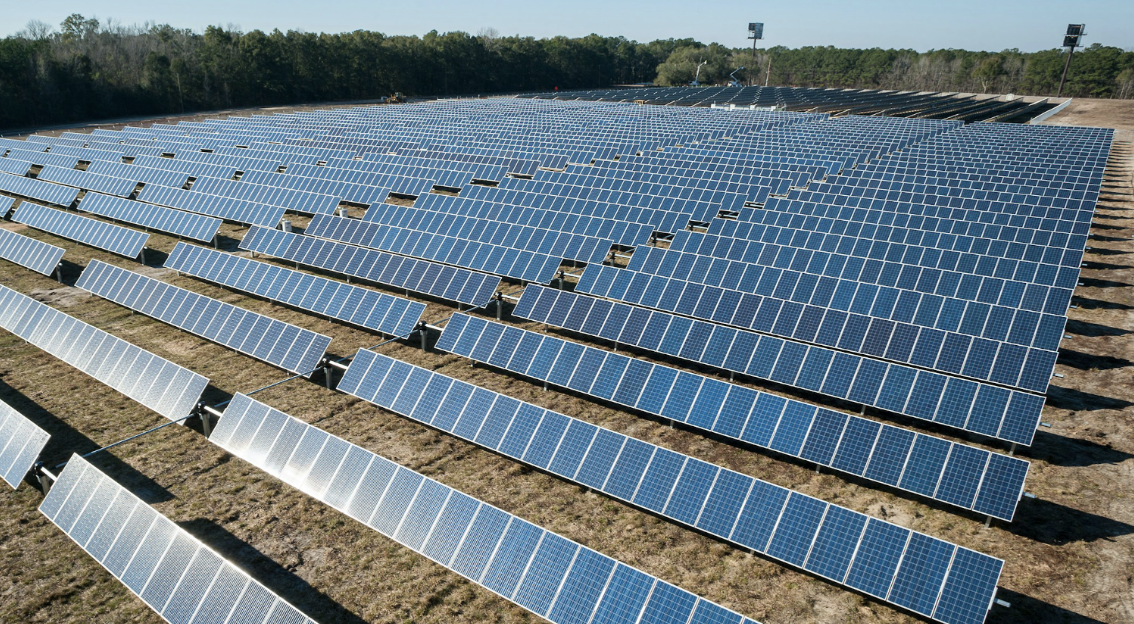
In utility-scale solar energy, accurate data is the foundation of performance. Every watt of production and every decision made on site depends on knowing how much sunlight is actually reaching the solar array. This is where pyranometers come into play. Precise instruments that measure solar irradiance and help operators evaluate system performance, efficiency, and reliability.
What Is a Pyranometer?
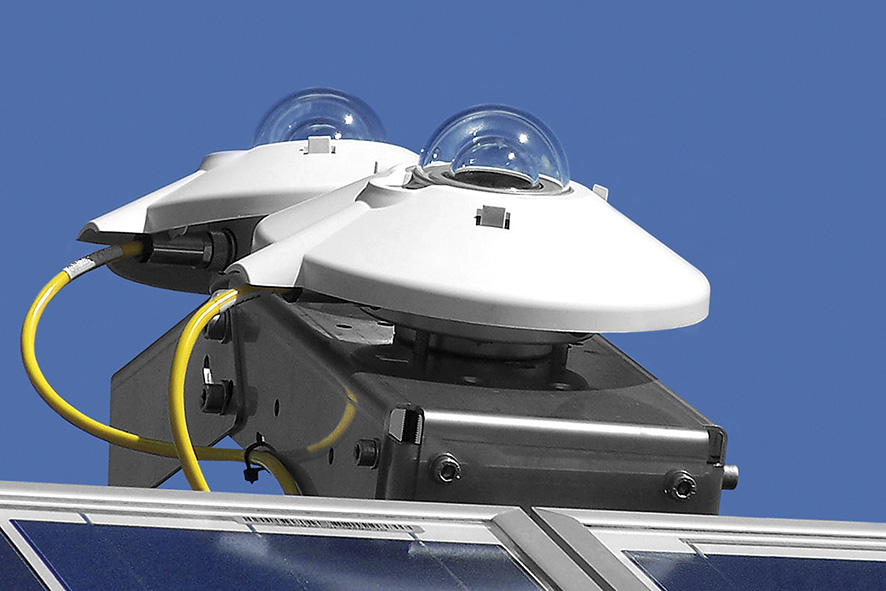
A pyranometer is a sensor used to measure solar irradiance. The power of sunlight per unit area, typically expressed in watts per square meter (W/m²). In simpler terms, it measures how much solar energy hits the panels at any given time. Pyranometers are designed to respond to the broad spectrum of sunlight, including both direct sunlight and diffuse light scattered by clouds or atmospheric particles. High-quality models, like those made by Kipp & Zonen, Hukseflux, or Lufft, use precision thermopile detectors under a glass dome to ensure accurate, stable measurements over time.
Why Pyranometers Matter in Utility-Scale Solar
In a large solar facility, the pyranometer is more than just a sensor, it’s a performance verification tool. Here’s why it’s critical:
- Performance Ratio (PR) Calculations
Pyranometer and reference cell data are used to compare actual energy output against expected production. This “Performance Ratio” helps determine if the system is meeting design expectations or if losses are occurring due to shading, soiling, or degradation.
- SCADA and Real-Time Monitoring
Pyranometers are typically integrated into the site’s SCADA or DAS (Data Acquisition System). This allows operators to visualize real-time irradiance alongside inverter and power output data, which is essential for diagnosing underperformance.
- Troubleshooting and Warranty Support
When a site experiences reduced generation, pyranometer readings are often one of the first things reviewed. By comparing irradiance with power output, technicians can quickly determine if the issue lies with the solar resource or the system itself.
- Preventive Maintenance and Forecasting
Over time, pyranometer and reference cell data help identify trends in production losses due to environmental factors, aiding in preventive maintenance, module cleaning schedules, and predictive energy modeling.
Typical Installation and Integration
At the utility scale, pyranometers and reference sensors are installed at one or more meteorological (MET) stations or distributed throughout the array. These setups typically include:
Plane of Array (POA) Pyranometers – Mounted at the same tilt and orientation as the PV modules to measure the irradiance directly hitting the panels.
Global Horizontal Irradiance (GHI) Pyranometers – Mounted flat (horizontal) to measure the total solar irradiance from all directions.
Reference Cells – Calibrated PV cells that mimic the electrical characteristics of the site’s modules, providing real-world irradiance data under the same spectral and temperature conditions as the array. Reference cells are often used for accurate PR and performance comparisons.
Rear Plane of Array (RPOA) Pyranometers – Installed on the back side of bifacial module systems to measure albedo, or the amount of sunlight reflected from the ground onto the rear of the panels. This is essential for accurately capturing bifacial gain and optimizing energy yield calculations.
These sensors typically connect to dataloggers or digitizers (e.g., Campbell Scientific CR-1000 or AlsoEnergy PowerLogger) and transmit data to the site’s SCADA network for storage, visualization, and performance analytics.
How REIG Supports Pyranometer and Reference Cell Systems
At Renewable Energy Integration Group (REIG), we specialize in the installation, programming, calibration, and troubleshooting of irradiance measurement systems — including pyranometers, reference cells, and rear POA sensors — as part of complete SCADA and communications packages for utility-scale solar projects.
Our technicians ensure:
Proper mounting, alignment, and leveling of POA, GHI, and RPOA sensors. Accurate wiring, scaling, and integration of reference cells within data acquisition systems. Validation and configuration within SCADA platforms such as PowerTrack, AlsoEnergy, or Trimark. Periodic cleaning, calibration checks, and performance verification to maintain long-term data integrity.
Whether installing new MET stations or upgrading legacy systems, REIG’s focus on precision, reliability, and industry best practices ensures solar operators have the accurate irradiance data they need to keep performance on track.
While pyranometers and reference cells may seem like small components compared to inverters or transformers, their role in data accuracy and performance analytics is enormous. By capturing true front-side, rear-side, and reference irradiance data, these instruments empower asset owners and operators to maximize production, validate bifacial performance, and ensure long-term reliability across the entire lifecycle of a solar facility.