
Solar meteorological station commissioning: sensors and time sync
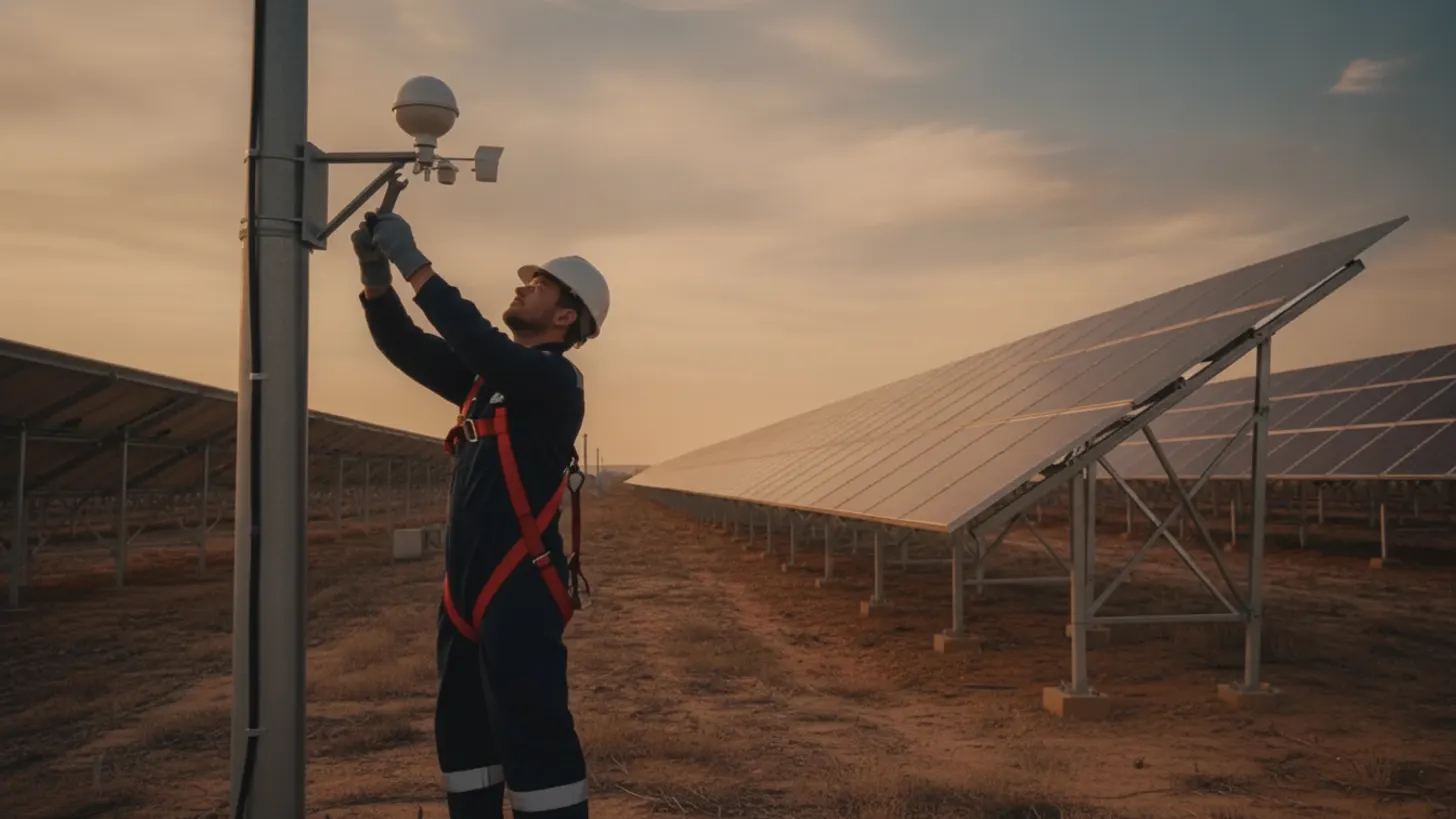
IEC 61724-1 caps plane-of-array irradiance measurement uncertainty at 3 percent for Class A monitoring, and a single mispointed pyranometer or a clock drifting by minutes will blow past that before the plant ever reaches substantial completion. That is the job of solar meteorological station commissioning: sensor placement, calibration records, signal scaling, and SCADA time sync all verified on site, before the data starts driving performance ratio.
What sensors belong in solar meteorological station commissioning?
A utility-scale met station typically carries seven measurement channels: plane-of-array irradiance, global horizontal irradiance, back-of-module temperature, ambient temperature, humidity, wind speed and direction, and rainfall, with soiling measurement added as an eighth wherever cleaning decisions depend on data rather than a calendar. Everything past that point is contract driven.
Plane-of-array (POA) irradiance is the anchor measurement. NREL solar resource research identifies plane-of-array irradiance measurement as a foundational input for PV performance evaluation, because every expected-energy model compares metered output against the irradiance the modules actually received. Global horizontal irradiance earns its slot as an independent cross-check and as the tie to satellite and forecast datasets, which is where our guide to solar irradiance forecasting and SCADA inputs picks up the thread.
Measurement class drives the hardware. IEC 61724-1, the IEC standard for photovoltaic system performance monitoring, defines Class A, B, and C monitoring with separate uncertainty limits, sensor requirements, and recording intervals. Class A is the normal target for a utility-scale plant under a production guarantee, and it holds POA irradiance measurement uncertainty to 3 percent. That pushes most owners toward top-class thermopile pyranometers rather than silicon reference cells, and it scales sensor counts with plant size instead of letting one mast speak for an entire 300 MW site.
Back-of-module RTDs feed the temperature correction inside the performance ratio calculation, so their adhesive, their position on the module, and their distribution across the array matter as much as the sensor grade. Ambient temperature and humidity support dew and condensation analysis. Wind speed and direction feed module temperature models and tracker stow logic. A rain gauge tells you whether last night event was enough to clean the array. Picking the sensor list is the easy half of solar meteorological station commissioning, and proving each channel is the other half.
How to verify placement, calibration, and signal scaling
Verification splits into three checks: correct siting and pointing, current and traceable calibration, and engineering units in the historian that match the physical measurement. A single wrong decimal point in that third check can burn through the entire 3 percent uncertainty budget IEC 61724-1 allows for Class A monitoring, and it will not surface until the first monthly report.
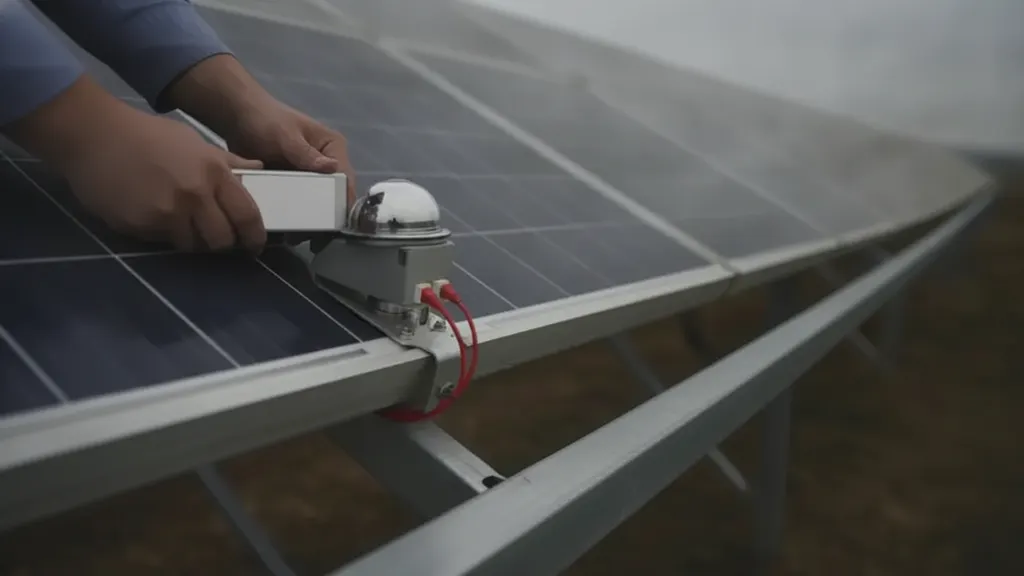
Point the POA pyranometer at the plane it represents. On fixed-tilt blocks that means matching rack tilt and azimuth with a digital inclinometer referenced to the module surface, not the torque tube. On trackers the sensor rides the moving structure and has to follow it through the full range of travel. Run a horizon shading survey from the sensor position, because a mast or a combiner box that clears the dome in June will cross it at 8 a.m. in December.
Every irradiance sensor should arrive with a dated calibration certificate traceable to the World Radiometric Reference, carrying the responsivity value the integrator is supposed to program into the data logger. Compare that number against what is actually loaded in the logger, a two-minute check that catches a surprising share of first-year data problems, because a certificate sitting in a binder does nothing for data quality if nobody transcribed its number correctly. Log the certificate date, the responsivity value, and the sensor serial number together in the commissioning record, since that is the trio an auditor or an O&M team will ask for years later. NREL's Measurement and Instrumentation Data Center publishes reference-grade measurement practice worth copying for side-by-side comparison runs against a known-good sensor.
Then prove the signal chain end to end. Inject a known input at the sensor terminals, or use a certified simulator, and read the resulting value at the logger, at the SCADA tag, and in the historian. Confirm the loop range, the units, the sign, and the decimal scaling at every hop. Tag mapping is where most of these errors hide, a problem our OPC UA solar SCADA integration guide covers in detail. I have watched this exact failure cost real money: on a 187 MW plant REIG commissioned outside Lamesa, Texas in the spring of 2023, a POA pyranometer's scaling factor was programmed one decimal place off the calibration certificate, and the historian quietly reported irradiance at roughly a tenth of the real value through six weeks of commercial operation before anyone noticed. We caught it the same way we now check every channel before handover, by hand-comparing the logger value against the certificate, and that two-minute check is still the cheapest insurance policy in solar meteorological station commissioning.
| Sensor | What to verify | Acceptance evidence |
|---|---|---|
| POA pyranometer | Tilt and azimuth match the represented array plane; level; clear horizon | Inclinometer reading, shading survey, photos |
| GHI pyranometer | Level, unobstructed sky view, ventilation or heater function | Calibration certificate, night offset record |
| Back-of-module RTD | Bond quality, module position, distribution across blocks | Installation record, loop resistance check |
| Ambient temperature and humidity | Radiation shield, aspiration, mounting height | As-built drawing, scaling test |
| Wind speed and direction | Mast height, north alignment, bearing condition | Alignment record, spin test |
| Rain gauge | Level, debris screen, tipping bucket volume per count | Bench test result, logger scaling record |
Data-quality checks that make solar meteorological station commissioning stick
Good sensors still produce bad data. Five screens, covering range, flatline, night offset, redundancy divergence, and clear-sky ceiling, catch drift, shading, icing, and dead channels before they contaminate a performance ratio. Build all five during commissioning, so the baseline dataset is the thing they were tuned against.
Start with physically possible limits, then add behavioral checks. A pyranometer reading well above zero at midnight has a thermal offset or a heater fault. A channel repeating the same value for hours is stuck. Two POA sensors that tracked within a tight band in March and now disagree every afternoon point at soiling, a loose mount, or a shading object that grew. Reference cells also soil differently from thermopiles, a difference our solar panel soiling loss measurement guide works through.
NREL best-practice guidance published in its library, including Best Practices for Operation and Maintenance of Photovoltaic Systems, recommends documented sensor calibration, inspection, and data-quality procedures for PV operations. The commissioning window is when those procedures get written rather than inherited. Write them into the solar meteorological station commissioning acceptance package, not into an analyst spreadsheet that leaves with the analyst.
Time sync and timestamp quality in solar meteorological station commissioning
Irradiance and power have to share a clock. A two-minute offset between the met station logger and the inverter data concentrator is enough to turn a clean cloud ramp into a false correlation error, and performance ratio wanders in ways no sensor check will explain. Store everything in UTC and discipline the clocks to one plant source.
That source is usually a GPS-disciplined clock at the control building, distributed over NTP for logging systems or over IEEE 1588 Precision Time Protocol where sub-microsecond alignment is wanted for protection and sequence-of-events records. The NIST Time and Frequency Division maintains the national reference behind that traceability. Never store local time, never let a daylight saving transition reach the historian, and never let a device fall back to its internal clock without raising an alarm.
Interval alignment matters as much as clock accuracy. IEC 61724-1 pairs short sampling intervals with fixed recording intervals, and if the met logger averages over a window that opens twenty seconds after the meter window, the two series will disagree on every broken-cloud day. That twenty-second gap sounds trivial until a cloud edge crosses the array in less time than that, which is exactly when irradiance and power need to agree the most. Confirm that averaging windows align, that recording timestamps mark the interval boundary the same way across devices, and that the historian is not resampling silently, since some historians quietly shift a timestamp forward or back during storage to fit a reporting interval nobody asked for. Timestamp quality flags belong in the solar meteorological station commissioning test record alongside the sensor results.
Documenting acceptance and recalibration intervals
Acceptance closes solar meteorological station commissioning with a seven-item evidence package rather than opinion: as-built drawings, calibration certificates, scaling test records, the horizon shading survey, time-sync verification, a clean baseline dataset, and a written recalibration schedule with named owners against each line item.
Capture the baseline over several clear days plus at least one overcast day, with every channel recording and both POA sensors in service. That dataset is what the O&M team compares against in year three when somebody asks whether the sensor drifted or the array degraded. Pair it with the mechanical handover covered in our solar tracker commissioning checklist, since tracker position errors show up in POA data first.
Recalibration intervals should be written down and funded. Pyranometer manufacturers and IEC 61724-1 both point at a documented interval, commonly one to two years, with each certificate archived against the sensor serial number. DOE Solar Energy Technologies Office funds much of the research base behind these measurement practices. Fold the met station into the plant sensor maintenance program described in our solar predictive maintenance guide, so solar meteorological station commissioning becomes a starting point rather than a one-off event.
Frequently asked questions
What does solar meteorological station commissioning actually involve?
It is a sensor-by-sensor proof that the met station measures what the performance model assumes. Technicians verify that plane-of-array pyranometers match the array tilt and azimuth, that calibration certificates are current and traceable, that each signal scales correctly from transducer to historian tag, and that every device shares one time reference. Data-quality screens are built and tested against a baseline dataset before handover. Solar meteorological station commissioning finishes with a documented acceptance package, which NREL treats as standard practice for PV operations.
How often do solar pyranometers need recalibration?
Follow the manufacturer stated interval and the monitoring standard you are held to, which commonly lands at one to two years for thermopile pyranometers used in performance monitoring. Keep the certificate, the responsivity value, and the date against the sensor serial number, and reprogram the logger whenever a new value comes back. Traceability is the part that matters in a dispute, because the calibration has to chain back to a recognized reference, which is the model NIST sensor science describes for measurement traceability. Budget for rotation spares so the mast is never blind.
Do I still need plane-of-array sensors if I measure global horizontal irradiance?
Yes. Global horizontal irradiance tells you what the sky delivered to a flat surface, while plane-of-array irradiance tells you what the modules actually received after tilt, tracking, and row-to-row shading. Performance ratio and expected-energy models are built on the latter, and transposing GHI to POA introduces modeling error you do not control. Keep both: GHI anchors the site to satellite and forecast datasets, POA anchors the production guarantee. EPRI photovoltaic performance research treats the two measurements as complementary rather than interchangeable.
Why does SCADA time synchronization matter for PV performance data?
Because irradiance and power are compared interval by interval. A clock offset of even a couple of minutes between the met logger and the revenue meter smears every cloud ramp, producing correlation errors that look like sensor drift or inverter underperformance. On broken-cloud days that error dominates the analysis. One plant time source, UTC storage, aligned averaging windows, and an alarm on clock drift remove the problem at the source. ISA, the industrial automation standards body, treats time coherence as a basic requirement for process data integrity.
What data-quality checks catch a failing irradiance sensor?
Five screens catch most failures. Range checks flag physically impossible values. Night-time checks catch thermal offset and heater faults, since a clean pyranometer should sit near zero after dark. Flatline detection catches stuck channels and frozen communications. Redundancy divergence compares two POA sensors and flags the day their agreement breaks, which usually means soiling, a shifted mount, or new shading. A clear-sky ceiling test catches gross calibration errors. Build all five into the solar meteorological station commissioning record, as DOE solar program material recommends.
Who signs off on met station acceptance at a utility-scale solar plant?
Usually the owner engineer or an independent commissioning agent, with the EPC presenting evidence and the O&M provider accepting the maintenance obligations. The signature should be against a defined package: calibration certificates, the scaling test record, the shading survey, time-sync verification, and the baseline dataset. Owners who report generation under EIA electricity survey programs and who carry a production guarantee have a direct financial interest in that package being complete, because solar meteorological station commissioning evidence is what settles an underperformance claim later.