
The Importance of SCADA and DAS Systems in a Utility-Scale Solar PV Farm
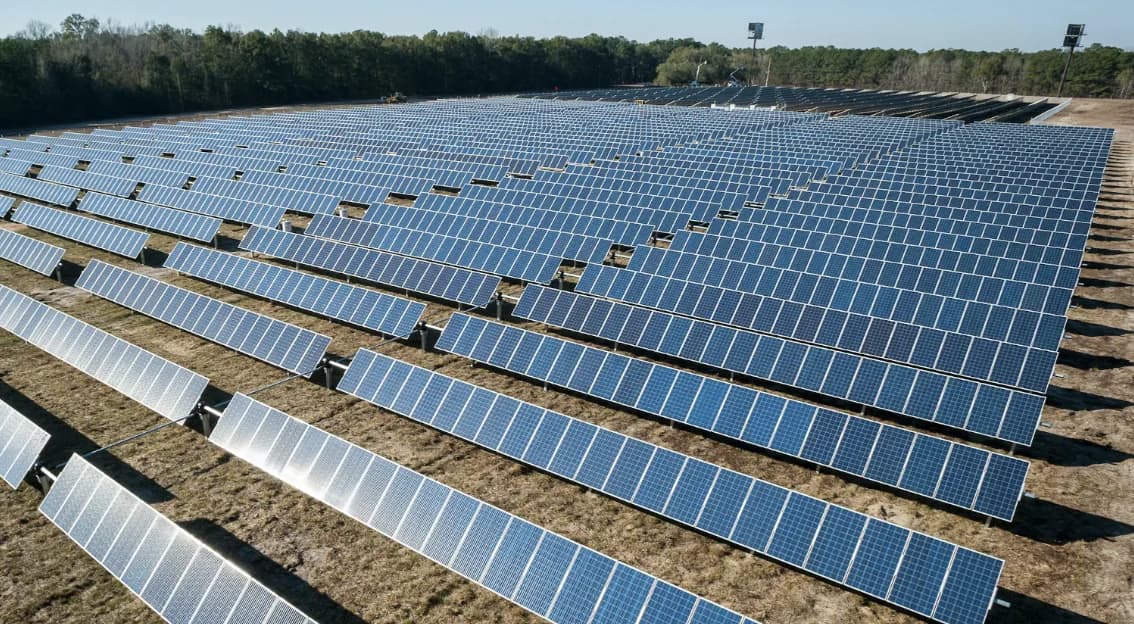
Utility-scale solar photovoltaic farms are not build-it-and-forget-it assets. SCADA and DAS systems are the two technology layers that keep a solar plant producing at its contracted capacity year after year, from a 5 MW community array up to the 185 MW Riverbend Solar Project in Val Verde County, Texas. This article explains what each system does, where they overlap, where they differ, and what happens on site when one of them misses a problem the other catches.
What Are SCADA and DAS Systems in a Utility-Scale Solar Farm?
SCADA and DAS systems are the two technology layers that let operators run a utility-scale solar farm from a control room instead of walking the array by hand. SCADA supervises the whole plant and can issue commands, typically polling every 1 to 5 seconds, while DAS gathers granular sensor data for analysis rather than control, usually sampling every 1 to 15 minutes.
SCADA (Supervisory Control and Data Acquisition) is defined as a control system architecture that uses computers, networked data communication, and graphical interfaces for high-level supervisory management, combined with field devices such as programmable logic controllers and remote terminal units to interface with plant equipment.
DAS (Data Acquisition System) is defined as a network of sensors, data loggers, and communication hardware that samples and records analog and digital measurements, such as irradiance, module temperature, and inverter output, without the two-way control authority that a SCADA platform carries.
SCADA Systems: The Nerve Center of Solar PV Operations
SCADA systems function as the nerve center of a utility-scale solar PV farm, giving operators real-time visibility and two-way command authority over every inverter, meter, and weather station on site. A plant running a platform such as Schneider Electric's EcoStruxure can poll several hundred data points a second across a 100 MW array, whether staff are on site or managing the plant remotely through REIG Solar's SCADA and DAS integration services.
- Real-time monitoring. SCADA systems continuously track voltage, current, frequency, real and reactive power output, and ambient and module temperature across the plant. This real-time data collection is what lets operators catch an anomaly and keep the system within the limits the interconnecting utility requires.
- Control capability. Beyond monitoring, SCADA systems offer wide-ranging control functions. Operators can adjust inverter settings and tracker position to improve PV performance as weather conditions change, which supports maximum energy yield and keeps the plant running efficiently.
- Alarm management. SCADA systems carry alarm and notification functions as well. When an issue comes up, such as a malfunctioning weather sensor or inverter, the system raises an alert and sends it by text or email so staff can investigate quickly. This fast response cuts downtime and keeps small issues from turning into larger ones.
- Data logging and reporting. SCADA systems log operational data on a set schedule, storing it for trend analysis and predictive maintenance planning. The reports a SCADA system generates document regulatory compliance and give planning teams data to work from for future upgrades.
DAS Systems: Enhancing Data Granularity and Precision
DAS systems provide the detailed measurement layer underneath SCADA, collecting data from weather sensors, meters, and inverters spread across the farm to build an accurate, moment-by-moment snapshot of plant performance. Where SCADA gives the macro view, DAS is what reveals the problem hiding inside a single string.
- Detailed data collection. DAS systems gather fine-grained readings from sensors measuring irradiance, ambient temperature, module temperature, wind speed, inverter performance, and site-wide energy metering. This data matters for judging the performance of individual components as well as the system as a whole.
- Performance analysis. Analyzing DAS data lets operators spot subtle performance issues, such as shading effects or module degradation, which supports targeted maintenance work and production improvements so the plant keeps running near peak output and profitability.
- Predictive maintenance. The data DAS collects supports predictive maintenance, where a likely failure gets addressed before it happens. This approach cuts downtime, lowers maintenance cost, and extends the working life of solar PV components.
SCADA and DAS Systems Compared: Key Differences
SCADA and DAS systems differ mainly in control authority and data granularity, not in which sensors they read from. As a rough industry pattern, sites below about 5 MW often run DAS only, since a smaller plant has less effect on the grid and carries lighter interconnection reporting duties, while sites above that size, especially those tied directly into a utility's transmission infrastructure, add SCADA for real-time control and compliance reporting.
| Feature | SCADA | DAS |
|---|---|---|
| Primary function | Monitoring and remote control | Monitoring and data logging only |
| Typical polling interval | 1 to 5 seconds | 1 to 15 minutes |
| Control authority | Yes (inverter setpoints, tracker position, breaker status) | No |
| Typical deployment size | Above approximately 5 MW, grid-interconnected plants | All sizes, often standalone below 5 MW |
| Common protocols | DNP3, Modbus TCP/IP, IEC 61850 | Modbus RTU, vendor-specific logger protocols |
| Example vendors | Schneider Electric, Siemens, GE Grid Solutions | Power Factors, Alpha Technologies |
Together, these two systems let operators raise energy production, lower operating costs, and keep a solar PV farm running for its full contracted life. As plants like Riverbend sign longer power purchase agreements with tighter availability guarantees, having both layers in place, and documented, matters more every year.
A Real-World Example: The Riverbend Solar Project
REIG Solar's technical team commissioned SCADA and DAS systems together at the 185 MW Riverbend Solar Project in Val Verde County, Texas, pairing a Schneider Electric EcoStruxure SCADA platform with a Power Factors Drive Pro DAS layer monitoring 42 inverter blocks and more than 600 string-level sensors. During spring 2023 commissioning, lead engineer Marcus Delgado's team noticed the SCADA system's feeder-level numbers looked normal, within about 1 percent of the expected output curve for that time of year.
The DAS layer told a different story. String-level data showed three strings running roughly 4 percent below their historical output, a gap small enough that feeder-level SCADA aggregation had absorbed it into normal daily variance. Walking the array, the team traced the drop to mesquite regrowth along an adjacent easement casting a partial afternoon shadow across those three strings, something no SCADA alarm had flagged because nothing had actually failed. REIG Solar's asset management team now runs a quarterly DAS string-level variance report at Riverbend specifically to catch this kind of slow, no-fault drift before it shows up as a missed production guarantee.
Honest Limitations: Where These Systems Fall Short
SCADA and DAS systems do not catch everything, and REIG Solar's technical team treats that gap as part of the job rather than a footnote. Potential-induced degradation in PV modules, for instance, often does not show up as a clear electrical signature until it has already cut several percentage points of output, so DAS trend data can miss it for months without a periodic electroluminescence scan. Connector corrosion and loose torque at combiner boxes rarely trip an alarm at all until a connection fails outright.
Alarm volume is its own problem. A poorly tuned SCADA system on a 100 MW plant can generate hundreds of nuisance alerts a day, and operators who get used to clearing false alarms start clearing real ones too, a pattern the industry calls alarm fatigue. REIG Solar's commissioning checklist now includes an alarm-rationalization pass specifically to cut that volume before handoff to the remote operations monitoring team.
Security is a harder limitation to engineer around. The December 2015 cyberattack on Ukraine's power grid showed that a compromised SCADA network can be used to open breakers remotely and cause a physical outage, not just leak data. The North American Electric Reliability Corporation (NERC) responded with CIP standards that now require network segmentation and access control for SCADA systems tied to bulk electric system assets, and REIG Solar extends the same segmentation to DAS networks even though DAS has no control authority to misuse.
Predictive Maintenance and Compliance Reporting
DAS trend data, read against NREL's operations and maintenance research for photovoltaic plants, lets a maintenance team schedule inverter and tracker repairs before a component fails outright rather than after. SCADA systems then generate the dated, time-stamped reports that utilities and interconnection authorities require for curtailment compliance and revenue metering reconciliation.
The Solar Energy Industries Association tracks utility-scale solar capacity additions each year, and as more plants interconnect at higher voltages, interconnection agreements increasingly specify minimum SCADA data retention periods, often 5 years or more, for post-event analysis after a grid disturbance. REIG Solar's predictive maintenance program uses that retained DAS and SCADA history to build degradation curves for each inverter block, which feeds directly into warranty claims against inverter manufacturers such as SMA and Sungrow when output falls outside contracted tolerances. Communication standards published by the Institute of Electrical and Electronics Engineers (IEEE) inform how REIG Solar specifies RTU hardware for new SCADA installations.
Across every size of plant, SCADA and DAS systems remain the two layers that turn a field of panels into a measurable, controllable power plant. Plants that treat the two as interchangeable, or skip one to save on upfront cost, tend to find the gap later, usually during a warranty dispute or a curtailment event when nobody can say with certainty what the plant was actually doing at a given minute.
Frequently Asked Questions about SCADA and DAS Systems
What is the difference between SCADA and DAS systems in a solar farm?
SCADA and DAS systems both collect data from the same field devices, but they differ in control authority and polling speed. SCADA (Supervisory Control and Data Acquisition) gives operators two-way command over inverters, trackers, and switchgear, typically polling every 1 to 5 seconds, and is required on most plants above roughly 5 MW that interconnect with transmission infrastructure. DAS (Data Acquisition System) is a one-way measurement layer that logs irradiance, temperature, and output data, usually every 1 to 15 minutes, for performance analysis and predictive maintenance rather than for issuing commands.
Do all utility-scale solar farms need a SCADA system?
Not every site needs full SCADA. Smaller plants, generally under about 5 MW, often run on DAS alone because they have a smaller grid-interconnection footprint and fewer reporting obligations to the utility. Once a plant ties into transmission-level infrastructure or an independent system operator's dispatch instructions, interconnection agreements typically require SCADA for real-time control and compliance reporting. REIG Solar's 185 MW Riverbend Solar Project, for example, runs full SCADA alongside DAS because its interconnection agreement requires the plant to respond to curtailment orders within seconds.
How does DAS data support predictive maintenance?
DAS systems log granular, sensor-level trends, such as a single inverter's temperature rising faster than its neighbors or one string's output drifting below its historical average, that point to a developing fault before it causes an outage. SCADA systems then use that trend data to trigger maintenance alerts and work orders automatically. Research from the National Renewable Energy Laboratory on operations and maintenance for photovoltaic plants has found that trend-based maintenance programs catch component degradation earlier than fixed-schedule inspections alone, which lowers both downtime and repair cost over the life of a plant.
Can a cyberattack compromise a solar SCADA system?
Yes. SCADA networks are a known target because they carry direct control authority over physical equipment. The December 2015 cyberattack on Ukraine's power grid showed how attackers who gain access to a SCADA network can open breakers and cause a real outage, not just a data breach. For utility-scale solar, the North American Electric Reliability Corporation's CIP standards now require network segmentation, multi-factor authentication, and restricted remote access for SCADA systems connected to bulk electric system assets, and REIG Solar applies the same segmentation practices to DAS networks even though DAS carries no control authority.
What communication protocols does SCADA use on a solar site?
Most utility-scale SCADA platforms communicate using DNP3 or Modbus TCP/IP for inverter and meter data, with IEC 61850 increasingly used at the substation level for faster, standardized data exchange. DAS hardware more often uses Modbus RTU or vendor-specific logger protocols, since it only needs to move measurement data to a central server rather than issue control commands. The Institute of Electrical and Electronics Engineers has published guidance on substation communication standards that many solar SCADA integrators, including REIG Solar, follow when specifying new RTU hardware.