
Solar farm vegetation management: NERC FAC-003 compliance field guide
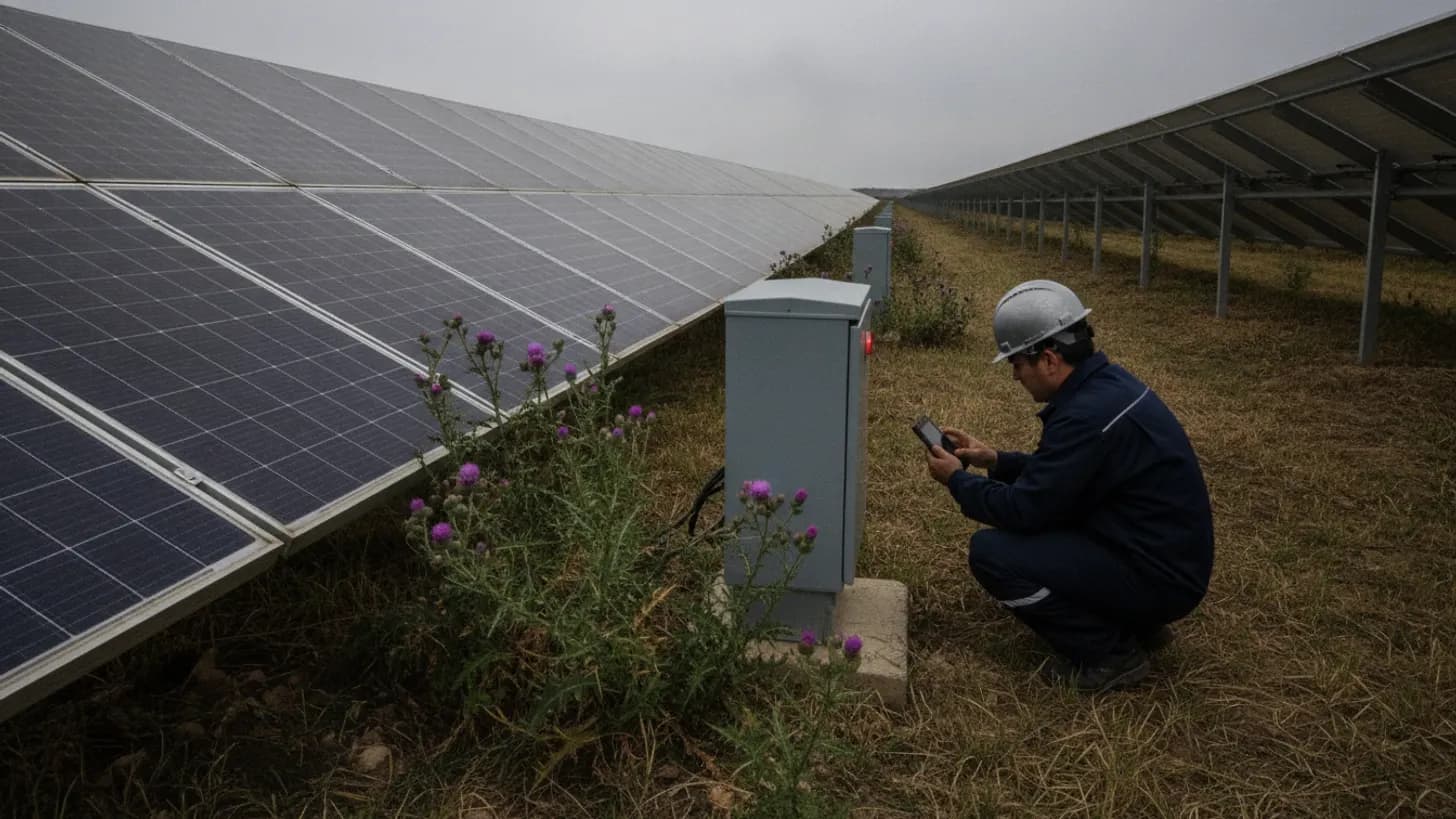
NREL research documents DC string output losses of 10 to 25 percent at peak irradiance hours when partial shading falls inside module shadow throw zones on utility-scale sites. NERC FAC-003-4 stacks on top of that, requiring transmission owners to prevent flash-over encroachment on lines rated 200 kV and above, with annual reporting obligations to NERC. Getting solar farm vegetation management right at a utility-scale plant protects both revenue and grid reliability, which is why every serious O&M program needs a compliance-grade field guide.
What NERC FAC-003-4 requires for solar farm vegetation management
NERC FAC-003-4, effective 2016, requires transmission owners and operators to prevent flash-over distance encroachment by vegetation on transmission lines rated 200 kV and above, with annual reporting obligations to NERC. Utility-scale plants that interconnect at 230 kV, 345 kV, or 500 kV fall inside that envelope by default.
The standard runs on six requirements. R1 forbids any sustained outage from vegetation contact. R2 forces clearances that keep growth outside the flash-over gap at maximum conductor sag, maximum wind displacement, and rated conductor temperature; the Minimum Vegetation Clearance Distance under FAC-003 Attachment 1 ranges from roughly 1.4 meters at 200 kV to more than 3 meters at 500 kV, so a single fast-growing tree in the right-of-way can close that gap in one growing season. R3 mandates at least one annual documented inspection on all covered transmission assets. R4 requires reporting any sustained outage caused by vegetation to NERC within 24 hours. R6 obliges an active work plan that corrects imminent-encroachment findings within a defined interval, typically 24 to 72 hours from discovery. The NERC FAC-003-4 standard page spells out the full obligations, and the FERC reliability standards docket records the enforcement history.
For a solar plant, the exposure is not only the gen-tie line to the point of interconnection. Collector-system aerial spans, switchyard bus dead-ends, and long feeders to remote inverter blocks can each cross the 200 kV threshold depending on plant design. Every one of those assets must appear on the vegetation inventory list. Miss one span in your inventory and you miss it in your inspection schedule, which is the most common finding in a FAC-003 audit. A defensible solar farm vegetation management program starts with a complete asset list and a signed inspection cadence.
Building a solar farm vegetation management plan
A solar farm vegetation management plan integrates ecological survey data, herbicide law, mechanical work windows, and yield-protection targets into one document owned by the O&M director. It codifies inspection cadence, contractor qualifications, chemistry list, disposal path, and audit evidence flow so any FAC-003 auditor can trace decisions to documents. REIG Solar has developed solar farm vegetation management programs on gen-tie interconnects from 230 kV to 500 kV at plants across the Carolinas and the Southeast. The plan document itself is the first item every auditor requests.
The plan starts with a baseline botanical survey at commissioning. Note dominant grass, forb, and woody species, invasive listings, threatened-and-endangered flagging, and pollinator habitat if any. That baseline governs what herbicide chemistry is available, what mechanical schedule fits, and whether pollinator-friendly seed mixes work under the array.
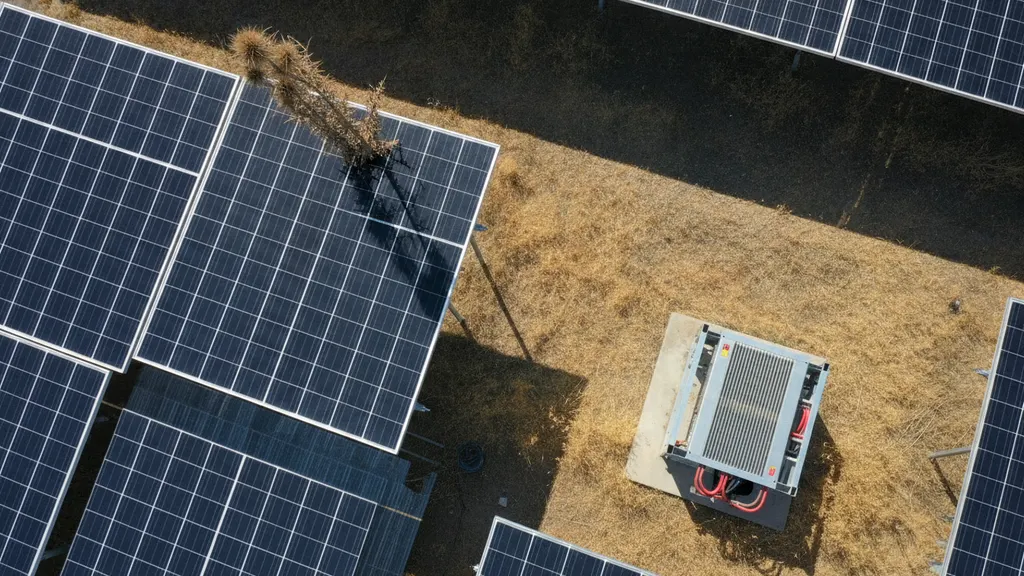
Zone the site by risk. High-risk zones include gen-tie right-of-way, inverter pads, DC combiner boxes, met station masts, and switchyard perimeter. Medium-risk zones sit under and between rows, where growth threatens tracker motion and creates the module shadow throw problem documented by NREL solar research. Low-risk zones cover perimeter fence lines and access roads.
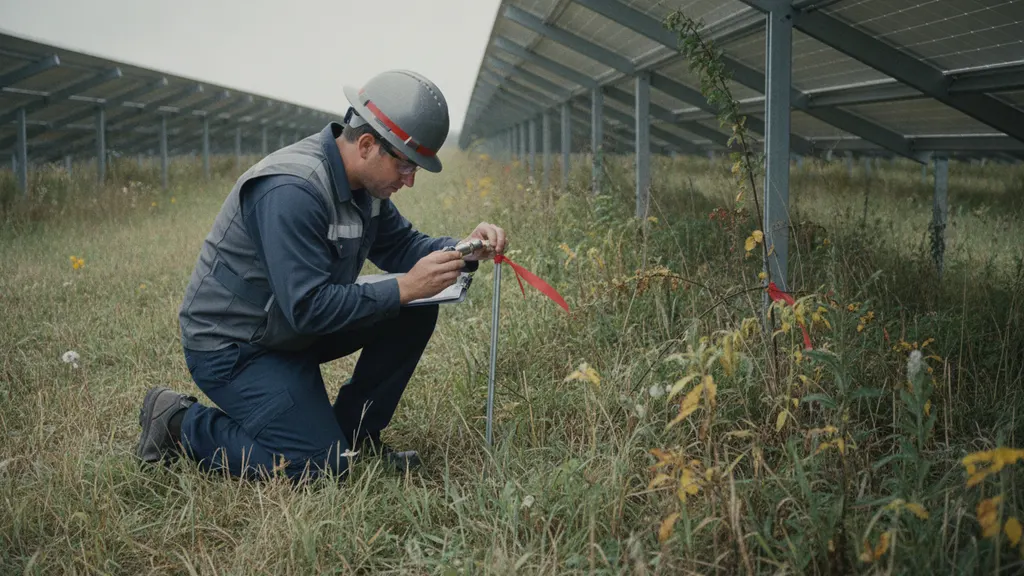
Bind each zone to a treatment class: pre-emergent herbicide, post-emergent spot spray, string-line mowing, sheep grazing, or manual removal. Document maximum vegetation height per zone. Above 12 inches under rows is a common threshold at which trackers report obstruction faults and combiner box access degrades. The EPRI research library and the SEIA operations resource library hold reference specifications useful in plan drafting.
Herbicide, mechanical, and biological controls in solar farm vegetation management
Solar farm vegetation management uses three control classes: chemical (herbicides), mechanical (mowing and string trimming), and biological (sheep grazing, targeted grazing, seed-mix competition). EPRI, EPA FIFRA, and DOE field guidance treat these as complementary tools inside one integrated plan, not competing options.
Chemical control leans on pre-emergent residual herbicides in early spring plus post-emergent spot treatment on woody encroachment and noxious species. Federal Insecticide, Fungicide, and Rodenticide Act (EPA FIFRA) regulations require every commercial-site application to be performed by or under the supervision of a licensed pesticide applicator, with application records retained for a minimum of 2 years. Miss the license, miss the record, and you fail both FIFRA and the downstream FAC-003 evidence pack.
Mechanical control means tractor-mounted flail mowers between rows, string trimmers around inverter pads, and drum choppers on gen-tie right-of-way. It is fast and predictable but consumes labor hours and creates fire risk during dry-fuel windows. DOE utility-scale solar operations guidance documents seasonal windows that fit most Sun Belt sites.
Biological control at utility-scale usually means contract sheep grazing under fixed-tilt arrays and along fence lines. It cuts herbicide load, reduces mowing rounds, and pairs well with pollinator seed mixes. Tracker sites are trickier because moving structures introduce animal-safety questions the O&M director must resolve with the flock manager in writing.
| Control class | Best zone | Compliance stack |
|---|---|---|
| Chemical (herbicide) | Gen-tie ROW, under-panel, perimeter | EPA FIFRA, state applicator license |
| Mechanical (mow/trim) | Between rows, inverter pads, roads | OSHA agriculture, fire watch |
| Biological (sheep, seed mix) | Fixed-tilt under-panel, fence lines | Livestock contract, veterinary sign-off |
Contractor safety sits on top of every control class. OSHA agricultural operations guidance applies to herbicide handlers, mechanical crews, and grazing contractors alike, and forms the third leg of the audit evidence pack alongside FIFRA records and NERC inspection logs.
Shading, yield loss, and equipment access under solar arrays
Vegetation shading and encroachment attack utility-scale plants on two fronts: DC-side yield loss inside module shadow throw zones, and physical access to combiners, trackers, inverters, and revenue meters. Both problems compound over a growing season if the O&M cadence slips.
NREL research has shown that partial shading from vegetation within the module shadow throw zone can reduce DC string output by 10 to 25 percent at peak irradiance hours depending on string configuration. The loss is nonlinear because a single shaded cell in a series string pulls current for the whole string. A single tall thistle at row-end can look small from the fence line and still drag an entire combiner branch below expected output.
Detection matters as much as prevention. Drone-based thermography catches shaded cells early; the solar drone thermal inspection field guide shows how a mid-season flight pairs with vegetation inspection to catch both symptoms in one visit. The soiling loss and cleaning ROI methods guide explains how yield-loss telemetry differentiates soiling from shading loss, so O&M spends money on the right remedy.
Equipment access is the other side of solar farm vegetation management. When growth exceeds 12 inches under trackers, torque-tube inspection windows narrow, IR combiner scans miss cabinets, and rescue-truck access to inverter pads degrades. That access loss becomes a safety finding at the next EHS audit.
Inspection frequency and FAC-003 audit documentation
NERC FAC-003 auditors expect a documented inspection cadence, a paper trail on remedial actions, and cross-referenced work orders that tie each finding to a completed remediation. Most plants land on quarterly ground patrols plus an annual aerial or LiDAR sweep.
The FAC-003 inspection minimum is annual, but a plant that runs only annual inspections will fail R6 as soon as one storm knocks a tree into the right-of-way. Quarterly ground patrols on gen-tie, monthly walkdowns on inverter pads during growing season, and one LiDAR flight per year on transmission corridors form a defensible cadence for solar farm vegetation management.
Documentation must include the inspection date, inspector name and qualification, method (ground, drone, LiDAR), findings by span, remediation action, work order number, and photos before and after. Every entry should link to a work order in the CMMS. The CMMS record should also carry the work type code, crew lead name, equipment deployed, and GPS coordinates of the remediation site. Attach the before photo at finding creation and the after photo at work-order close; that two-photo chain is the minimum audit-admissible evidence for an R6 finding. Auditors want to see that a finding on 2026-04-15 became a work order on 2026-04-16 and a completed clearance on 2026-04-18, all in one traceable thread. Plants that centralize this evidence in a single CMMS module rather than distributed email chains cut audit preparation time and reduce the risk of a document-not-found finding during an unannounced spot audit.
For SCADA-tied plants, integrating vegetation work orders with the plant CMMS matters. The solar SCADA commissioning witness pack guide covers how work-order provenance flows through commissioning, and the same pattern applies to the ongoing operations phase. Retain NERC inspection records for 7 years and FIFRA application records for at least 2 years.
Frequently asked questions
What is NERC FAC-003-4 and does it apply to my solar farm?
NERC FAC-003-4 is the transmission vegetation management reliability standard that took effect in 2016. It requires transmission owners to prevent flash-over encroachment on lines rated 200 kV and above, run at least one documented annual inspection, and file audit-ready reports to NERC. It applies to a utility-scale solar farm whenever any generator lead line, aerial collector span, or switchyard bus operates at 200 kV or higher, which is common at points of interconnection. Facilities below 200 kV still fall under state or utility vegetation rules, per the NERC compliance program. Confirm the asset list with your Reliability Coordinator.
How often should solar farm vegetation management inspections happen?
The FAC-003 minimum is once per year on covered transmission, but a defensible program runs quarterly ground patrols on gen-tie right-of-way, monthly walkdowns on inverter pads during the growing season, and one annual aerial or LiDAR flight on transmission corridors. Storm events trigger extra unscheduled inspections within 24 to 72 hours. This cadence protects both audit posture and DC yield, since NREL PV research documents rapid shading loss between quarterly cycles in humid climates. Match cadence to species growth rate documented in your baseline botanical survey.
Can we spray herbicides under solar panels?
Yes, if a licensed pesticide applicator does or supervises the work. EPA FIFRA regulations require every commercial solar site herbicide application to be performed by or under the supervision of a licensed applicator, with application records retained for a minimum of 2 years. Product choice matters: pre-emergent residuals in early spring, post-emergent spot treatment on woody encroachment, and avoidance of soil-mobile chemistries near stormwater controls. Confirm each product label allows utility right-of-way use. State agency rules sit on top of federal FIFRA, since state buffers around water and pollinator habitat sometimes exceed federal minimums, per DOE Solar Energy Technologies Office guidance.
How much revenue does vegetation shading actually cost?
Vegetation shading loss varies with string configuration, tracker geometry, and species height, but NREL research documents DC string output cuts of 10 to 25 percent at peak irradiance hours when partial shading falls inside the module shadow throw zone. A 100 MW plant losing 10 percent of DC output during peak summer hours can bleed six-figure monthly revenue depending on PPA rate and time-of-day pricing. That is why quarterly cadence, integrated with DC-side telemetry from your solar SCADA plant systems, pays back faster than any single control class alone. Track kWh per inverter block against baseline to catch stealth losses that fence-line patrols miss.
Who is qualified to run a solar farm vegetation management program?
The program owner is typically the O&M director or plant manager, backed by an EHS coordinator, but applicator work must be done by state-licensed pesticide applicators under EPA FIFRA. NERC FAC-003-4 does not name a specific inspector credential, though auditors expect inspectors to hold an ISA Certified Arborist Utility Specialist qualification, a state right-of-way pesticide applicator license, or documented equivalent training. Contract crews are common: the plant retains vegetation contractors with the licensing stack, then keeps QC oversight in-house. Cross-reference SEIA policy resources for contractor qualification checklists.
What documentation does a NERC FAC-003 audit expect?
Auditors expect an approved solar farm vegetation management plan document, a vegetation inventory tied to each transmission asset, dated inspection reports naming inspector and method, remediation work orders with before-and-after photos, herbicide application records that satisfy FIFRA, and evidence that R6 imminent-encroachment findings were resolved within the plant policy window. Records should sit in one auditable folder or CMMS module, not scattered across email. Retain NERC records at least 7 years and FIFRA records at least 2. Reference the FERC enforcement record for precedent when scoping evidence retention.