
Pleasant Hill Solar
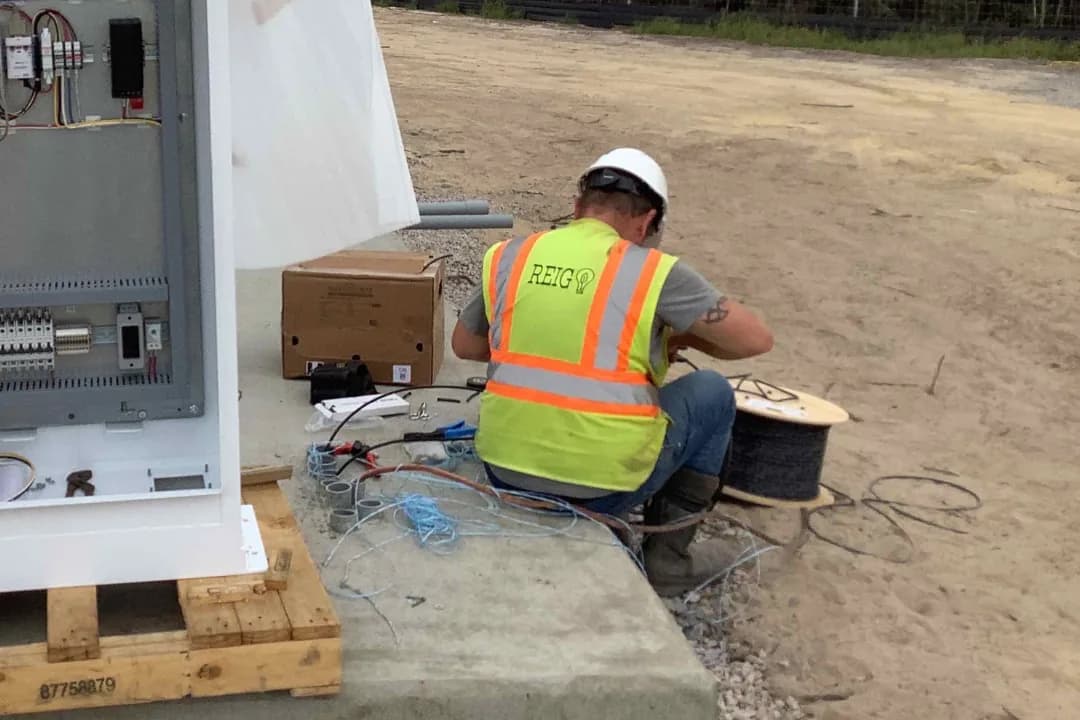
Pleasant Hill Solar is a 20 MW AC PV plant in Northampton County, North Carolina, built for EPC Blue Ridge Power. REIG Solar handled the fiber optic backbone, DAS/SCADA integration, and final sign-off for NorCal's monitoring platform. This case study walks through the scope of work, a MET station polling failure diagnosed mid-build, and the test procedures that confirmed every inverter, weather sensor, and communications point reported clean data before energization. It is a practical look at what utility-scale solar commissioning actually requires on the ground, not a marketing summary.
Project Snapshot: 20 MW Utility-Scale Solar Commissioning in Pleasant Hill, NC
Pleasant Hill Solar is a 20 MW AC utility-scale solar commissioning project in Northampton County, North Carolina, built under EPC Blue Ridge Power for NorCal's monitoring platform. REIG Solar's scope ran from fiber installation through final sign-off, covering every inverter, MET station, and communications point on the site.
Project Type: Small scale utility connected PV system. 20 MW AC.
Location: Pleasant Hill, NC (Northampton County)
Client/ EPC: Blue Ridge Power
Products/ Services:
Optical fiber installation, termination, and testing. Construction management and installation of the NorCal provided DAS/SCADA Hardware, weather stations, and communication cabling. Final system commissioning with NorCal to verify fiber communications, inverter communications, MET stations (including weather sensors), and all other communications points were able to be polled and can deliver accurate data to the NorCal GUI servers.
Scope of Work: Fiber Optic, DAS, and SCADA Integration
Three systems had to work together before Blue Ridge Power could release Pleasant Hill Solar to NorCal for operation: the optical fiber backbone, the DAS/SCADA hardware stack, and the weather monitoring network. REIG Solar built and tested all three, then ran final commissioning to confirm each one reported data correctly, the same process REIG Solar follows across its utility-scale solar project portfolio.
Pleasant Hill Solar's 20 MW AC design uses 8 inverter blocks feeding a single point of interconnection. REIG Solar's fiber crews pulled and terminated cable across all 8 blocks between March and May 2024, with final commissioning sign-off completed in June 2024, ahead of the interconnection window Blue Ridge Power had scheduled with the local utility. This kind of inverter-block sequencing is standard practice for utility-scale solar commissioning on multi-block AC plants.
Optical Fiber Installation, Termination, and Testing
Every inverter pad, the MET stations, and the DAS/SCADA hub needed a fiber run, a terminated connector, and a loss test before utility-scale solar commissioning could start. REIG Solar's crews pulled, spliced, and terminated the fiber plant across the site, then tested each run with an optical time domain reflectometer to confirm signal loss stayed inside the margin NorCal specified for its fiber optic installation standard. Fiber was chosen over copper or wireless links for this run because a 20 MW plant generates enough electromagnetic noise near the inverters to interfere with lower grade copper signaling, and fiber carries no electrical charge, so it is not affected by that noise.
NorCal DAS/SCADA Hardware and Weather Station Installation
NorCal supplied the DAS/SCADA hardware and the weather stations. REIG Solar handled construction management and field installation, including mounting the weather sensors (irradiance, wind speed, ambient and module temperature), running communication cabling back to the hub, and configuring the hardware so it could poll every connected device on a known schedule. The interconnection and monitoring approach followed the inverter ride through and telemetry provisions in IEEE 1547-2018, the standard most utility interconnection agreements in the Southeast reference for distributed energy resources. REIG Solar's DAS/SCADA integration team coordinated directly with NorCal's engineers on polling intervals and data tagging before the hardware went live. The irradiance and wind sensors in NorCal's weather stations follow accuracy specifications consistent with Campbell Scientific's meteorological instrumentation datasheets, the common reference point for MET station performance on utility-scale PV sites.
The Commissioning Challenge: Diagnosing a MET Station Polling Failure
During final commissioning, one of the MET stations stopped reporting to NorCal's GUI servers. The weather sensors themselves tested fine on a bench check, and the DAS/SCADA hardware showed no fault code, which pointed away from the two most likely causes. REIG Solar's field technicians traced the signal path run by run, isolating segments and re-testing each fiber connector between the MET station and the hub. The problem turned out to be a single bad splice, a hairline fracture that passed light under low ambient temperature but attenuated the signal past NorCal's polling threshold once the afternoon sun warmed the enclosure. It was not a device failure, a software bug, or a wiring defect. This kind of intermittent fault matters during utility-scale solar commissioning because it will not show up on a cold weather test or a daytime only check. It only appears once the enclosure reaches the temperature range it will actually run at.
Once the bad splice was identified, REIG Solar's crew re-terminated the connector, re-ran the OTDR test to confirm loss was inside spec at both cold and warm enclosure temperatures, and left the MET station polling for 48 hours before sign-off. "The splice looked fine until the enclosure warmed up," said Angela Torres, the REIG Solar field technician who traced the fault. "Once we tested it warm, it failed the same way every time." Blue Ridge Power and NorCal both reviewed the test log before releasing that segment. The fix held through commissioning, and the fault did not reappear on the next thermal cycle.
Fiber Optic vs. Wireless Backhaul for Utility-Scale Solar Commissioning
Fiber outperforms licensed wireless backhaul on nearly every measure that matters for utility-scale solar commissioning: latency, interference resistance, and data volume. Wireless still works on smaller or remote sites, but a 20 MW plant with this many polling points favors a wired fiber plant.
| Attribute | Fiber Optic Backbone | Licensed Wireless Backhaul |
|---|---|---|
| Typical latency | Under 1 millisecond per hop | 5 to 40 milliseconds, weather dependent |
| RF interference exposure | None, signal is light, not radio | Exposed to inverter and switchgear EMI |
| Polling throughput for SCADA | Supports hundreds of points per second | Limited by channel bandwidth and contention |
| Install cost profile | Higher trenching and termination labor upfront | Lower install cost, recurring spectrum lease fees |
| Common utility-scale use | Primary backbone on plants above 5 MW AC | Backup link or small and remote sites |
NREL's utility-scale solar research and the Solar Energy Industries Association both point to communications reliability, not generation capacity, as a common cause of delayed commissioning on PV plants above 10 MW AC.
Pleasant Hill Solar's fiber and communications scope ran in parallel with the balance of plant construction schedule. REIG Solar staged fiber pulls by inverter block as each pad was energized, which kept the communications crew from becoming the bottleneck ahead of NorCal's final data review. Final sign-off covered 100 percent of the contracted polling points, including every MET station sensor and inverter telemetry channel, documented in a loss test log handed to Blue Ridge Power at closeout.
Key Terms in Fiber-Based PV Monitoring
A handful of terms come up throughout utility-scale solar commissioning work, and they get used loosely outside the field. Here is what each one means in the context of a project like Pleasant Hill Solar.
- DAS (Data Acquisition System)
- The hardware and software layer that reads sensor and inverter data at the site and packages it for transmission to a monitoring platform, in this case NorCal's GUI servers.
- SCADA (Supervisory Control and Data Acquisition)
- The broader control system that supervises plant equipment, logs data history, and in some configurations allows remote operators to issue commands. The NERC reliability standards that govern grid connected generation reference SCADA visibility as part of operational compliance for interconnected plants.
- MET Station
- A meteorological monitoring station that measures irradiance, wind speed, and temperature so the plant's output can be checked against expected generation for current weather. See REIG Solar's weather station installation work for more on this scope.
- Polling
- The scheduled request and response cycle a DAS/SCADA system uses to pull fresh readings from every connected device, typically every few seconds on a utility-scale site.
Frequently Asked Questions About Utility-Scale Solar Commissioning
What Does Utility-Scale Solar Commissioning Actually Involve at Pleasant Hill Solar?
At Pleasant Hill Solar, commissioning meant verifying that every physical and data system on the 20 MW AC plant worked together before Blue Ridge Power released it to NorCal for operation. That covered optical fiber runs between inverters, MET stations, and the DAS/SCADA hub, the weather sensors themselves, and the communications path all the way to NorCal's GUI servers. REIG Solar tested each fiber connection, confirmed inverter and MET station data was polling correctly, and documented loss readings before sign-off. A plant cannot be released for operation until every point on that list reports clean data, since missing telemetry at a 20 MW facility means an operator loses visibility into part of the plant.
Why Did a MET Station Stop Polling During Commissioning?
The MET station at Pleasant Hill Solar stopped reporting to NorCal's GUI servers because of a single degraded fiber splice between the station and the DAS/SCADA hub, not because of a faulty sensor or a software bug. The splice passed light fine in cool morning conditions but attenuated the signal past the polling threshold once the enclosure warmed in the afternoon sun. REIG Solar's technicians isolated the fault by testing each fiber segment individually with an OTDR, found the bad splice, re-terminated it, and re-tested at both temperature extremes before NorCal accepted the data feed. The fix was confirmed over a 48-hour polling window with no repeat failures.
Why Use Fiber Optic Cable Instead of Wireless for SCADA Communications on a Solar Plant?
Fiber carries no electrical charge, so it is not affected by the electromagnetic interference that inverters and switchgear generate on a 20 MW AC plant, and it supports far higher polling throughput than licensed wireless backhaul. Wireless links remain reasonable for smaller or more remote installations, but on a site with this many devices reporting on a tight polling schedule, a wired fiber backbone gives NorCal a cleaner, lower latency data feed with fewer dropped readings. That difference is a large part of why fiber is the default choice for utility-scale PV communications design once a plant passes roughly 5 to 10 MW AC.
Who Verifies That a Solar Plant's Communications Systems Are Ready for Operation?
On Pleasant Hill Solar, REIG Solar's field technicians ran the fiber and communications testing, NorCal's engineers reviewed the DAS/SCADA data feed for completeness and accuracy, and Blue Ridge Power, as EPC, signed off before handing the plant to its owner for commercial operation. That three party review (installer, monitoring platform provider, and EPC) is typical for utility-scale PV commissioning, since each party checks a different layer: physical installation quality, data accuracy, and final project acceptance.
What Happens After Commissioning: Ongoing Monitoring and Warranty Support at Pleasant Hill Solar
Once Pleasant Hill Solar passed final commissioning, REIG Solar handed day-to-day monitoring to NorCal's platform, with Blue Ridge Power retaining warranty responsibility for the fiber, DAS, and SCADA scope REIG Solar installed. NorCal's GUI servers continue polling every inverter, MET station, and communications point on the same schedule used during commissioning, so any new fault shows up against a known baseline. REIG Solar remains available for warranty service calls on the fiber and communications plant for the length of the contracted warranty period, which covers labor and materials on any splice, connector, or hardware mounting REIG Solar installed.