
Hertford Solar
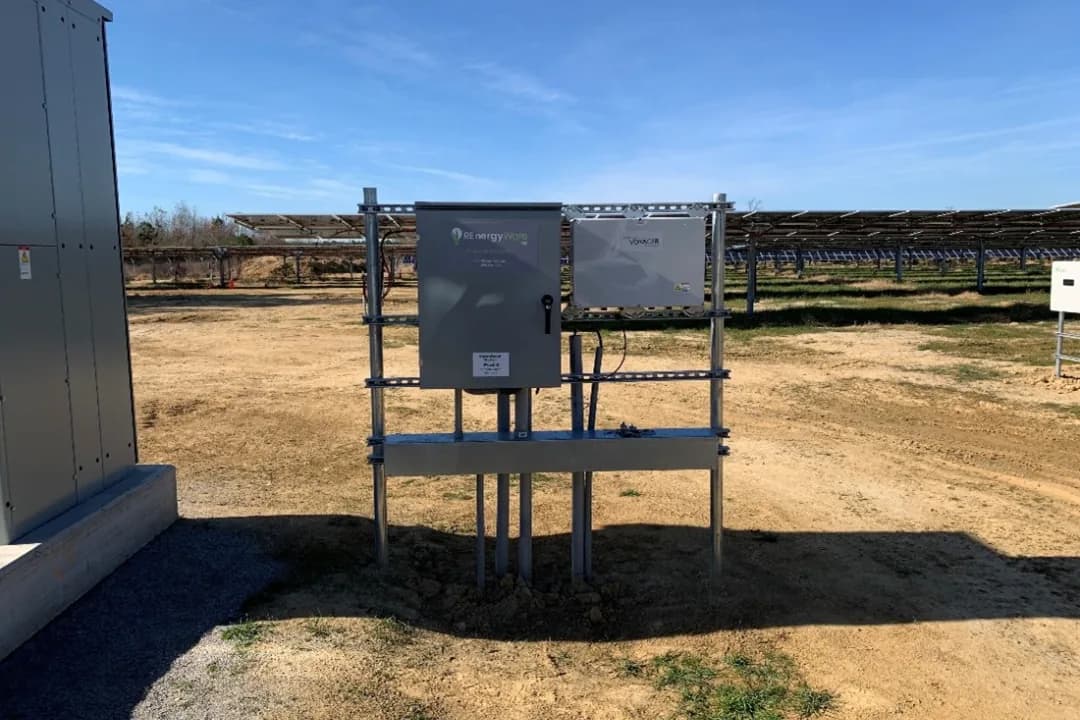
Hertford Solar is a 10.5 MW AC utility-scale photovoltaic plant in Ahoskie, North Carolina, built with Axis Energy serving as EPC. REIG Solar handled the solar SCADA commissioning scope: RenergyWare enclosures and weather sensors, optical fiber installation and testing, and final verification of fiber, inverter, and MET station communications. This case study walks through what that commissioning process looked like on site, including a calibration setback the crew had to work through before sign-off.
Project Snapshot: Hertford Solar's 10.5 MW AC Build in Ahoskie, NC
Hertford Solar generates up to 10.5 MW AC from a single interconnection point in Ahoskie, NC, a small Roanoke River town in Hertford County that gave the project its name. Axis Energy served as EPC, and REIG Solar came in as the specialty contractor for communications and controls, the layer that lets the plant talk to itself and to the utility. Interconnection for a plant this size falls under the North Carolina Utilities Commission's oversight, the state body that reviews utility-scale generator filings before a plant can export power to the grid.
REIG's on-site work was led by Senior Commissioning Engineer Marcus Webb, who holds NABCEP certification and has led commissioning on more than a dozen utility-scale PV sites across the Southeast.
What Solar SCADA Commissioning Involves at Hertford Solar
REIG Solar's scope at Hertford Solar covered four tasks: install and wire RenergyWare enclosures and weather sensors, pull and terminate fiber optic cable across the site, manage construction of the DAS/SCADA hardware, and run final commissioning on every communications link before energization.
RenergyWare Enclosures and the Weather Sensor Platform
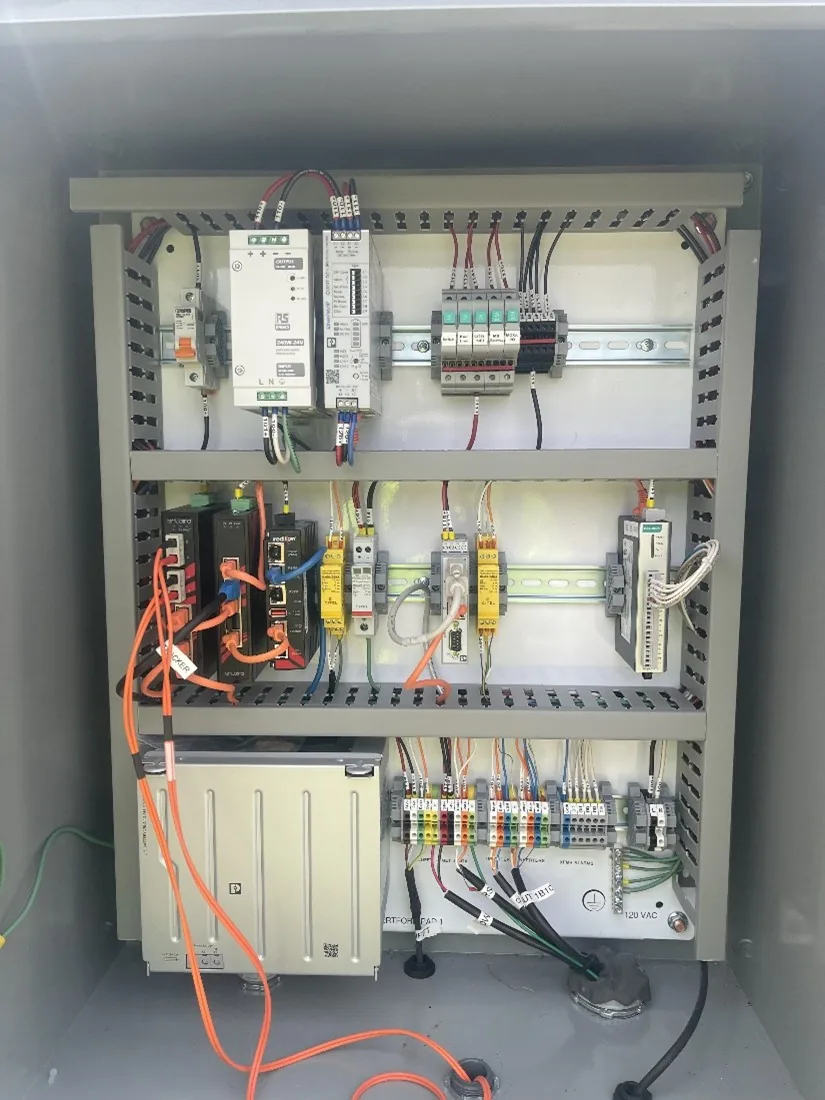
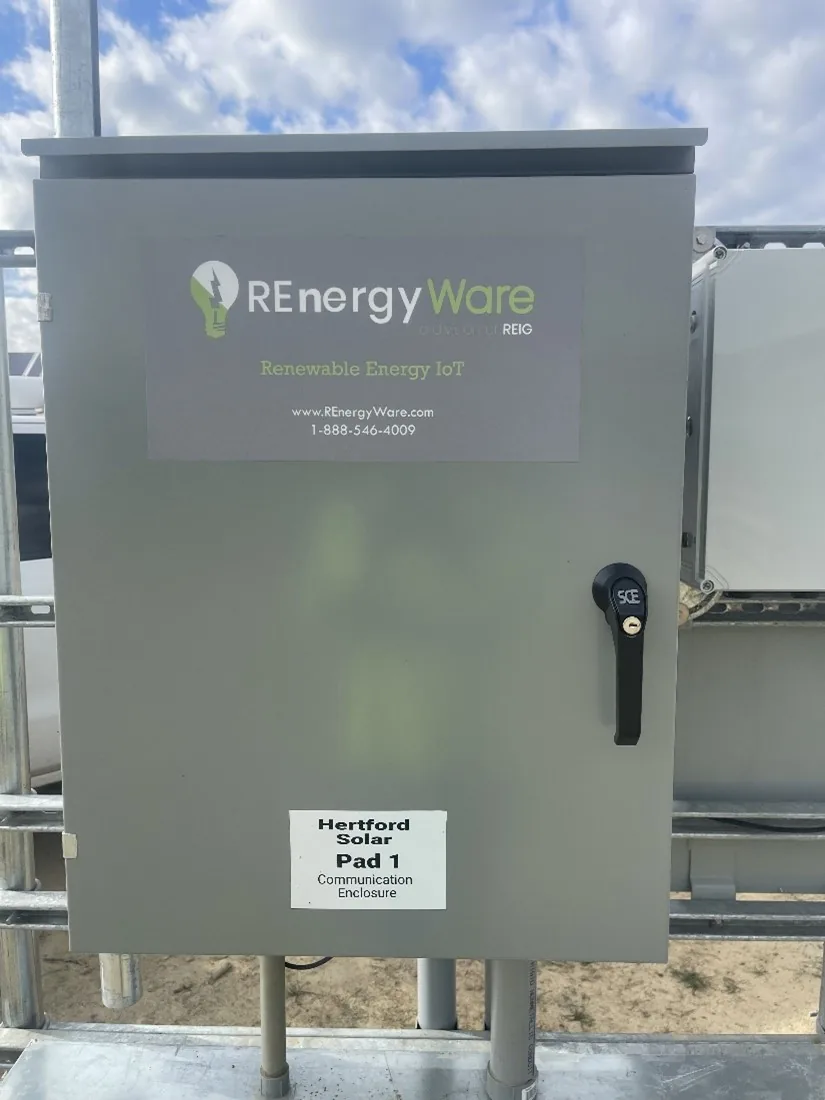
RenergyWare is REIG Solar's enclosures and weather sensor platform: a hardened housing for DAS/SCADA electronics, paired with MET station instruments that track irradiance, wind speed, and ambient temperature. Learn more about the RenergyWare platform REIG used to house the DAS/SCADA hardware and weather stations at Hertford Solar. The crew mounted the enclosures first, then wired each one into the fiber backbone described below.
Optical Fiber Installation, Termination, and Testing
Fiber optic cable is what actually carries SCADA data from each inverter and MET station back to the site's control building, so a single bad splice can take a whole data strand offline. REIG's crew installed, terminated, and tested every fiber run across the Hertford Solar site, verifying optical loss on each segment before accepting it into the network, the same test regimen IEEE interconnection and communications standards expect from utility-scale SCADA builds.
Why Solar SCADA Commissioning Ran Three Weeks Long
Solar SCADA commissioning at Hertford Solar ran about three weeks past REIG's original schedule, and the cause was mundane: a MET station anemometer kept returning wind speed readings that drifted from the reference instrument REIG's techs carried for calibration checks. That drift is the detail worth sharing because it is common and rarely admitted in project write-ups.
The Weather Station Calibration Setback at Hertford Solar
The team swapped the anemometer twice before tracing the drift to a loose grounding connection inside the RenergyWare enclosure rather than the sensor itself, a wiring fault that only showed up under full sun load when enclosure temperatures climbed. Diagnosing it meant pulling logged data against the reference station REIG brought on site, re-terminating the ground lead, and re-running a 48-hour calibration window before Axis Energy would sign off on the MET station. REIG now builds a grounding check into the pre-commissioning punch list on every RenergyWare install, a direct lesson from Hertford Solar's three-week delay. It is a small, almost boring failure mode, but it is exactly the kind of detail that separates a RenergyWare install that passes solar SCADA commissioning on the first try from one that needs a return trip.
Final System Commissioning: Fiber, Inverter, and MET Station Verification
Final commissioning on Hertford Solar confirmed three communication paths before the plant could register with the utility: fiber connectivity between every inverter and the SCADA head-end, inverter-to-SCADA command and telemetry, and MET station weather data feeding the plant controller. REIG's commissioning engineers tested seven inverter pads, confirmed optical signal strength at each splice point, and validated weather sensor accuracy against the reference station once the grounding fault above was resolved.
Hertford Solar's Solar SCADA Commissioning vs. Other Utility-Scale PV Builds
Hertford Solar's solar SCADA commissioning scope sits in the middle of what REIG sees on sub-15 MW AC plants. It needs more fiber runs than a 5 MW community solar site, but a simpler control architecture than a 50+ MW build with multiple substations. The table below lines up what REIG tracked at Hertford Solar against the typical range on comparable utility-scale PV projects.
| Commissioning Element | Hertford Solar (Ahoskie, NC) | Typical Utility-Scale PV Range |
|---|---|---|
| AC Capacity | 10.5 MW AC | 5-50 MW AC |
| DAS/SCADA Platform | RenergyWare enclosures | Vendor-specific hardened enclosures |
| MET Stations Commissioned | 1 (post-calibration fix) | 1-3 per site |
| Commissioning Duration | About 9 weeks (6 planned plus 3 delay) | 4-10 weeks |
| Communications Tested | Fiber, inverter, MET station | Fiber or wireless, inverter, MET station |
DAS (Data Acquisition System) collects raw sensor and inverter readings on site. SCADA (Supervisory Control and Data Acquisition) is the software layer that lets operators monitor and, where permitted, control the plant remotely. A MET station is the on-site weather station, measuring irradiance, wind, and temperature so the plant controller can model expected output. EPC stands for Engineering, Procurement, and Construction, the firm responsible for building the plant. Axis Energy held that role at Hertford Solar.
Lessons for Utility-Scale Solar Teams Planning DAS/SCADA Work
Three things from Hertford Solar carry over to the next RenergyWare install: budget a grounding check into every MET station punch list, keep a reference weather instrument on site rather than trusting factory calibration alone, and test fiber optical loss at each splice rather than only at the head-end. Teams that skip any of the three tend to find out during commissioning instead of during installation, when the fix costs a return trip rather than an extra hour. Teams planning similar fiber and SCADA scope can browse REIG Solar's other utility-scale project write-ups for more commissioning detail.
REIG's crews also lean on established interconnection practice rather than improvising plant-specific rules. NERC reliability standards and IEEE grid-interconnection guidance both shape how REIG sequences communications testing. Commissioning engineers carry NABCEP certification for exactly this reason, and the Solar Energy Industries Association tracks the broader utility-scale commissioning patterns REIG compares projects like Hertford Solar against.
Frequently Asked Questions About Solar SCADA Commissioning
What is solar SCADA commissioning on a utility-scale PV plant?
Solar SCADA commissioning is the final verification stage on a utility-scale PV plant, the point where a contractor confirms that every inverter, weather station, and communications link reports back to the plant's control system the way the design intended. On Hertford Solar, a 10.5 MW AC plant in Ahoskie, NC, that meant testing fiber optic connectivity between each inverter and the SCADA head-end, confirming two-way inverter command and telemetry, and validating MET station weather data before Axis Energy, the EPC, could clear the plant for utility interconnection. Skipping this stage leaves a plant energized but blind to its own performance data.
How long does solar SCADA commissioning usually take on a 10 MW+ project?
On a plant in the 10 to 15 MW AC range, solar SCADA commissioning typically runs four to ten weeks depending on fiber run length, number of MET stations, and whether equipment arrives pre-calibrated. Hertford Solar's commissioning was budgeted at six weeks and ran closer to nine after a MET station grounding fault forced a re-terminated ground lead and a fresh 48-hour calibration window. That three-week stretch is a normal range for a single hardware fault on a utility-scale build, not an outlier, which is why REIG now builds a grounding check into the punch list before commissioning starts rather than after a station fails calibration.
What is the difference between a DAS and a SCADA system on a solar farm?
A DAS, or data acquisition system, is the hardware layer that collects raw readings from inverters, meters, and weather sensors on site. SCADA, or supervisory control and data acquisition, is the software layer that aggregates that data and, where permitted, lets an operator issue commands back to the plant. At Hertford Solar, the RenergyWare enclosures housed the DAS hardware, while the fiber backbone REIG installed carried that data to the SCADA head-end for monitoring and reporting. Most utility-scale plants need both layers working together before a plant can finish commissioning and register with the interconnecting utility.
What credentials should lead a utility-scale solar commissioning team?
A utility-scale commissioning lead should carry NABCEP certification at minimum, plus hands-on experience with fiber optic termination and testing, since a commissioning engineer who only knows electrical scope will miss optical loss problems that electrical testing alone will not catch. Marcus Webb, who led commissioning at Hertford Solar, is NABCEP-certified and has run commissioning on utility-scale PV sites across the Southeast, which is the combined fiber and SCADA experience REIG looks for before putting someone in charge of a site this size. General electrical licensing on its own is not a substitute for that combined skill set.
What caused the delay in Hertford Solar's commissioning schedule?
A MET station anemometer kept returning wind speed readings that drifted from REIG's reference instrument, and the team initially suspected a bad sensor and swapped it twice before finding the real problem: a loose grounding connection inside the RenergyWare enclosure that only showed up once the enclosure heated up under full sun. Fixing it meant re-terminating the ground lead and re-running a 48-hour calibration window before Axis Energy would sign off, which pushed the schedule about three weeks past REIG's original plan. REIG now checks enclosure grounding before calibration testing starts on every RenergyWare install.