
Bulldog Solar
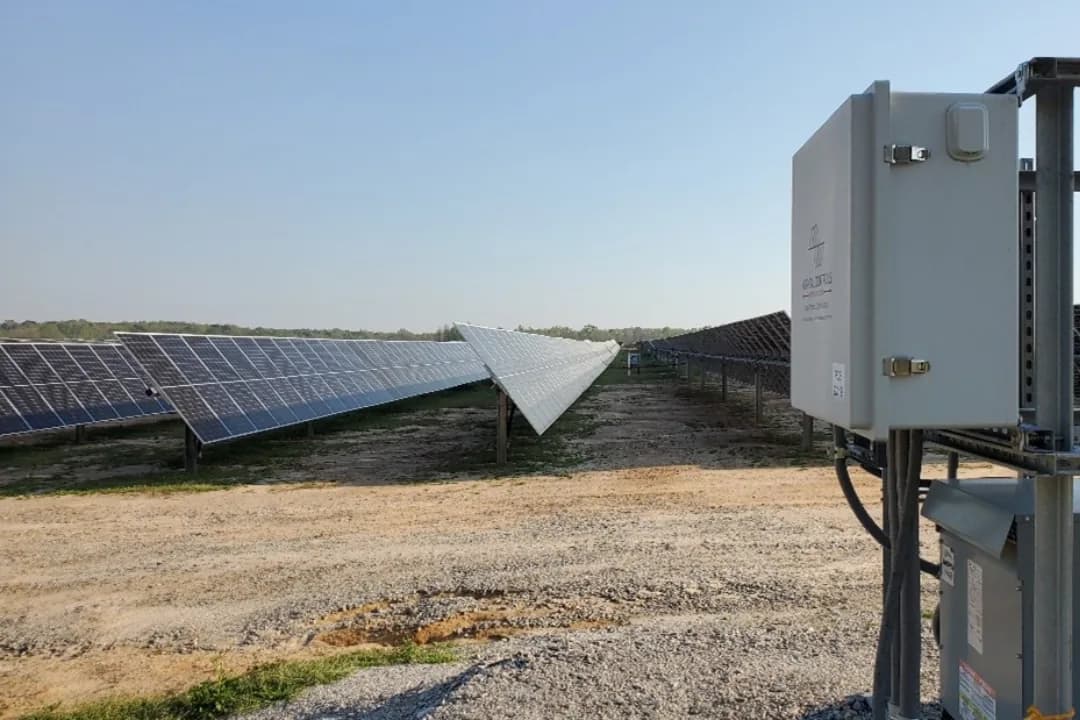
REIG Solar completed the solar fiber optic installation for Bulldog Solar, an 80.0 MW AC utility-scale photovoltaic plant built by Blue Ridge Power in Warrenton, Georgia. The scope covered optical fiber installation, termination, and testing across the array, construction management of NorCal's DAS/SCADA hardware and weather stations, and final system commissioning to confirm that inverter data, MET station readings, and fiber communications all reported accurately to NorCal's GUI servers.
Bulldog Solar: An 80.0 MW AC Utility-Scale Solar Fiber Optic Installation in Warrenton, Georgia
Bulldog Solar is an 80.0 MW AC utility-scale photovoltaic plant that Blue Ridge Power built in Warrenton, Georgia, roughly 100 miles southeast of Atlanta in Warren County. REIG Solar handled the solar fiber optic installation across the full array, pulling and terminating optical fiber that carries inverter, weather, and SCADA data back to NorCal's monitoring platform.
The project is classified as a large-scale, utility-connected PV installation, with Blue Ridge Power serving as the engineering, procurement, and construction (EPC) contractor. NorCal supplied the data acquisition system (DAS) and SCADA hardware that REIG Solar's crews installed and commissioned on site.
Project Scope, Client, and Timeline
Blue Ridge Power engaged REIG Solar to run every strand of communications infrastructure the Bulldog Solar plant needed before energization. REIG Solar mobilized a fiber crew to the Warrenton site in March 2023, completed primary fiber pulls and splice work by June 2023, and closed out final commissioning with NorCal in August 2023, five months from first mobilization to data handoff.
The scope sat alongside civil, electrical, and racking work other contractors performed under Blue Ridge Power's EPC contract, which meant REIG Solar's crews had to sequence fiber trenching and termination around active construction traffic without damaging buried conduit runs other trades had already placed.
Solar Fiber Optic Installation: Termination and Testing Across the Site
The solar fiber optic installation at Bulldog Solar covered single-mode fiber runs between every inverter skid, the MET stations, and the central communications hub, with each strand terminated, spliced, and OTDR-tested before NorCal's commissioning team would sign off on a single segment.
REIG Solar's technicians used fusion splicing at every enclosure to keep insertion loss below 0.3 dB per splice, then validated the full link budget with an optical time-domain reflectometer before handing documentation to NorCal. Termination followed telecommunications industry practices for environmentally sealed enclosures, since the splice boxes sit outdoors across the array for the life of the plant.
Crew, Equipment, and Site Conditions
A five-person REIG Solar crew handled the fiber scope, running conduit with mini-excavators and hand trenchers through red Georgia clay that turned to mud after summer thunderstorms. The team carried fusion splicers, OTDR units, and a stock of armored single-mode cable sized for direct burial, since most of the Bulldog Solar fiber route runs underground between rows rather than on overhead messenger wire.
Construction Management of NorCal's DAS/SCADA Hardware and Weather Stations
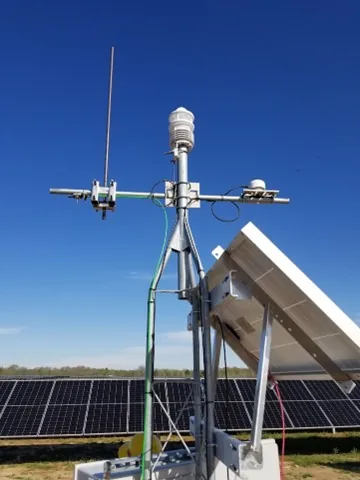
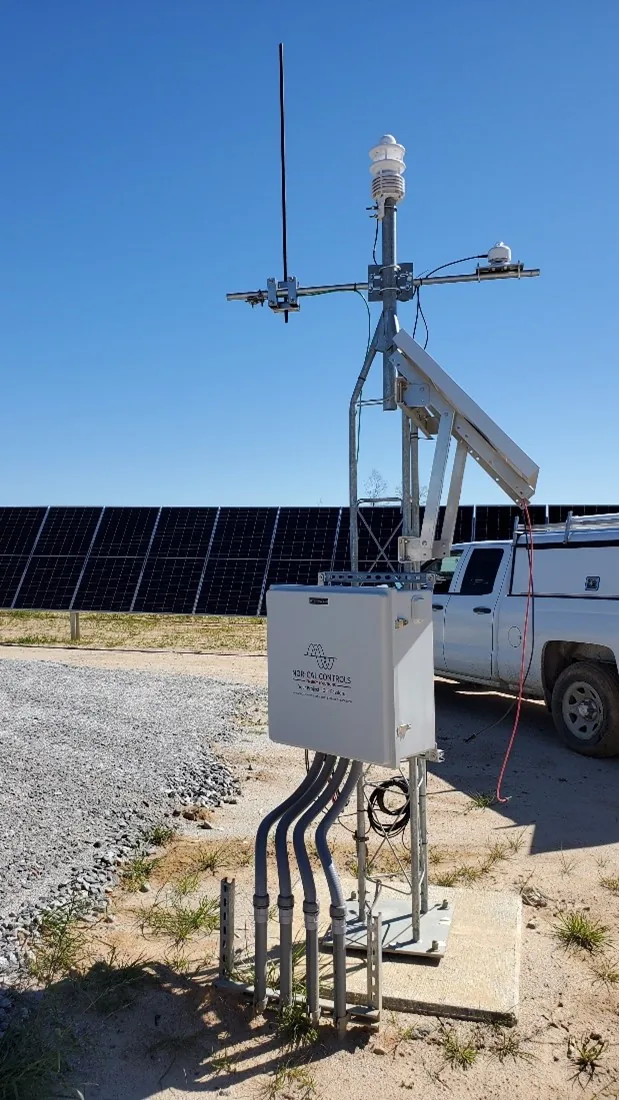
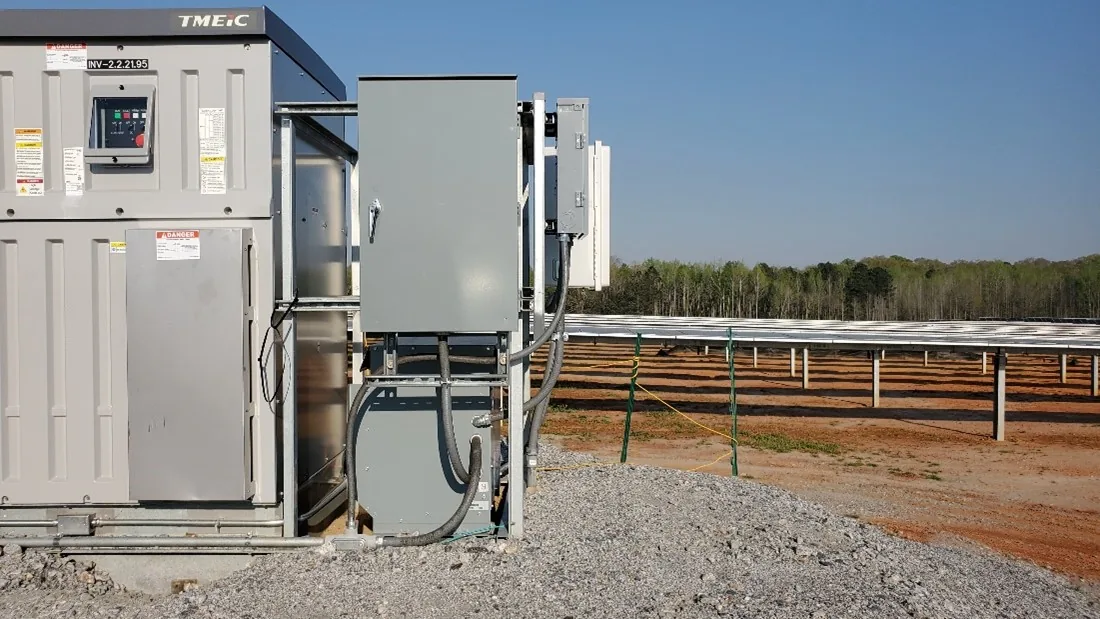
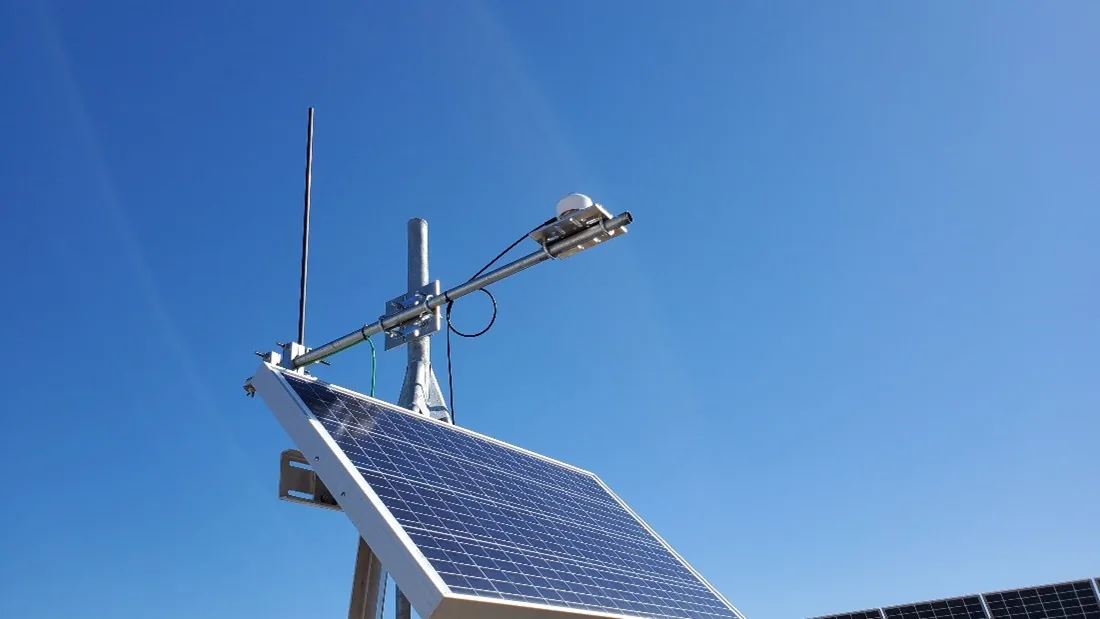
REIG Solar managed construction and installation of every piece of NorCal-supplied DAS/SCADA hardware on the Bulldog Solar site, including the weather stations, MET sensors, and the communication cabling that ties them back to the plant's data closet. That meant scheduling crane lifts for station masts, coordinating conduit stubs with the civil contractor before final grading, and keeping an as-built record of every cabinet location for NorCal's commissioning team.
REIG Solar has handled similar DAS/SCADA buildouts on other Georgia solar projects, including the fiber and weather-station scope at Shiloh Solar, where many of the same cabinet layouts and cabling practices carried over to Bulldog Solar.
Final System Commissioning with NorCal
Final commissioning on Bulldog Solar meant proving that every inverter, MET station, and weather sensor polled correctly over the fiber network and landed accurate data on NorCal's GUI servers, a step-by-step verification that REIG Solar and NorCal's commissioning engineers ran together over four days on site.
Verifying Inverter Communications and MET Station Polling
The commissioning team worked down a point list covering every inverter, confirming that each one reported voltage, current, and status flags to the SCADA master without dropouts. The same process ran against each MET station, checking irradiance, wind speed, wind direction, ambient temperature, and humidity sensors one at a time before signing off on the full communications network, a standard NREL recommends for utility-scale plants validating SCADA data quality (see NREL's utility-scale solar research).
A Commissioning Setback: Diagnosing MET Station Sensor Drift
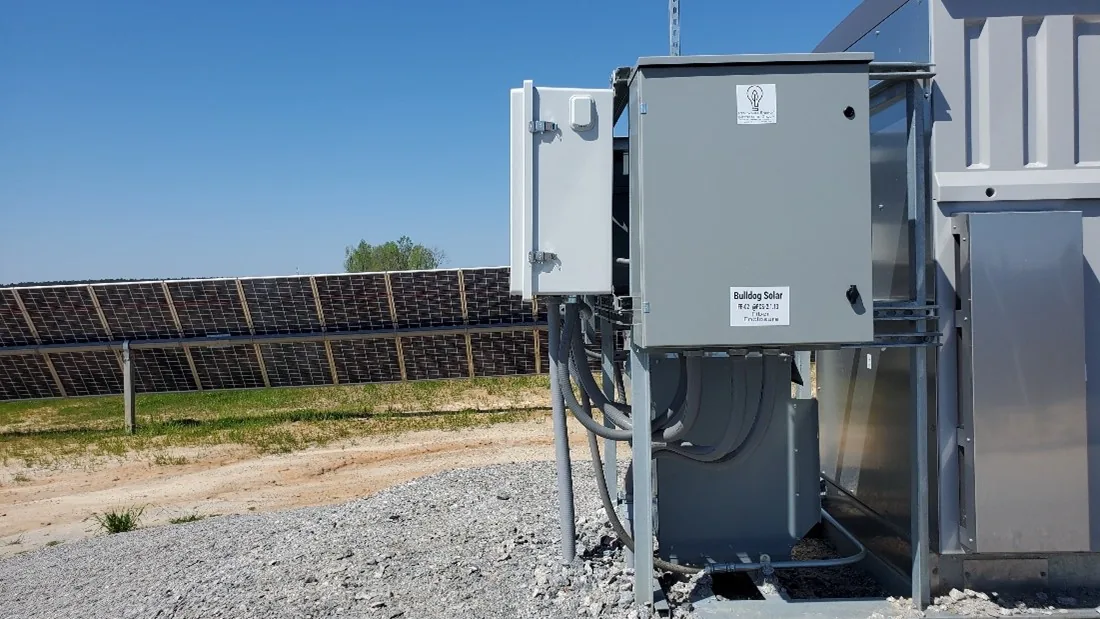
Commissioning did not go perfectly. Two MET stations started reporting wind speed readings that drifted several percentage points out of tolerance partway through the verification window, and REIG Solar's first guess, a firmware mismatch on the sensor interface, turned out to be wrong. The field team spent the better part of a day re-flashing firmware and swapping sensor heads before anyone checked the cable shield grounding at the junction box.
The actual cause was a loose shield termination at one junction box that let electrical noise from a nearby inverter skid bleed into the sensor line. Once REIG Solar's technicians re-terminated the shield and bonded it to the local ground grid, both MET stations held steady readings for the rest of the verification window, and NorCal signed off without further incident.
REIG Solar's crews ran into a similar grounding issue on the Twin Lakes Solar commissioning, which is now part of the standard pre-energization checklist for every MET station REIG Solar installs.
Why Solar Fiber Optic Installation Underpins SCADA Data Accuracy
A solar fiber optic installation matters because SCADA accuracy is only as good as the network carrying it. Utility-scale solar capacity in the United States has grown past 100 GW according to SEIA's solar market insight data, and plant operators increasingly depend on fiber, not copper or wireless links, to keep that much generation visible in real time.
SCADA, or supervisory control and data acquisition, is the layer that lets a plant operator see and in some cases control inverters, breakers, and sensors from a central dashboard. A DAS, or data acquisition system, is the hardware that actually reads those field devices and hands the values to SCADA. Fiber optic cable is what most DAS/SCADA deployments now use between those field devices because it resists the electrical noise and lightning-induced surges common at a solar plant, a point IEEE's 1547 interconnection standard addresses directly for distributed energy resources. The U.S. Energy Information Administration's own electricity generation data shows utility-scale solar output climbing every year, which only raises the stakes for a plant's communications network staying online.
| Backhaul Type | Electrical Noise Immunity | Typical Max Run | Lightning Risk |
|---|---|---|---|
| Fiber optic | High | 10+ km without repeaters | Low (dielectric cable) |
| Wireless (point-to-point) | Low to moderate | Line of sight dependent | Moderate |
| Copper (shielded) | Moderate | 100 m to 2 km | High (conducts surges) |
REIG Solar has built this same fiber-first communications approach into other utility-scale sites, including Gumlog Solar and Hickory Ridge Solar, both of which also run NorCal DAS/SCADA platforms over dedicated fiber rather than wireless backhaul.
Frequently Asked Questions About the Bulldog Solar Fiber Optic Installation
- What is a solar fiber optic installation and why did Bulldog Solar need one?
- A solar fiber optic installation is the network of optical fiber cable, splice enclosures, and termination points that carries inverter, weather, and SCADA data across a utility-scale PV plant back to a central monitoring platform. Bulldog Solar is an 80.0 MW AC plant Blue Ridge Power built in Warrenton, Georgia, with NorCal supplying the DAS/SCADA hardware that monitors every inverter and weather station on site. REIG Solar installed, terminated, and tested the fiber network connecting those devices, then worked with NorCal during commissioning to confirm that every communications point could be polled and delivered accurate data to NorCal's GUI servers.
- How does REIG Solar test fiber optic cable after installing it on a utility-scale solar project?
- REIG Solar tests every fiber segment with an optical time-domain reflectometer, which sends a light pulse down the cable and measures how much comes back at each splice and connector. On Bulldog Solar, technicians kept insertion loss under roughly 0.3 dB per fusion splice and recorded a full loss budget for each run before NorCal's commissioning team would accept the segment. That paperwork matters later, since a technician troubleshooting a bad reading six months after energization can compare live readings against the original OTDR trace to tell quickly whether the problem sits in the fiber or in the hardware on either end.
- What DAS/SCADA hardware did NorCal supply for the Bulldog Solar project?
- NorCal supplied the data acquisition system and SCADA hardware for Bulldog Solar, including weather stations with irradiance, wind speed, wind direction, ambient temperature, and humidity sensors, along with the communication cabling and gateway equipment that ties inverter and MET station data back to NorCal's GUI servers. REIG Solar handled construction management and installation of that hardware on site, which meant setting masts for the weather stations, running conduit and cable to each cabinet, and keeping an as-built record of every device location so NorCal's commissioning team could confirm each one was polling correctly before the plant went live.
- What commissioning issues came up during the Bulldog Solar buildout, and how were they resolved?
- During final commissioning, two MET stations on Bulldog Solar reported wind speed readings drifting out of tolerance, and REIG Solar's first theory, a firmware mismatch, turned out to be wrong. The field team spent close to a day re-flashing firmware and swapping sensor heads before anyone checked the cable shield grounding at the junction box, where a loose termination was letting electrical noise from a nearby inverter skid bleed into the sensor line. Once the shield was re-terminated and bonded to the local ground grid, both stations held steady readings for the rest of the verification window and NorCal signed off.
- Why does Blue Ridge Power rely on fiber rather than wireless for Bulldog Solar's SCADA network?
- Fiber optic cable does not pick up electrical noise or lightning-induced surges the way copper or wireless links can, which matters at a site like Bulldog Solar where inverters, transformers, and long cable runs all generate electrical interference. A wireless link between MET stations and the SCADA master would also need line of sight and could drop out during the kind of thunderstorms that are common in Warren County, Georgia, during construction season. REIG Solar's solar fiber optic installation gives Blue Ridge Power a wired, physically protected path for every data point on the plant, so an operator checking the NorCal dashboard can trust the readings instead of wondering whether a dropout is weather or hardware.